Blog

  • 5 Best Millets for Weight Loss

    5 Best Millets for Weight Loss

    5 Best Millets for Weight Loss:

    People are nowadays are very health conscious and finding food which is healthy around the globe. The best food which comes to my mind is the Millets. Due to the modern lifestyle, health-related problems like diabetes, obesity, cardiovascular disease, Millet is the best gift for human beings as they were the oldest foods that our forefathers were consuming. But due to the large-scale cultivation of wheat and rice has shifted our food habits.

    Millets have many nutritional, nutraceutical, and health-promoting properties which will keep our body healthy, and the important aspects which I am going to say today is about the properties which will help in weight loss and the best millets for weight loss.

    The unhealthy consumption of junk food has made people fatigue and in the long run, will affect our body and invite a lot of diseases. So the answer to all is the Millets.

    Table of Contents:

    1. Millets and types of Millets
    2. Nutritional Value of Millets
    3. Specific Content in Millets for Weight Loss
    4. Millet Recipes to start with
    5. Where to buy Millets

    Millets and types of Millets:

    Millets are the small-seeded grains that belong to the Poaceae family. They can be grown under marginal and low fertile soil with fewer inputs like fertilizers and pesticides. Now it is popularly known as Nutri-Cereals.


    Based on the grain size, the millets are categorized into Major and Minor Millets. Under major, there are two kinds of millets, which include Sorghum (Jowar) and Pearl millet(Bajra). The Foxtail Millet(Kangni), Finger Millet (Ragi/Mandua), Little Millet(Kutki), Kodo Millet(Koden), Barnyard Millet(Sawan), Proso Millet(Cheena), and Browntop Millet(Korale).

    Related Post: Types of Millets and its health Benefits

    Based on the presence of husk on Millets it is categorized into two types- Naked grains and Husked grains. Naked grains (Finger Millet, Sorghum, and Pearl Millet) do not have hard indigestible husk as other millets. It does not require much processing as compared to the husked grains, whereas the Husked grains(Little Millet, Foxtail Millet, Barnyard Millet, Proso Millet, Browntop Millet, and Kodo Millet) requires proper processing for human consumption.

    Click to Buy Best Millets Online

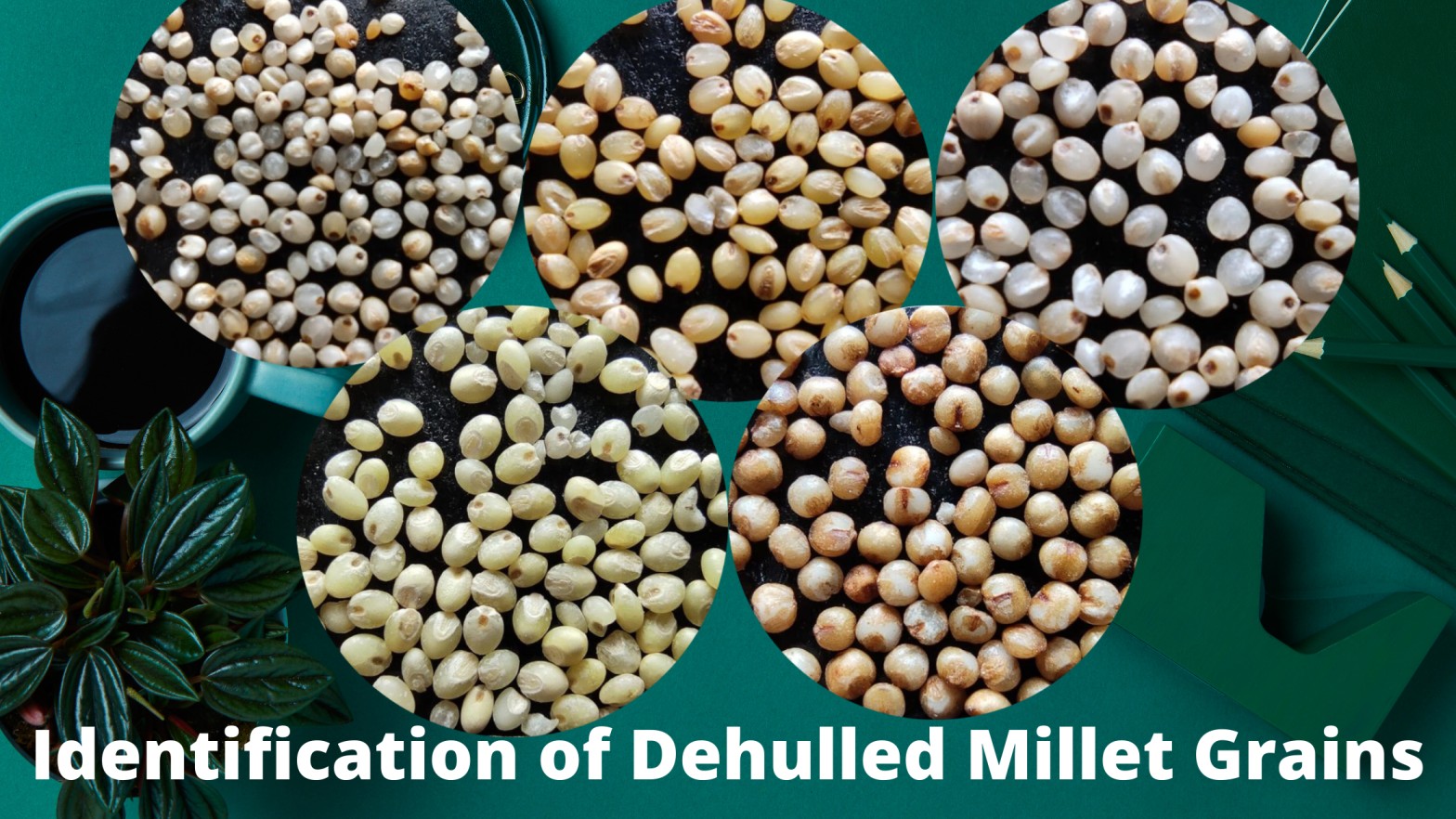
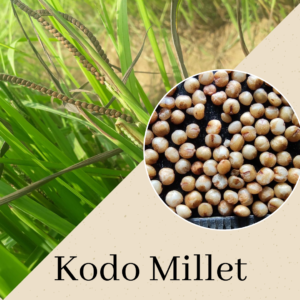
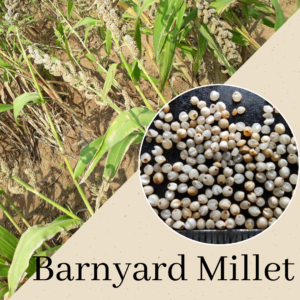
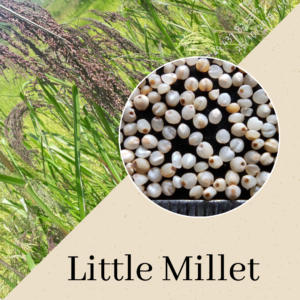
    Identification of Dehulled Millet Grains: Best Millets for Weight loss

    Identification of Dehulled Millet Grains


    Nutritional Value of Millets: Best Millets for Weight Loss

    Millets contain unique nutritional value especially complex carbohydrates, phenolic compounds, phytochemicals, and important dietary fiber. They are the natural source of Calcium, Iron, Zinc, Phosphorous, Potassium, and many other essential nutrients. The Calcium content in Ragi is 344 mg per 100 gram, which is the highest among the cereals.

    Health Benefits of Millets

    Click to Buy Best Millets Online

    Specific Content in Best Millets for Weight Loss:

    I think you must be familiar with the types of millet and the nutritional value of millets. So let us jump in to know the content of millets that are favoring weight loss in our body.

    Calorie Content of Millets: Best Millets for Weight Loss

    The calorie count of food is important with respect to weight loss or weight gain. From Research, it is found out that if we consume fewer calories than our body actually burns, may help us for losing weight faster. Barnyard Millet contains 307 kcal which you can include in your diet.

    Dietary Fibre Content- Best Millets for Weight Loss:

    As you know, the millets contain a lot of dietary fiber which helps to prevent constipation and reduce the risk of developing bowel disorders. But let’s see what are the function of dietary fiber in millets.

    • Retardation of carbohydrate absorption and impaired glucose tolerance.
    • In increasing the transit time of food in the gut.
    • In water-absorbing.
    • It helps in the binding of toxins as a detoxifying agent.

    The above function of dietary fiber in millets directly helps in the weight loss of the body. So, it must be coming to mind which millet to choose. Looking into the dietary fiber, there are five millets that are rich in it, Sorghum(10.2 g), Pearl Millet (11.5 g), and Finger Millet(11.2g) (Source: Indian Food Composition Tables, NIN-2017), and Barnyard Millet (12.6 g).

    Policosanols:

    Research has found out that the intake of policosanols helps in weight loss. Sorghum(Jowar) contains policosanols which help in reducing cholesterol in our body.

    Tryptophan: It is an alpha-amino acid that is used in the biosynthesis of proteins. The presence of tryptophan in Foxtail Millet(Kangni) gets digested at a slower rate and keeps us away from consuming extra calories in diet and favors in the weight loss journey.

    Click to Buy Best Millets Online

    So, the 5 Best Millets that will help us in Weight Loss are as follows:

    1. Sorghum
    2. Finger Millet
    3. Barnyard Millet
    4. Foxtail Millet
    5. Pearl Millet

    Best Millets Recipes to Start with the Journey of Weight Loss: Best Millets for Weight Loss

    1. Jowar, Bajra, and Ragi Roti
    2. Millet Upma: You can include Foxtail Millet and Barnyard Upma in your breakfast which is easy and quick to prepare. I have made many millet recipes that you can check in my blog as well as on my Youtube Channel.

    Foxtail Millet Upma Recipe

    Barnyard Millet Upma:

    Barnyard Millet Upma Recipe

    Where to buy Best Millets for Weight Loss:

    It is always recommended to buy millets directly from the farmers. If you are staying in urban areas then you can easily buy from an online store.

    CLICK TO BUY THE BEST MILLETS FOR WEIGHT LOSS:

    1. Organic Ragi Flour

    2. Organic Sorghum Flour

    3. Organic Bajra Flour

    4. Foxtail Millet

    5. Barnyard Millet

    Why Overweight/Obesity is Increasing?

    Due to lack of dietary diversity, there is an increase of non-communicable diseases, Overweight/Obesity is one of them. We need to understand, why obesity is increasing at a rapid rate in India.

    1. When we look into the ingredients that we use to make our food,  we prefer a more refined cereal-based diet and this food contains no dietary diversity.
    2. We intake more high-calorie diet with low nutrients which is unhealthy.
    3. The consumption of packaged food is increasing which is rich in high sugar, salt, and fats.

    In a nutshell, this video on Best Millets for Weight Loss is the main summary of what we have discussed above. I think you will love it.


    Hope you liked reading this article and it will help in your weight loss journey. Please do give your comments below for further improvement.

    Author: Tapas Chandra Roy, A Certified Farm Advisor on Millets. Promoting Millets from Farm to Plate.
     

  • The revival of Millet Grain on Farm to Plates addressing Nutritional Security

    The revival of Millet Grain on Farm to Plates addressing Nutritional Security

     Odisha Millets Mission in Sundargarh:

    “Special Programme for Promotion of Millets in Tribal Areas of Odisha” (Odisha Millets Mission)- Reviving Millets on Farm to Plates. It is a flagship programme supported by the Department of Agriculture & Food Production, (Govt of Odisha) to promote millets. It was launched in Sundargarh district in the year 2018-19. The programme initially covered 4 blocks, that is, Nuagaon, Kuarmunda, Rajgangpur and Kutra, which was gradually extended to another 4 blocks (Lephripada, Hemgir, Tangarpali & Balisankara) with financial assistance from District Mineral Foundation, Sundargarh.

    The programme covers all aspects of millet ecosystem that includes production, consumption, processing, marketing and inclusion of millets in State Nutrition Programmes.
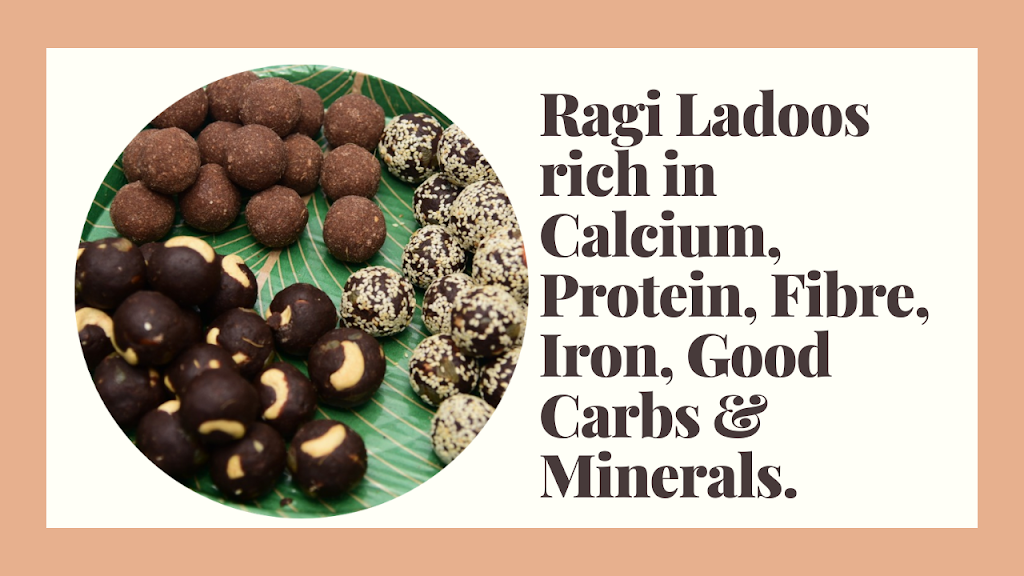
    Ragi Ladoos for Nutritional Security
    Ragi Ladoos for Pre-School Children


    The objectives of the Millet Mission:
    1. Improving the productivity of Millet crops to secure household level surplus.
    2. Setting up of decentralized processing facilities for easy access to processed millets.
    3. Promoting Household-level consumption to increase food and nutrition security.
    4. Promoting farmer collectives and marketing to further the millet economy with a focus on women entrepreneurs.
    5. Inclusion of millets in the State Nutrition Programme and Public Distribution System.
    The success of Odisha Millets Mission owes to its unique design of programme delivery involving various stakeholders like Government agencies, Civil Society Organisations, Community Based Organisations and Academic institutions. In Sundargarh, 8 Community-Based Organisations have been implementing the programme with the support of 6 Facilitating NGOs.
    The Agricultural Technology Management Agency (ATMA), Sundargarh acts as the nodal organisation for implementation of the programme at the district level. The State Secretariat for Odisha Millets Mission is hosted at Nabakrushna Choudhury Centre for Development Studies (NCDS), a social science research institute situated at Bhubaneswar. The State Secretariat comprises of Programme Secretariat and Research Secretariat anchored by WASSAN and NCDS respectively.
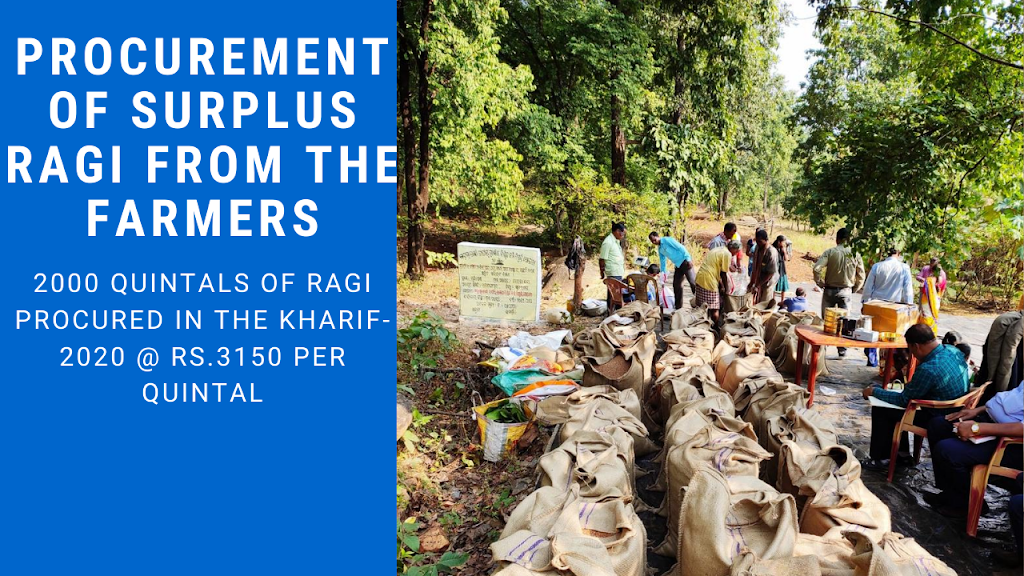
    In the first year of implementation (2018-19), millet (exclusively Ragi) was cultivated in 600 Hectares benefitting 1405 farmers in 4 blocks of the district. During 2019-20, 930 Hectares of millet was cultivated including Ragi, Little Millet, Foxtail Millet and Sorghum involving 2820 farmers. A surplus of around 500 quintals of Ragi was procured from farmers in the Kharif Marketing Season 2018-19 which increased 4 folds to just above 2000 quintals in Kharif Marketing Season 2019-20. 
    Procurement of Surplus Ragi from farmers
    Procurement of Surplus Ragi from the Farmers


    The millets, owing to its nutritional benefits, climate resilience characteristics and nostalgic sentiments about the grain being attached with their tribal culture have added to the other incentives provided by the programme to encourage farmers to cultivate and consume millets. The positive feedbacks from the agrarian community and successful implementation of the programme paved the way for an expansion of the scheme to 4 additional blocks with support from District Mineral Foundation, Sundargarh from 2020-21.
    Inclusion of Ragi Ladoo in ICDS, Sundargarh
    Background of Millet Mission:
    In a series of discussions at State level regarding utilization of the Ragi procured from farmers it was proposed that Ragi, for its nutritional values should be included in the ICDS using DMF and OMBADC funds, based on which the pilot programme for introducing Ragi Ladoo for pre-school children in Anganwadis Centres of Sundargah the district was planned.
    Ragi is extremely nutritious millet rich in Calcium(344 mg), Protein(7.3 gm), Fibre(3.6 gm), Iron(3.9 mg), Good carbohydrate(72 gms), and other essential minerals. In the process of hulling, the nutrition content of ragi is not lost. Hence, this is an excellent grain for the children.
    About the Project:
    The project envisages supplementing the nutritional requirements of pre-school children (3 to 6 years) enrolled in the Anganwadi Centres of the district. Each child shall be provided with 4 Ragi Ladoos per week comprising of 10.5 gms of Ragi in each Ladoo.
    The existing WSHGs engaged as the THR (Take Home Ration) making units or Chhatua Units in each ICDS project area, promoted by Mission Shakti (W&CD Dept, Govt of Odisha) shall be trained to prepare and supply the Ragi Ladoo Mix to the Anganwadi Centres.
    The Anganwadi helpers shall make ladoos out of the Ragi Ladoo Mix and provide to the children. As Anganwadi Centres are closed in the present pandemic situation, the Ragi Ladoo Mix is packaged and supplied to the beneficiaries’ home on a monthly basis.
    The project, supported by DMF, Sundargarh is a joint initiative involving 2 agencies, that is, Odisha Millets Mission (Directorate of Agriculture & Food Production, Odisha) & Mission Shakti / ICDS (Dept of Women & Child Development and Mission Shakti, Odisha).
    Odisha Millets Mission shall ensure enhancement in millet production in the district and thereby the availability of surplus Ragi in procurement Mandis. They shall also provide machinery required for cleaning, grading and destoning ragi grains to the selected WSHGs. Two WSHGs in the district have been empanelled as the cleaning units, which shall clean the ragi grains using the machinery and supply to the various Chhatua Units for preparation of Ragi Ladoo Mix. The project shall be implemented in a phased manner.
    Millet Ladoo making
    Preparation of the First batch of Ragi Ladoo Mix by Jyoti SHG of Bileimunda, Hemgir Block

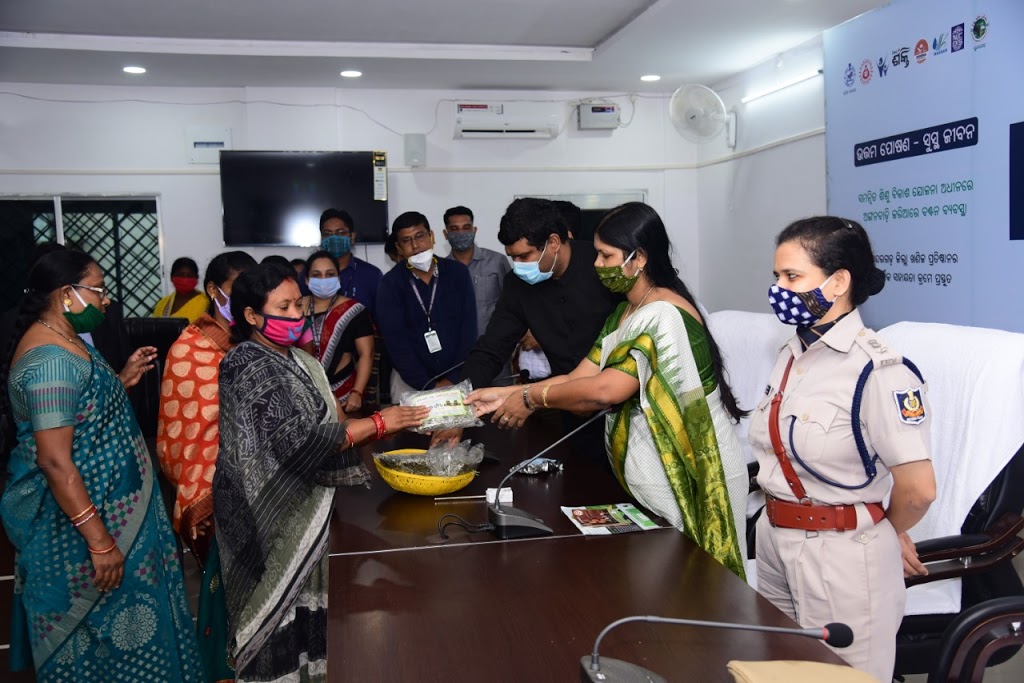
    The first phase was inaugurated by the Minister of WCD&Mission Shakti on 15th August 2020 in which about 3000 children of Hemgir project were covered. From November 2020, the second phase shall be launched in 5 project areas (primarily urban) and in the third phase, starting from January 2020 all 21 project areas are planned to be covered.

    Millet ladoo mix distribution
    Distribution of Ragi Ladoo mix by the Honourable Minister WCD & Mission Shakti to beneficiaries in the Inaugural Ceremony.


    This initiative was jointly undertaken by Odisha Millets Mission & Mission Shakti, with support from DMF, Sundargarh and Sundargarh District Administration has exemplified how convergence among different agencies have successfully revived the journey of a once-neglected the Nutri-cereal grain on-farm to plates and thus this initiative will address the Nutritional Security.
    Author: Arpan Das, District Project Coordinator, WASSAN, Odisha Millet Mission
  • Delicious Millet Kheer with Jaggery

    Delicious Millet Kheer with Jaggery

    Millet Kheer with Jaggery:

    You might have heard of making Kheer with rice but few have heard of making it with millets. As you know making with millets makes it tasty, nutritious, and healthy. Kheer or Payasam is originated in the Indian sub-continent and it is served during meals or in desserts. It is flavoured with cardamom, raisins, almonds, cashews and many other dry fruits and nuts.

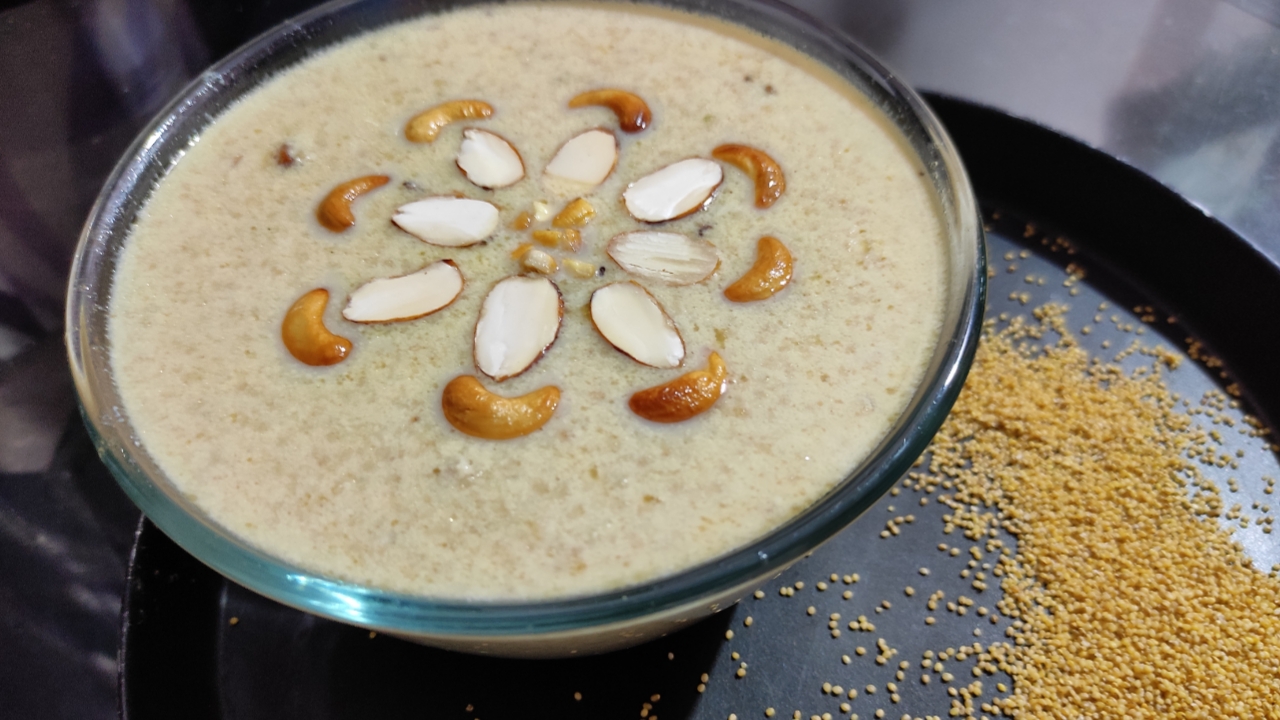
    Millet Kheer
    Delicious Foxtail Millet Kheer

    Ingredients for Millet Kheer:

    • 1/2 cup foxtail millet
    • 1/3 cup of desi ghee
    • 1/3 cup powdered/ grated jaggery
    • 1 litre of milk
    • 5-6 Nos. of Cardamon
    • 15-20 Nos. of raisins
    • 10-12 Nos. of Almonds
    • 20 Nos. of cashew

    Preparation Method of Millet Kheer:

    • First of all the foxtail millet was soaked for 6 hours to get the maximum nutrition. and for better cooking.
    • Take a pressure cooker and light the stove to heat it and then put 2 tbsp of ghee.
    • Keep the flame on a low medium and add the soaked millet.
    • Saute it well for 2 minutes and add two and a half cup of water.
    • A pinch of salt is added to it so that millet is cooked properly.
    • The pressure cooker is covered with a lid up to 2 whistles on a medium flame.
    • After two whistles keep it aside and let the pressure releases by itself.
    • Open the lid after 15 minutes and add the boiled milk into it.
    • In the meantime, take a pan and add 1 tbsp of ghee into it and then add all the cashews and fry it until it turns to golden in colour.
    • Repeat the same process for raisins.
    • After 20 minutes put the grated jaggery into it and give it a nice mix.
    • Keep stirring and ensure that it does not stick to the bottom.
    • Add the fried cashews and almonds.
    • Add the powdered cardamom powder into it and switch of the stove.
    • Add the fried raisins into it.
    • You can put ghee on the top of the kheer.
    • Transfer the entire kheer into a bowl and garnish it with almonds and cashews.
    • You can take it when it is hot or after it cools down

    Award-Winning Recipe: Millet Rasgulla with Jaggery

    For more Millet Recipes: Subscribe my Youtube Channel


  • Millets to boost strong immunity in 2020

    Millets to boost strong immunity in 2020

     MILLETS ARE THE RIGHT GRAINS:

    We have heard the old saying ”You are what you eat”. If you are taking the right balanced diet, you remain healthy always. But we have forgotten the old millet grains which our grandparents were taking in their food and this has given us more lifestyle diseases. So in this situation, we should focus on boosting our immunity and health. The right grains that we can add to our regular diet are the ”Millets” and boost our immunity.

    Why Millets?

    It contains a high amount of dietary fibre, essential amino and fatty acids, B-complex vitamins and Vitamin E. They are high in minerals, iron, magnesium, phosphorous and potassium. These minerals help us as a shield and protect us from infections and diseases. They contain more fibre which lowers the risk of diabetes by releasing a lesser percentage of glucose over a long period of time.

    So, making excuses for not including millets, will only keep us far away from better health. Millets can be taken by adults, children and Babies. The sooner you bring them in your regular diet, the faster you witness the positive changes in your health. It is the sole responsibility of parents to add millets so that children gradually accept these grains.

    Of course, there is a lot of things to learn about millets and understand the right way to cook it. You will definitely find wonderful recipes out of millets in my blogs as well as in my youtube channel. I am a Certified Farm Advisor on Millets and promoting Millets from ”Farm to Plate”. You can surely mail me or comment on this blog if any query comes to your mind.

    Millets to boost strong immunity
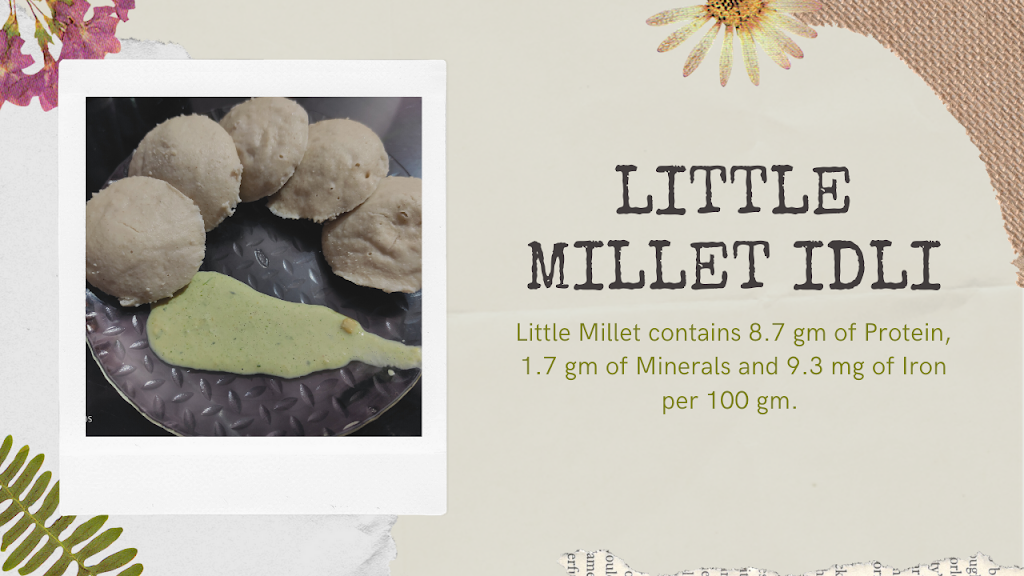
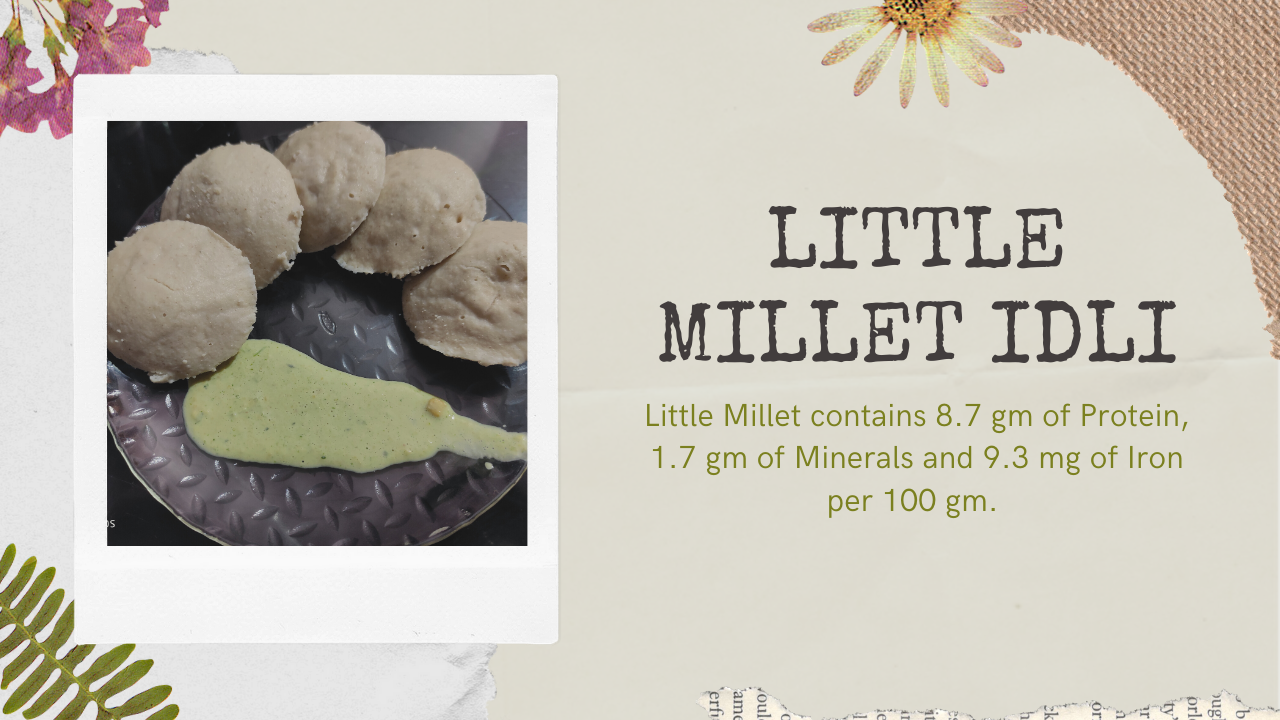
    Little Millet Idli

    On the day of ”Janmashtami”, First of all, Wish a very Happy Janmashtami. Yesterday evening I thought to share a new recipe of Idli with Little Millet. Generally, it is consumed as rice and any recipe that demands staple rice can be prepared using Little Millet. It looks similar to Proso Millet after dehulling, but you can easily differentiate by its prominent spot and the size. Little Millet is the smallest of all minor millets.

    Little Millet is reported to have 8.7 gm protein, 7.6 gm fibre, 9.3 mg iron, 1.7 gm minerals per 100 gm. It contains 13 times more iron than rice. We can make a lot of recipes using this Millet. I will keep you updating the wonderful recipes.

    So, let us see the ingredients and method to make Little Millet Idli.

    Ingredients:

    • 1 cup Little Millet
    • 1/2 cup Urad Dal
    • 1 tbsp Methi seeds
    • 1 cup Water
    • 1 tbsp Puha (flattened rice)
    • Salt as per taste
    Preparation Method:
    • Little Millet, Urad Dal and Methi seeds are taken separately and soaked for 3 hours.
    • Urad Dal is then ground in a wet grinder until it becomes a soft batter.
    • Water is drained out from Little Millet and ground along with the methi seeds and puha till nice batter.
    • All the batter is mixed together thoroughly and allowed to ferment overnight.
    • After that little salt as per taste is added to the batter and idlis are steamed in idli Steamer.
    • Idlis are cooked till they are soft texture and served hot with chutney.

    Thumb Rules while Cooking Millets:

    • Soak it before cooking in water for at least 2 to 3 hours. But soaking millets overnight is more helpful.
    • To get the best taste of it, served it hot. If allowed to cool, they become drier than rice and wheat.
    • Always store it in a cool and dry place. Sun-drying at regular interval will ensure more shelf life.

    CLICK TO BUY LITTLE MILLET

    Please text me in the comment box, how it turned out with you.

    (Tapas Chandra Roy, a Certified Farm Advisor on Millets and promoting Millets from ”Farm to Plate”).

  • Differentiate 5 Types of Dehulled Millets with Clarity

    Differentiate 5 Types of Dehulled Millets with Clarity

    Millets:

    In the beginning, it was difficult for me to identify millet grains after dehulling. But gradually, going deep into its size, shape, and colour, it became easy for me. So, today I thought to share with you about these dehulled millets and how to differentiate dehulled millet. If you want to know about the details of unhulled millet grains, you can have a look at the previous blog on the Close-Up of Millets

    1. Foxtail Millet:

    Millets-Foxtail Millet
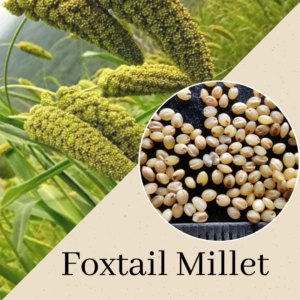
    Foxtail Millet Panicle and Dehulled Grains

    It resembles a tail of a fox, so it is called a Foxtail Millet. It is one of the oldest cultivated millets. It is the most yellowish colour millet with slightly oblong on one end.

    2.Proso Millet:

    Millets-Proso Millet

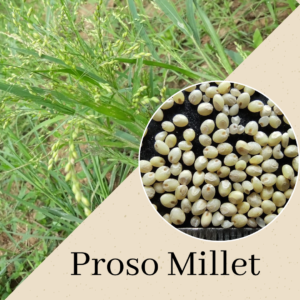
    Proso Millet is called ”Chena” in Hindi and ”Variga” in Telegu. It is the largest grain in the category of minor millets. It is creamy yellowish and perfect oblong on one end.

    3.Kodo Millet:

    Kodo Millet
    Kodo Millet and its Dehulled Grains

    Kodo Millet is called ”Kodon” in Hindi and ”Arikelu” in Telugu. It is brownish in colour and the colour gets lighter after polishing.

    4.Barnyard Millet:

    Barnyard Millet
    Barnyard Millet Panicles and its Grains

    Barnyard Millet is known as ”Sanwa” in Hindi and ”Udhalu” in Telegu. It is similar to Little Millet but the colour is little greyish as compared to Little Millet. The easy way to differentiate it, by its prominent dark spot.

    5.Little Millet:

    Little Millet
    Little Millet and its Dehulled Grains

    Little Millet is called ”Kutki” in Hindi and ”Samalu” in Telegu. It is the whitish millet in the Minor Millet category. It is spherical in shape. Little millet is the smallest millet.

    For More Videos on Millets: Subscribe to my Youtube Channel

    Author: Tapas Chandra Roy, A Certified Farm Advisor on Millets, ‘Promoting Millets from Farm to Plate’. In a mission to take the forgotten grains- Millets to Millions. To remain updated on my blogs on millets you can join my Telegram Channel – Millet Advisor.

  • Millet Grain Anatomy

    MILLET GRAIN ANATOMY

    There  are three main parts in the millet grain:
    1.Bran
    2.Germ
    3.Endosperm

    Bran:

    It contains important minerals, vitamins, fiber, and antioxidants. It protects the kernel from pests, diseases, water, and sunlight. It is the multi-layered outer skin of the kernel.
    So, while processing millets utmost care should be taken to keep the bran layer intact. Completely removing the bran will result in the deterioration of nutrients.

    Germ:

    It contains vitamins, antioxidants, phytonutrients, and unsaturated fats. It will sprout into a new plant when fertilized by the pollen.

    Endosperm:

    It provides food and energy to the new plant when it is young. It contains starchy carbohydrates, vitamins, minerals, and proteins.

  • Millets Market Analysis in 2020

    Millets Market Analysis in 2020

    MILLET MARKET ANALYSIS:

    Millets are ancient Super grains, nowadays known as Nutri-Cereals, is the reservoirs of nutrition for better health. They are classified into major and minor. Major Millets( Sorghum and Pearl Millet) and Minor Millets(Foxtail, Proso, Kodo, Little, Barnyard Millet). They are predominantly gaining more importance in the world and in India.

    Market  Analysis pertaining to Millet can be discussed by its:
    1. Demand and Consumption
    2. Use in Food Processing
    3.Online Distribution Channel
    4. Increase in Millet Production
    5. Market Forecast
    6. Market Competition.

    DEMAND & CONSUMPTION:

    Millets were considered as the Poor Man’s Food. Now it has shifted to Rich Man’s Food. The demand for it is increasing in urban areas not only due to its nutritional value but also enhancing immunity in the human body. They are considered to be promising sources as an immunity booster. The important elements that maintain our body’s immune system are those which contain all vitamins and minerals and a completely balanced diet.


    So, the first cereals that come to my mind which contain vitamins, minerals, fiber, and anti-oxidants are the MILLETS. The increase in awareness of the health benefits of Millets will directly boost the consumption and trigger the industry growth rapidly by 2025.


    USE OF MILLETS IN PROCESSING:
    Millets Beer
    Millet Beer

    Innovative millet products are taking their share in many segments like Infant Food, Bakery Products, Health Drinks, Ready to Eat Food, Breakfast Food, and the emerging industry i.e. Alcohol.

    Two mothers of India came forward with a yummy and healthy food for babies in the brand name  Slurrp Farm. Bringing their experience and imbibing their ideas into them. Many Startup Businesses have come with wonderful millet products in the market. The Toit Brewery of Bengaluru is the first to introduce Nutri grain-Millet into the beer jug. By this, there will be a reduction in the import of barley malt from abroad. As they are rich in nutrients, it is taking the place in the health drink segment.
    ONLINE DISTRIBUTION CHANNEL:
    Millet Market Share
    Market Share by Distribution Channel

    In 2018, millets market share by distribution channel shows that e-commerce online stores are gaining importance and likely to show promising above growth more than 3% CAGR by 2025. Previously people were dependant on traditional grocery stores for millet products but now in the situation of COVID-Pandemic, everyone is dependant on online stores. Keep in mind that Millets are the immunity booster and getting the product at the doorstep, Online Store will take the maximum share in the distribution channel.

    INCREASE IN MILLET PRODUCTION:

    India is the largest producer of millets with 41% market share in the world. The importance of millet is increasing day by day due to increased awareness among people and government policies supporting nutritional security. The only crop to withstand drought and climate change is the millet as it can be grown in every soil with less rainfall. Many states like Odisha, Karnataka are promoting millets on a large scale benefitting small and marginal farmers. There is an increase in MSP of millets for the last 3 years giving confidence to farmers to grow more millets.


    MILLET MARKET FORECAST:

    According to a report announced by the Reportlinker.com “North America Millets Market Forecast to 2027- COVID-19 Impact and Regional Analysis By Product; Application; Distribution Channel; and Country, where they have mentioned that The North America Millets Market was valued at US$ 841.87 million in 2018 and expected to grow at a CAGR of 4.0% during 2019-2027 to reach US$ 1,192.24 million by 2027.


    MARKET COMPETITION:

    The global millet market is unorganized and fragmented. The millet processors are generally small in size catering small export business. As the trend of growth in millet will bring more opportunities for the entrepreneurs and simultaneously have more competition in the market. The entrepreneur with the right strategy and good quality products will take the maximum market share. The organic millets with more traceability and transparency will win the game.

    BUY MILLET PRODUCTS FROM STOREFRONT IN AMAZON


  • Utilisation of Finger Millet in Nutritional Security

    Utilisation of Finger Millet in Nutritional Security

    To utilize Finger Millet for Nutritional Security we have to focus on the following points in the coming days:
    Utilisation of Finger Millet in Nutritional Security
    Crop Cutting of Finger Millet

    1. To increase the production and productivity of Finger Millet:

    • Awareness creation on the system of millet intensification(SMI) of finger millet as this the method is giving more yield as compared to traditional methods.
    • Conservation of local promising varieties which are giving more yields and sustaining from climate change.
    • Giving more priority for weed control as it is the main constraints in Finger Millet production.
    • Sowing/transplanting in time will enhance the production and productivity of finger millet.
    • More production of finger millet will bring change in the livelihood of the tribal’s by addressing the consumption part and also by selling in the market/mandi.
    • Farmers must be encouraged to use the finger millet residue as fodder as it contains more nutrients and fiber.
    • Development of context-specific improved varieties to improve productivity, increase shelf-life, improved nutritional content, and promote crop diversity.

    2. To address the consumption of finger millet:

    Utilisation of Finger Millet in Nutritional Security
    A farmer showing his Ragi Porridge(Mandia Jau in Odia)
     
    • Consumption of finger millet, every day is a tradition of tribal’s as they keep 75% of their finger millet produces for consumption. It is seen that, the availability of finger millet in their house is almost for 12 months (65% households) but we have to address the rest (35% households) for round the year availability.
    • The perception of most households is that they consumed finger millet as it gives more energy than other food and they can easily do the daily routine work and least were unaware of the control of blood sugar.
    • Odisha tribals possess traditional knowledge of making different types of recipes from finger millets for ages. But we have to encourage them by organizing a food festival.
    • As no modern recipe was available in the market neither they had any idea to make it. Only giving them training time to time will help to build their skill in cooking and simultaneously we can encourage the local entrepreneurs to come out with modern recipes at their local market. It is seen that most of them have the interest to have modern recipes like cakes, biscuits, and ladoos.
    Utilisation of Finger Millet in Nutritional Security
    Suggestions to increase the consumption of Finger Millet
    • All recommended to include ragi in mid-day meals and ICDS. The second suggestion (42 sample household) was to include ragi in PDS followed by awareness creation among farmers about health benefits, organizing food mela, an outlet of millet products in the local market, and finally training to farmers. They all had a concern that their children do not take ragi and including in mid-day meals and ICDS will surely address the nutritional security and malnutrition.
    •  

    3. To address the primary and secondary processing of Finger Millet:

    Utilisation of Finger Millet in Nutritional Security
    Understanding Traditional Millet Processing
    • 67% of households come under marginal and small farmers and 56% did not have any assets like farm implements, pump sets, motorcycles, and tractors. 86% do their threshing of finger millet manually by using sticks. This can be addressed by establishing community hiring centers and also encouraging entrepreneurs to establish an agriculture service center in the locality.
    • Most of the sample household (69 percent) do their milling by using traditional chhaki and rest (30 percent) by pulverizer. It was found that the sample households near to market availed the service of pulverizer. Community pulverizers can address this issue and can simultaneously reduce the drudgery of women.

    4. Initiatives are taken under Odisha Millet Mission:

    System of Millet Intensification in Farmer’s Field
    • Around 50,000 farmers have been mobilized to take up millet cultivation with improved agronomic practices. Incentives to farmers for millet cultivation. For SMI its Rs.5000/- per hectare in the first year and in the second year it’s Rs.3000/- per hectare. Similarly, for line sowing/line transplanting its Rs.2500/- per hectare and Rs.1500/- per hectare in the first and second years respectively.
    • The State Government has already started the procurement of surplus ragi from the farmers. Last year(2018) around 18,000 quintals of Ragi were procured from farmers @Rs.28.97/kg and in the year(2019) the procurement target was enhanced to one lakh quintal @Rs.31.50/kg and procurement of about 95,000 quintals was done. In this year 2020, the MSP of Ragi is bringing more hope for Small and marginal farmers. 
    • Introduced supply of 1kg ragi under PDS in addition to 5 kg basket per person entitlement.
    • Plans are afoot for the inclusion of millets in supplementary nutrition programs under mid-day meals and ICDS.
    • Started public awareness about health, nutritional, environmental & other important benefits of consuming & cultivating millets. Plan to set up decentralized millet processing units in the block and gram panchayat level.
    • Plan to form a Farmer Producer Organisation in the block level as this will be an extension arm of government in the future for delivery of services.
  • Finger Millet Production- Important Factors and Constraints

    Finger Millet Production- Important Factors and Constraints

    FINGER MILLET PRODUCTION FACTORS AND CONSTRAINTS:

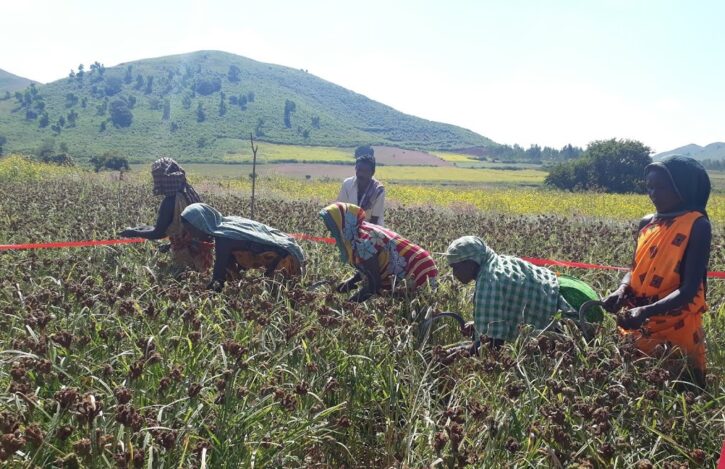
    Finger Millet Cultivation
    SMI of Finger Millet Crop Cutting Experiment

    Finger Millet(Eleusine coracana) commonly known as Ragi. It is grown for grains and fodder purposes under varied agro-climate conditions in India. It is cultivated on a variety of soils from rich loam to poor shallow upland soils.

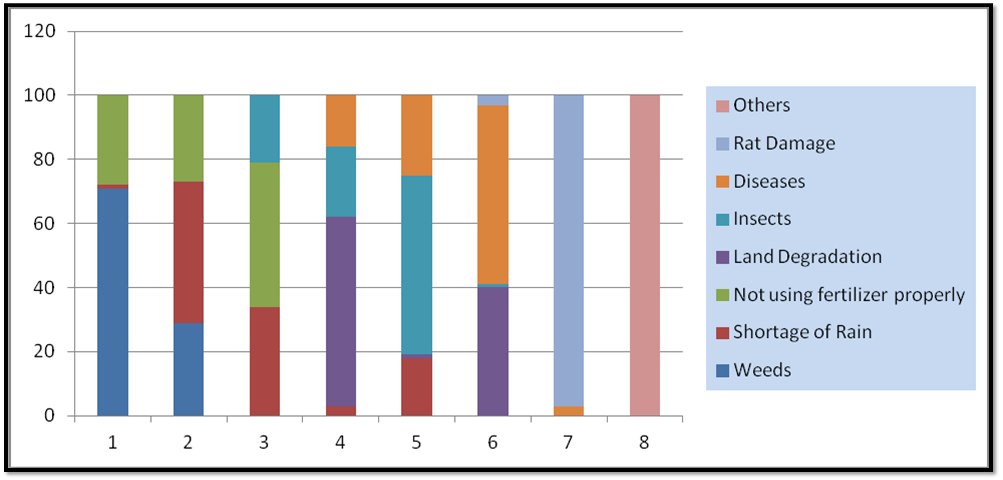
    To understand the constraints in Finger Millet Cultivation a study was conducted in Dasamantpur Block of Koraput District, Odisha. The important production-related constraints of finger millet in terms of spread across the sample villages and the number of affected farmers identified by the survey : 

    Important Production related Constraints:

    • Weeds
    • Shortage of rainfall
    • Land degradation
    • Insects
    • Diseases
    • Not using fertilizer properly
    • Rat damage
    • If any other

    Further to understand with reference to finger millets, the ranking of the constraints were done.

    Finger Millet Cultivation
    Figure: Ranking of the constraints in the production of finger millet

    After the study, it was found that weeds are the major problem in Ragi cultivation and it was ranked in the first position in terms of a problem followed by a shortage of rainfall, No using fertilizers properly, Land Degradation due to soil erosion, Insects, Diseases and Rat Damage.

    Recommendation:

    Two weddings are recommended in finger millet. In line-sown or transplanting, weeding can be done with a tyne-harrow or push type operated wheel weeder or with a cycle weeder when the crop is 30 days old and next on the 45th day. In broadcast crop 1st weeding after 15-20 days and 2nd weeding on 35-40 days.
    Finger Millet Cultivation
    Checking the Push-type operated Wheel Weeder in Farmer’s Field

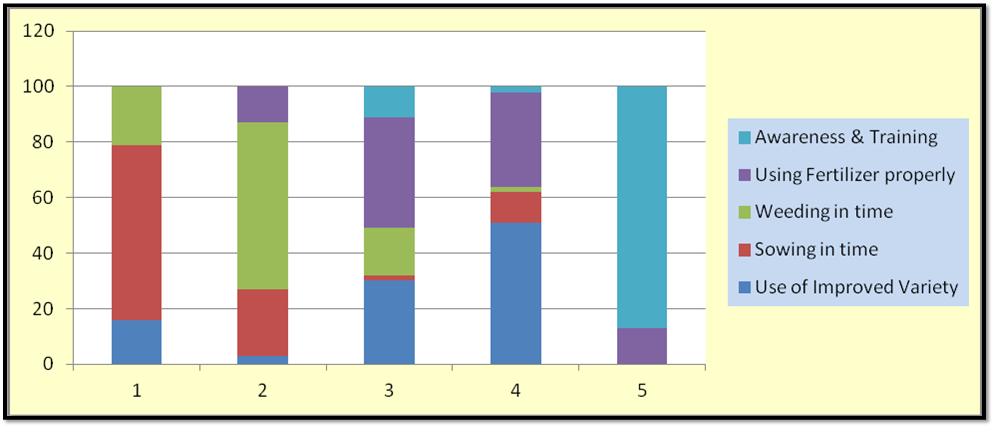
    Factor to increase the production of finger millet in the future: (100 respondents)

    Out of the 100 households who have reported on different factors to increase the ragi production, 63 percent of them indicated sowing in time is the first factor to increase production. The second factor is weeding on time (60 percent), third is the use of fertilizer properly (40 percent), fourth is the use of improved variety (51 percent) and fifth is awareness and training (87 percent).
    Finger Millet Cultivation
    Figure:  Ranking of factors to increase the production of finger millet

    From the study, it is understood that sowing in time is an important factor. Most of the farmers broadcast their seeds on the onset of the monsoon but those who opt for transplanting differ due to delay or shortage of rainfall. It is also found that old seedlings more than 25 days affect the yield. It is better to complete the sowing and transplanting in the month of July.

    Author: Tapas Chandra Roy, A Certified Farm Advisor on Millets. Promoting Millets from Farm to Plate.