Tag: Finger Millet

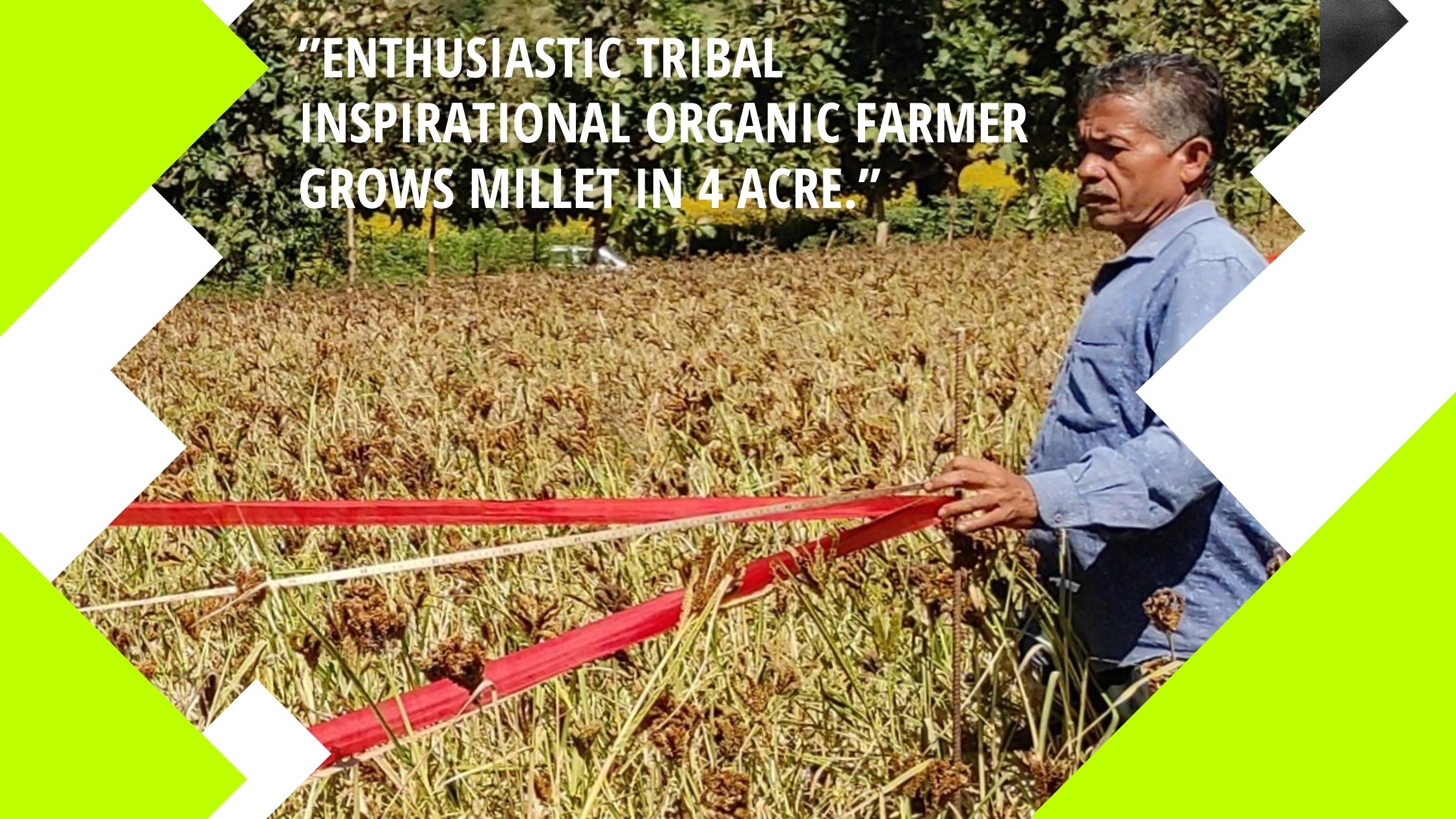
  • Enthusiastic Tribal Inspirational Organic Farmer grows Millet in 4 acre

    Enthusiastic Tribal Inspirational Organic Farmer grows Millet in 4 acre

    Inspirational Organic Farmer grows Millet:

    You must have heard the slogan “Jai Jawaan Jai Kisaan”  by our second Prime Minister of India Lal Bahadur Shastri. The slogan was to enthuse soldiers to defend India and at the same time cheering farmers to increase agriculture production. This endeavor was carried forward by a tribal farmer of Koraput. Ratnakar Jani(55) of Paraja Godri Village of Gadiaguda Gram Panchayat of Dasamantpur Block, Koraput, Odisha. He is now growing Finger Millet on 4 acres of land and has become the inspirational organic farmer after retirement from the Defence Force.

    Serving in the Defence Forces:

    I joined the Defence Forces in Assam Rifles on 20th April 1989. I was selected based on the open rally test and physical fitness held at Jeypore, Koraput. In the tenure of my 22 years of service in the Defence Force, I had the opportunity to work in Jammu & Kashmir, Jabalpur, Hariyana, Manipur, and in the North-Eastern States(Assam, Nagaland, Tripura, Meghalaya) in the rank of Hawaldar.

    As you know that Assam Rifles is the oldest paramilitary force of India. I feel proud to be part of protecting our country from enemies said, Ratnakar Jani.

    Journey in Farming:

    After retirement, I had in my mind to do something good. I always had an interest in doing farming said, Jani. He has 7 acres of land in which 3 acres he grows mango, lemon, chilies, sweet potato and done teak plantation and in 4 acres he has completed devoted to Millet farming. He has grown finger millet totally organically. He has followed the System of Millet Intensification method. He has completely transplanted the 25 days seedlings maintaining a distance of 10 inches from plant to plant and row to row.

    Technologies followed in Finger Millet Cultivation:

    • Selected good finger millet variety( ML-365 & Jana Mandia)
    • Done the seed treatment with Bijamrit.
    • Raised the seedlings on a raised bed.
    • Transplanted the 25 days seedlings.
    • Followed the System of Millet Intensification(SMI) Method.
    • Used 2 ton of Farm Yard Manure per acre.
    • Sprayed Jeevamrit 3 times.
    • Used Cycle Weeder for weeding.

    Supported by Odisha Millet Mission:

    The 4-acre land was infertile and was full of stones and pebbles. The soil of his land was tested under Soil Health Card Scheme in the year 2016. It was found that the soil was acidic and contained less Organic Content, Nitrogen, Phosphorous but high Potassium. He wanted to do organic farming.

    Ratnakar Jani was supported by Odisha Millet Mission. The facilitating Agency under Odisha Millet Mission- DHAN Foundation came forward and guided him from seed to market. With support from DHAN Foundation, he was able to grow Finger Millet on his 4-acre land. He sprayed his crops 3 times with jeevamrut and done weeding using Cycle Weeder. The cycle weeder was provided under this project.

    By using cycle weeder he was able to reduce his labor cost towards weeding.
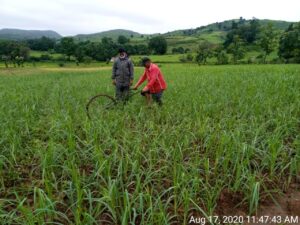
    Inspirational organic farmer grows millet
    The farmer using Cycle Weeder in his field.

    In my recent study, it was found that weeds are the major constraints in Finger Millet Cultivation. Under Odisha Millet Mission, he will receive incentives of Rs.5000/- per hectare for following the SMI method, and also he can sell his surplus produce in the mandi @ Rs.32.95 per kg of finger millet.

    On 13.11.2020, a Crop Cutting Experiment was conducted in his field and it was found that in 5m by 5m CCE, the green weight was 12.08 kg. I think it is a good yield looking into the factor of soil fertility. He is expecting 40 quintals from his 4-acre land.

    In the future, he has a plan for seed production and to supply the seeds to the farmers in his locality. His initiative is highly appreciated and the farmers of his village will be inspired by his work in Millet Farming.
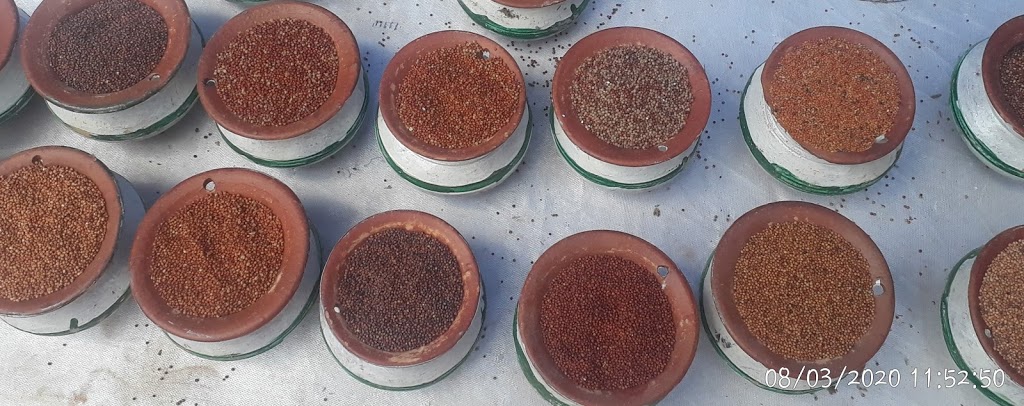
  • Varietal Diversity in Finger Millet in Koraput

    Varietal Diversity in Finger Millet in Koraput

    Varietal Diversity in Finger Millet:

    Varietal Diversity in Finger Millet
    Finger Millet Varieties in Koraput

                                         The Finger Millet is mostly grown by the tribal farmers of Koraput as it can withstand drought and can be grown in marginal and infertile soil. Finger Millet serves as an important food for nutritional security as it is rich in nutrients and easy to process as compared to other millets. The best attribute of Finger Millet is that it has excellent keeping qualities. The varietal diversity in Finger Millet is considered to be an important contributor to the resilience of the concerned farming system.

    Dasamantpur site is already facing climate change-induced weather-related issues such as late-onset of monsoon, dry spells within the crop period, heavy rains during harvest, and early withdrawal of monsoon. Varietal diversity in the household is expected to play an important role in adapting to these conditions.

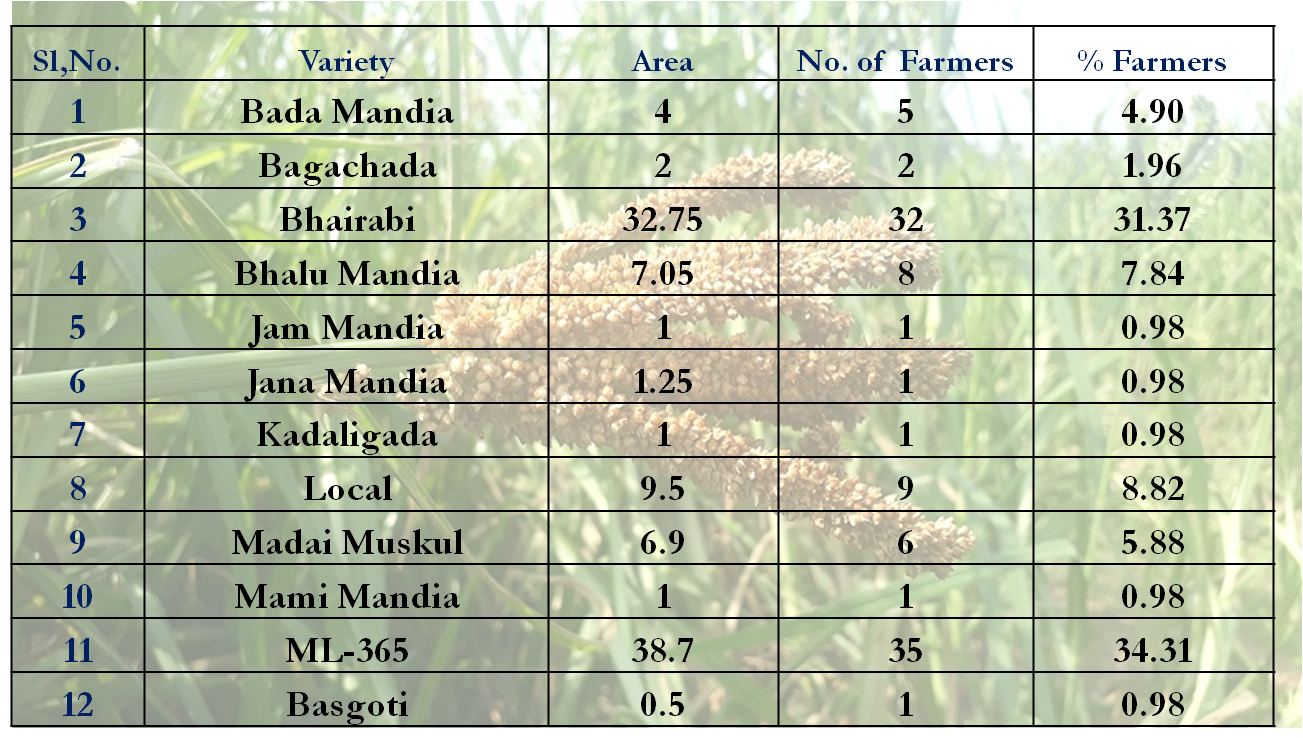
    It was observed through the survey, that there is a lack of varietal diversity in Finger Millet at the household farm level in Dasamantpur. Only three households were found with two varieties of Finger Millet each, though there were a total of twelve known varieties among the sample households.

    The existing Finger Millet Varieties was broadly classified under two heads: 1. Released Varieties 2. Local Varieties

    The two released varieties existing among the sample households were Bhairabi and ML-365.

    Similarly, nine local varieties were Bada Mandia, Bagachada, Bhalu Mandia, Jana Mandia, Jam Mandia, Kadaligada, Mami Mandia, Modai Maskuli and Basgoti.

    Varietal Diversity of Finger Millet
              (Figure: The proportion of Finger Millet Variety, area and no. of farmers)

                                              Around 65.38 percent of Finger Millet farmers were using released varieties. This is due to the Odisha Millet Mission and National Food Security Mission (NFSM – Nutri Cereals) intervention in this study area. The remaining farmers were cultivating local varieties. The category of varieties grown by 8.82 percent of the farmers could not be identified. Among the released varieties, ML-365 was found to be the dominant one (34.31 percent farmers). Moreover, the adoption of released varieties was found to be widespread across the landholding categories. 

    Varietal Diversity in Finger Millet
    Number of farmers, the area covered, and varieties wise of finger millets:(100 respondents)

    Sources of the seed of finger millet:

    It is observed that most of the farmers in the sample used department-supplied seeds (65.38 percent). The second source of seed was found to be farmer saved seeds (34.62 percent).
    The productivity of finger millet:
    The analysis of the productivity of Finger Millet is important to understand the factors behind the difference in productivity among the sample households. An analysis based on the area of landholding, the variety was undertaken, the number of farmers, the average yield, and the method of planting to understand the productivity situation in Dasamantpur.
    Figure: Proportion of average yield and the method of agronomic practices)
                             In this, it is seen that most of the sample households were using the Bhairabi variety and with this variety, they had followed(28% sample households) the system of Millet Intensification(SMI) agronomic practices. Bhairabi variety performance was accepted by the farmers as it was giving a promising average yield of 4.98 quintal/acre and due to its special character i.e. Non-lodging and good taste. Other local varieties like Madai Muskul and Basgoti average yield were found to be 6 quintals/acre but it is not considered as the sample size is only 6 and 1 respectively.
     
    Participatory Varietal Trial of Finger Millet:
    Varietal of Finger Millet
    Participatory Varietal Trial of Finger Millet

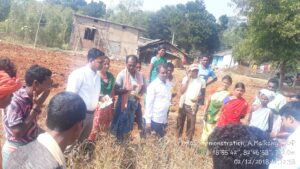
    Participatory Varietal Trial(PVT) was conducted under Odisha Millet Mission by DHAN Foundation. In every plot of the demonstration, the same agronomic practices were followed. Farmers participated in this trial and were given their feedbacks and views depending upon the yield, color, taste, duration, plant height, size of the grains, and market demand.

    This PVT will definitely help in preserving the seed variety, good in every aspect. As seen in the study, the local finger millet varieties are vanishing day by day. We need to preserve the local varieties of Finger Millet by building Community Seed Centre at the village level.

    Author: Tapas Chandra Roy, A Certified Farm Advisor on Millets, ‘Promoting Millets from Farm to Plate’. In a mission to take the forgotten grains- Millets to Millions. To remain updated on my blogs on millets you can join my Telegram Channel – Millet Advisor.