Tag: Odisha Millet Mission

  • First Ever Solar Millet Processing Unit under Odisha Millet Mission

    First Ever Solar Millet Processing Unit under Odisha Millet Mission

    Solar Millet Processing Unit:

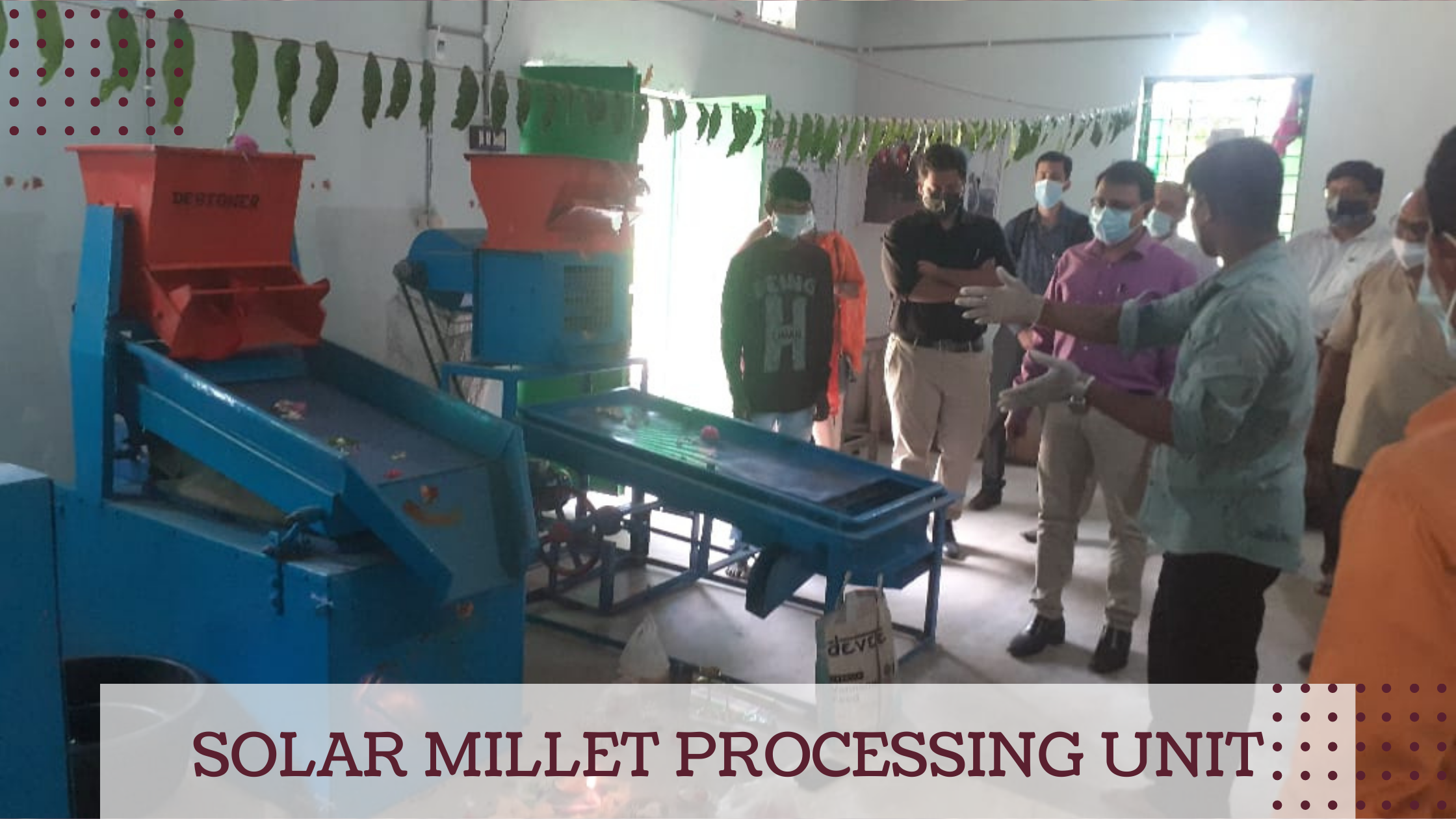
    The first-ever solar millet processing unit was inaugurated on 10th, August 2021 in the village Gobindapur of Manikapur GP, Mohana Block of Gajapati district in Odisha. This unit is established with support from Odisha Millet Mission, Watershed Support Services and Activities Network(WASSAN), and SELCO Foundation, to be managed by Taptapani Farmer Producer Company(FPC) and facilitated by SACAL.

    This unit was inaugurated in presence of the Sub-Collector, Block Development Officer, Tahasildar, and other government officials.

    This center is the first new project and it will reduce drudgery in women and the most important aspect, it will reduce the carbon footprint. As we know processing millets is a difficult task and processing in a traditional way involves drudgery and consumes a lot of time. It takes about one hour to process one kilo of millet grains.

    Odisha Millet Mission’s main objective is to promote household millet consumption, establishing decentralized millet processing units, promoting the Farmer Producer Organisation for marketing, and the inclusion of millets in the ICDS Programme and Mid-day meals. This solar millet processing unit will cater to all the purposes of the millet mission.

    With the help of Mission Shakti, Self Help Groups(SHG) can become self-reliant and independent by opening Millet Shakti Shop. They can get the processed millet grains like Foxtail Millet, Little Millet, Sorghum, and Finger Millet(Ragi), and millets grain flours.

    In the inaugural session, the Sub-Collector announced to make this unit a profitable enterprise by providing a better road and godowns. The Block Development Officer encouraged the branding of millet products and others praised Odisha Millet Mission for working for health and nutritional security.

    Machines in the Solar Millet Processing Unit:

    1. A set of Millet Grader: The grader will help in separating the inert materials like big stones, sticks, sand, grass, etc from the millet grains.
    2. Destonner with Aspirator: It will help in separating the same size stones, mud balls from the grains.
    3. Multigrain Huller: For removing the husk and separate the millets from the husk. It has a capacity of 100-150kg/hour.
    4. Polisher: It will help in removing the thin glome layer or the upper thin layer from millet grains and produce polished grains and it has the capacity of 50-100 kg/hour.
    5. Pulverizer: It will be used for grinding the millet grains into powder form. The capacity of the pulverizer is 10 to 15 kg/hour.

    Related Post: Millet Processing Machines

    The solar millet processing unit can run for 4 hours with full capacity with a full day charge. One machine can be operated at once with battery backup.

    Grading, destoning, polishing, and pulverizing of Ragi, Foxtail Millet, Little millet, Sorghum, etc can be done in this unit. FPO can get processing charges for processing and can also use for self-business purposes. FPO is currently planning for processing that will support local consumption and marketing of millet in local and nearby urban markets.

    Nowadays, there is a demand for healthy food, and millets can provide better nutrition as compared to other grains. This solar millet processing unit will not only help for the processing of millets but will also encourage farmers to grow millets in their area.

    In the coming days, more millet processing units are to be installed in Odisha under Odisha Millet Mission and this initiative will definitely help millet growing farmers and also empower women in Odisha.


    Author: Tapas Chandra Roy, A Certified Farm Advisor on Millets, ‘Promoting Millets from Farm to Plate’. In a mission to take the forgotten grains- Millets to Millions. To remain updated on my blogs on millets you can join my Telegram Channel – Millet Advisor.


  • How Millet Food Festival ensuring Nutritional Security of Tribals in Odisha

    How Millet Food Festival ensuring Nutritional Security of Tribals in Odisha

    Millet Food Festival Ensuring Nutritional Security:

    Nutritional Security is achieved ”when all people at all times consume food of sufficient quantity and quality in terms of variety, diversity, nutrient content and safety to meet their dietary needs and food preferences for an active and healthy life, coupled with a sanitary environment, adequate health, education and care” (FAO, 2012). No doubt, now India is self-sufficient in food grain production but we are facing the challenges of nutritional security.

    So, India is taking a lot of initiative for achieving Nutritional Security by 2030. In Odisha, it is clearly mentioned in Samrudhi (Agriculture Policy-2020) in which the Vision aimed at continuously raising farmers’ income and welfare while ensuring nutritional security. Nutrition has become the mainstream of all agriculture activities. Odisha Millet Mission Model is one of the programs ensuring nutritional security.

    Food Festival under Odisha Millet Mission:

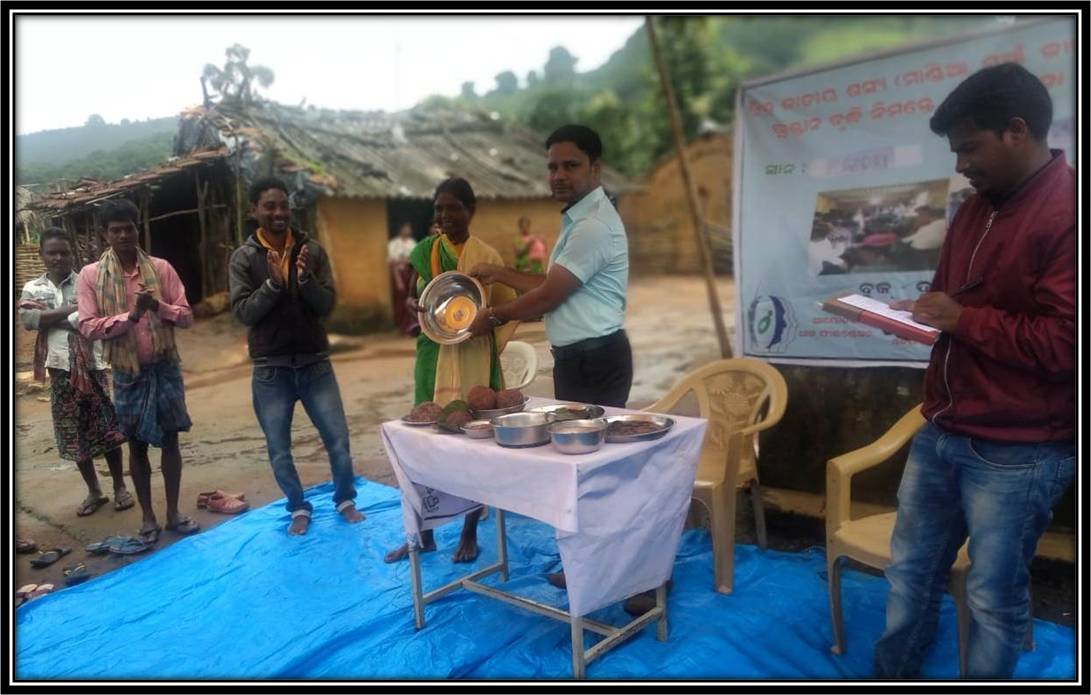
    Special Programme for Promotion of Millets in Tribals Areas of Odisha (Odisha Millet Mission) was launched by the Government of Odisha in 2017 to revive millets in farms and on plates. Under this mission, Millet Food Festival is a program of 2 days. On the first day, the tribal women are trained in making millet recipes, and on the 2nd day, they come with their own millet recipes. This program helps in bringing the forgotten millet recipes and also it gives learning for other women.

    Related Post: Traditional Millet Recipes of Koraput and their Perceptions

    Millet Food Festival in Koraput:

    Millets are part of everyone’s diet in the tribal areas of Koraput. We cannot live without millets as it gives us more energy to do all the activities throughout the day. Every morning starts with Mandia Jau (Ragi Porridge) said by Jema Majhi of PaikaPuki village of Gadiaguda Gram Panchayat in Dasamantpur Block.

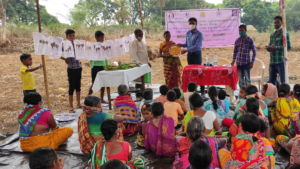
    Millet Food Festivals were organized by DHAN Foundation in Dasamantpur Block. The tribal women were trained on the importance of millets and their nutritional value. They were taught how to make murukkus, ragi pakodas, ragi ladoos, and many more. The children of the village liked the millet recipes which were made on the first day.

    In 2019, when I was doing my Project Work on “Utilization of Finger Millet in Nutritional Security” could find out that including millets in the mid-day meals and in ICDS will increase the consumption of millets among the children. Many farmers’ concern was that their children hesitate to take millet food at home and they recommended including it in mid-day meals. Many children said that they don’t like ”Mandia Jau” every day but like to have ragi ladoos, ragi biscuits, cake, idli, dosa, millet upma, etc.

    On this day, the tribal women came with many recipes made out of Finger Millet, Little Millet, and Foxtail Millet. Finger Millet is the main crop of most farmers in Koraput as it is easy in cultivating, processing and make food items. But it is not the same case with Little Millet and Foxtail Millet as these millets require processing and it is very difficult to do.

    I was very happy to see the millet recipes. Really they have the talent in making awesome recipes. Now, let us see some recipes made by them on the Millet Food Festival Day.

    Millet Food Festival in Odisha
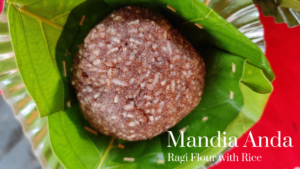
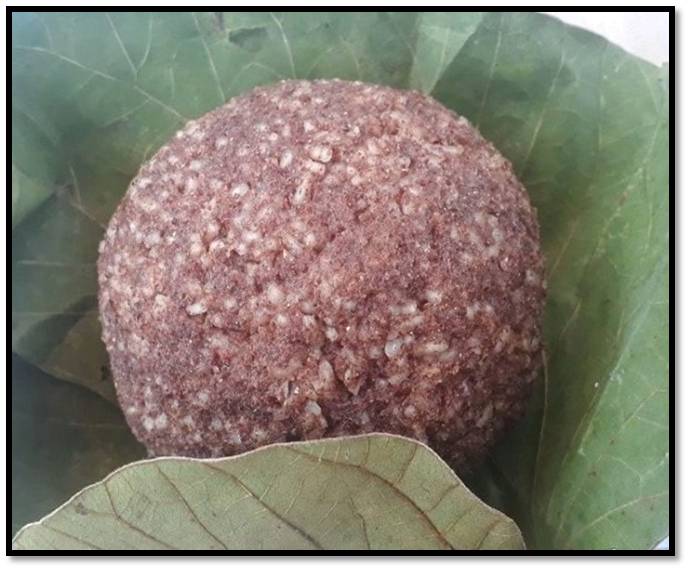
    Mandia Anda (Ragi Balls with Rice)
    Millet Food Festival in Odisha
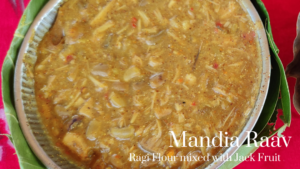
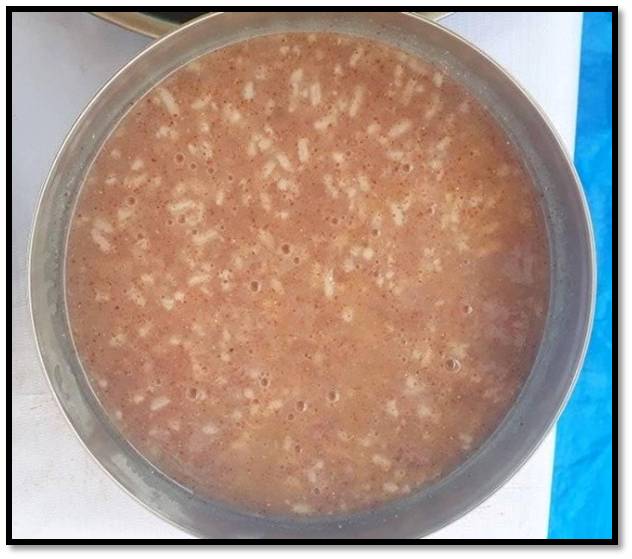
    Mandia Ponosh Raav( Ragi Flour mixed with Jack Fruit)

    The combination of Mandia Anda with Mandia Ponosh Raav is enjoyed by the children. As you know Jack fruit is known as the poor man’s fruit rich in vitamins A, B, C, and Calcium, potassium, proteins, iron, and carbohydrates. When millets mixed with fruits and vegetables it enhances the nutrition profile of the food.

    Millet Food Festival Odisha
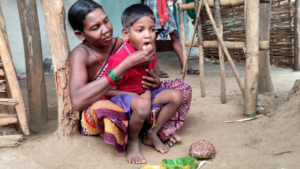
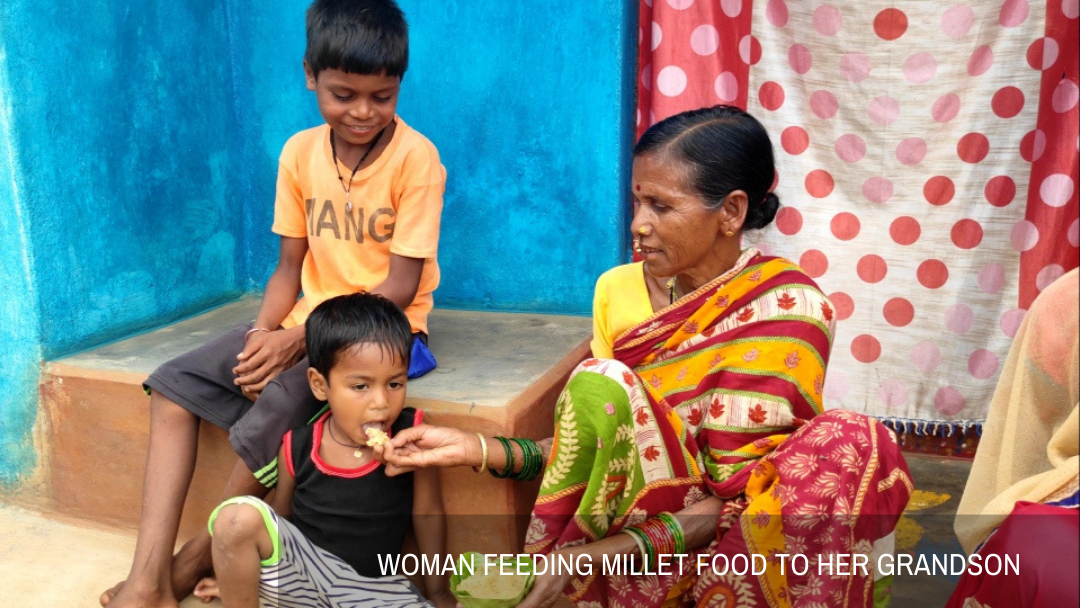
    Women feeding Millet food to her grandson

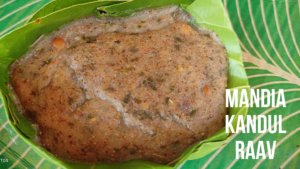
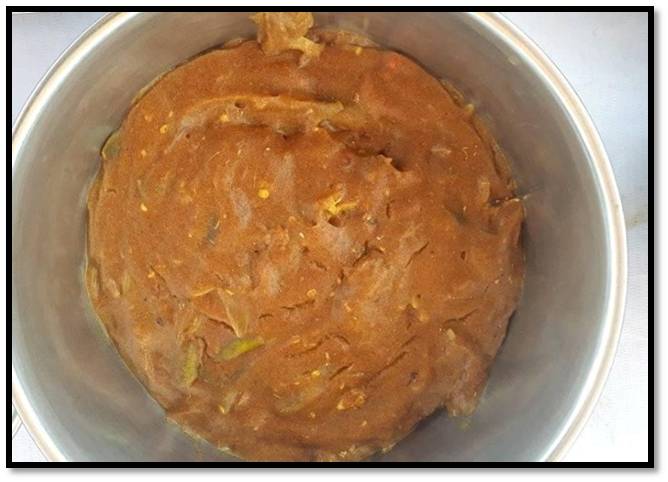
    Scientists have found out that a combination of Millets with Pulses increases the quality of protein. The proportion of essential amino acids in millets and pulses complement each other. One such recipe was with millets and arhar dal. In this recipe, water is taken in a kadai and heated up and then the greens and soaked arhar dal are put into it. Turmeric, chili, and salt are added. When it is cooked properly, ragi flour and tamarind are put into it. It is cooked for some time and the recipe is ready. The uniqueness I marked in most of the recipes is that they don’t use oil and spicy masala.

    Millet Food Festival in Odisha
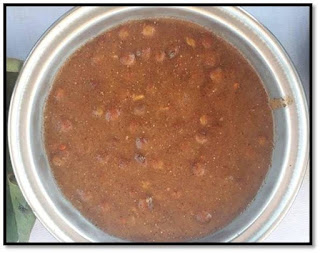
    Mandia Kandul Raav (Ragi flour is mixed with Arhar Dal)

    In the beginning, they were a little shy to come out with the millet recipes but later on when they were encouraged and motivated. They were told that the best millet recipes will be awarded a prize. Few of them were excited to participate in this program. Looking into the uniqueness of the recipes, the first, second, and third were chosen and awarded. I could mark their happiness when distributing the prizes to the winners.

    Millet Food Festival in Odisha
    Distribution of Prize to the Winner

    Such Food Festival will encourage the women to make the forgotten millet recipes and it will be learning for other women when they exchange their ideas on how to make the millet recipes. In this way, we can revive the millets on plates and thus ensure Nutritional Security in the tribal areas of Odisha.


    Author: Tapas Chandra Roy, Certified Farm Advisor-Millets

  • First Millets Processing Unit under Odisha Millet Mission in 2021

    First Millets Processing Unit under Odisha Millet Mission in 2021

    First Millets Processing Unit under Odisha Millet Mission – Inaugurated in Keonjhar District, Odisha:

    The Special Programme for Promotion of Millets in Tribal Areas of Odisha (Odisha Millet Mission) was launched by the Department of Agriculture and Farmers Empowerment, Government of Odisha in 2017 to revive millets in farms and on plates. It was the first agriculture program with a priority on increasing millet consumption in Odisha.

    Odisha Millet Mission was initiated in Keojhar District from Kharif 2019. This five-year project is funded by the District Mineral Foundation of Keonjhar covering 7 blocks in this district (Banspal, Champua, Joda, Jhumpura, Harichandanpur, Hatadihi, and Sadar)

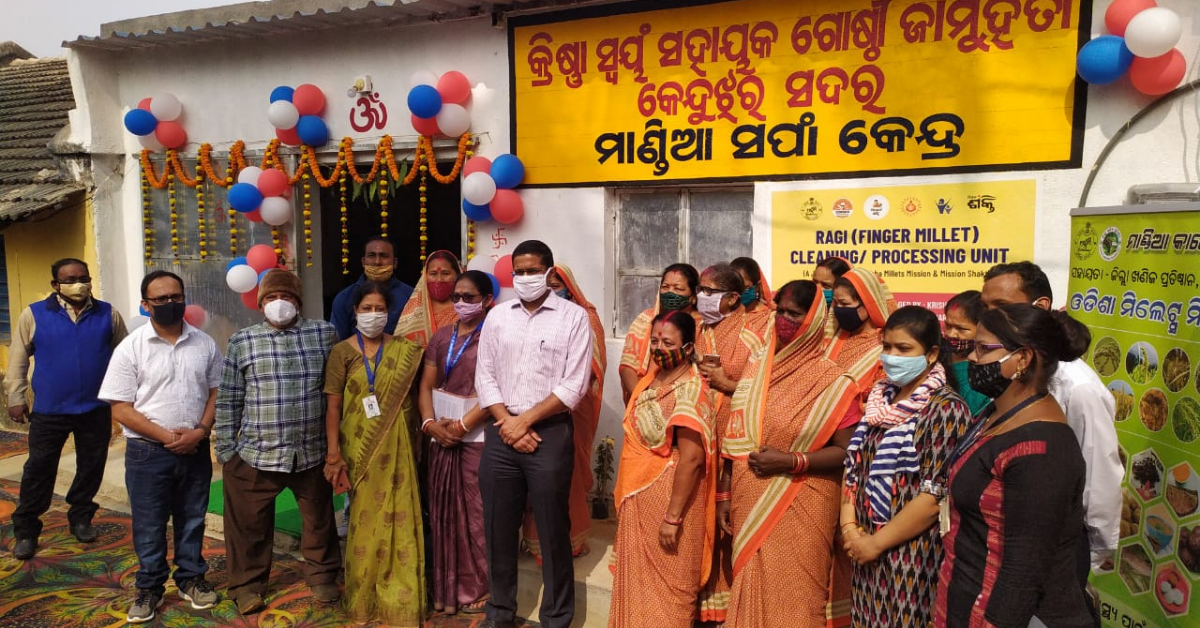
    One of the main objectives was developing millet enterprises and establishing market linkages to rural/urban markets with a focus on women entrepreneurs through FPOs and SHGs. The first Millets Processing Unit Inauguration in Keojhar District of Odisha has shown a way forward. It was inaugurated by the Collector and District Magistrate of Keonjhar.

    Millets Processing Unit:

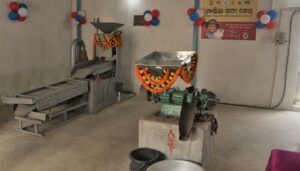
    The first Millets Processing Unit is now fully functional and ready to supply clean Ragi for different flagship programs of the District Administration. It is a joint venture of Odisha Millet Mission and Mission Shakti.

    Millets Processing Unit
    First Millets Processing Unit Inaugurated under Odisha Millet Mission
    • This Unit is being managed by Krishna Self Help Group of Sadar Block and supported by Mission Shakti.
    • The Unit has the capacity of cleaning about 2 quintals of Millets per hour and can clean over 500 quintals in a month.
    • This Unit has been established to ensure the supply of clean Ragi for the flagship ICDS Ragi Laddu Programme.
    •  The Unit has been provided under the Odisha Millet Mission, supported by the District Mineral Foundation.
    • Technical support is being provided by the Department of Agriculture and Farmers Empowerment and WASSAN.

    Machines Installed in the Millets Processing Unit:

    Cleaner-cum-Aspirator with Grader and Integrated Destoner.Make of the model by INDOSAW (Osaw Industrial Products Ltd, Ambala)

    Millets Processing Unit

    • Capacity up to 250kg/hr
    • The heavy structure makes the machine sturdy and more stable. Deck mounted on foundation frame for the stability of the machine.
    • Feeding system provided with a feed hopper, a regulator for the inflow of grains across the entire width of the deck.
    • Fitted with a five-stage cleaning facility.
    • 2 HP motor of reputed make to run on 415V, 50 HZ, 3 Phase AC Supply.
    • A vibratory system with aspiration and size grading system to separate the finer impurities.
    • Vibratory deck with well balanced built-in fan for air volume adjustment for accurate final separation of grains by the counter current.
    • Vacuum type dust collector with variable sludge gate and dust trapper.
    • Separate collection bins for different outputs.
    • One set of 2 removable screens.

    Related Post: Millets Processing Machines

    Millets Processing Machine
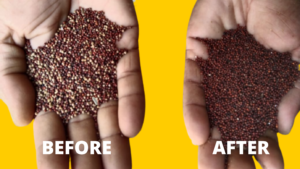
    Before and After Processing of Ragi

    In this Unit, a dehuller is also installed to remove the husk. First of all, the ragi grains are put into the dehuller and next to the Cleaner-cum-Aspirator with Grader and Integrated Destoner. The grader is used for separating inert materials like big stones, sticks, sand, grass, etc. from the grains. These are separated by sieves of different sizes. The top sieve helps in separating the big sticks, stones, and grasses, the middle one separates the good quality grains, and the bottom separates the fine and coarse sand particles.

    The aspirator has a small fan that sends the dust and light particles to the rear end.

    The Destoner helps in removing the small stones and mud balls which are identical to the size of the grains. Destoner works based upon gravitational principles.

    Contribution of Funds:

    The total cost of the Millets Processing Unit is about 5.2 lakhs. 2.2 lakhs is the cost of the Cleaner-cum-Aspirator with Grader and Integrated Destoner and about 3 lakhs is the contribution of Self Help Group towards the construction of Hall, Godown, Electricity and Huller Machine(for removing the outer husk from the Ragi grains).

    Conclusion:

    No doubt, Millets processing is a tedious job and involves lots of drudgeries. But processing machines make the work easier with less effort. Previously, the women farmers were using hand pounding tools to remove the husk and then the bamboo hand winnower to separate the dust, stones, and other impurities. For Ragi, they use to wash with water. The entire process is time-consuming.

    I hope this Millets Processing Unit will help the women in getting a clean and nice end product and ultimately the end consumer will be happy.


    Author: Tapas Chandra Roy, A Certified Farm Advisor on Millets.


  • Enthusiastic Tribal Inspirational Organic Farmer grows Millet in 4 acre

    Enthusiastic Tribal Inspirational Organic Farmer grows Millet in 4 acre

    Inspirational Organic Farmer grows Millet:

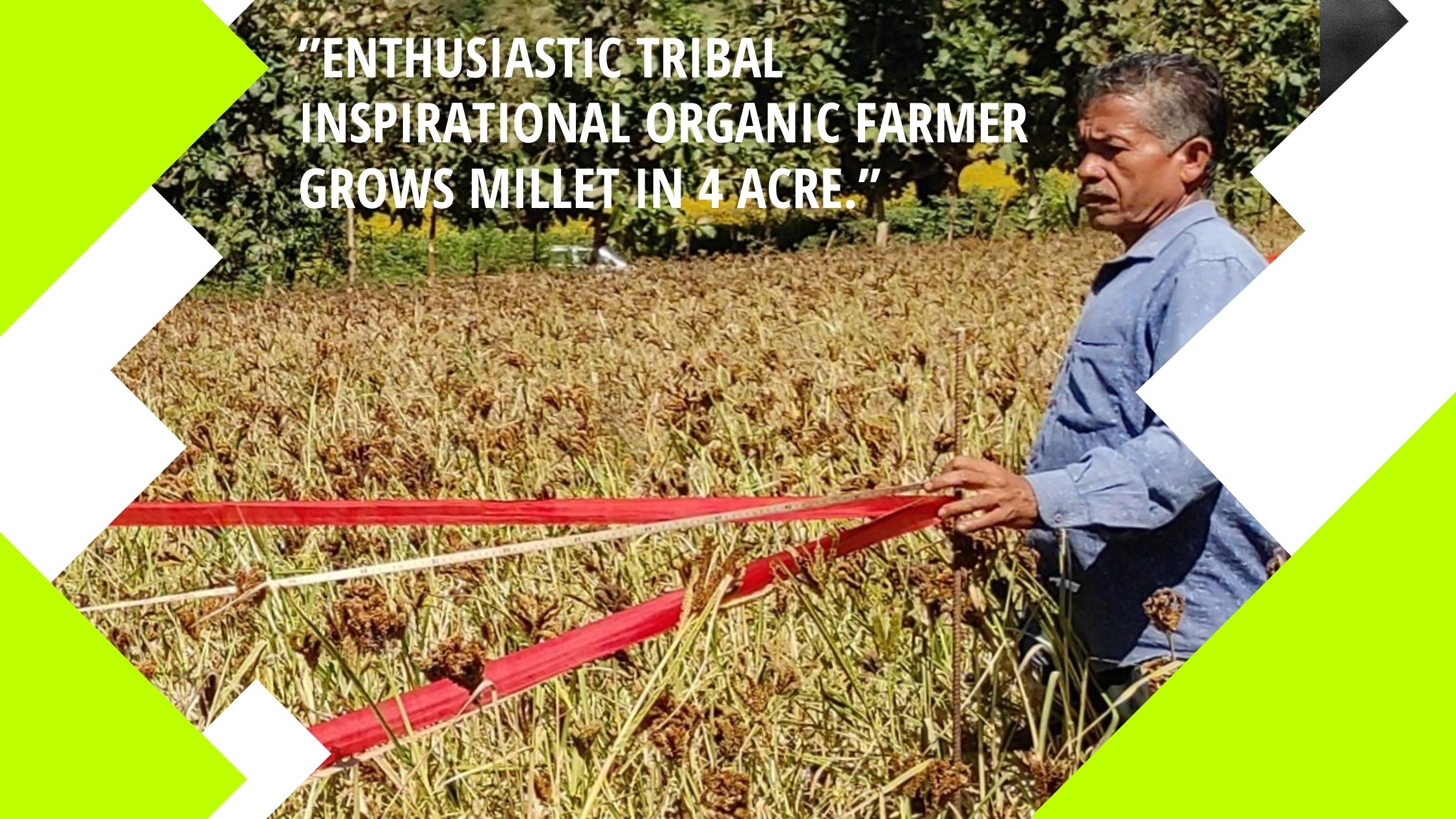
    You must have heard the slogan “Jai Jawaan Jai Kisaan”  by our second Prime Minister of India Lal Bahadur Shastri. The slogan was to enthuse soldiers to defend India and at the same time cheering farmers to increase agriculture production. This endeavor was carried forward by a tribal farmer of Koraput. Ratnakar Jani(55) of Paraja Godri Village of Gadiaguda Gram Panchayat of Dasamantpur Block, Koraput, Odisha. He is now growing Finger Millet on 4 acres of land and has become the inspirational organic farmer after retirement from the Defence Force.

    Serving in the Defence Forces:

    I joined the Defence Forces in Assam Rifles on 20th April 1989. I was selected based on the open rally test and physical fitness held at Jeypore, Koraput. In the tenure of my 22 years of service in the Defence Force, I had the opportunity to work in Jammu & Kashmir, Jabalpur, Hariyana, Manipur, and in the North-Eastern States(Assam, Nagaland, Tripura, Meghalaya) in the rank of Hawaldar.

    As you know that Assam Rifles is the oldest paramilitary force of India. I feel proud to be part of protecting our country from enemies said, Ratnakar Jani.

    Journey in Farming:

    After retirement, I had in my mind to do something good. I always had an interest in doing farming said, Jani. He has 7 acres of land in which 3 acres he grows mango, lemon, chilies, sweet potato and done teak plantation and in 4 acres he has completed devoted to Millet farming. He has grown finger millet totally organically. He has followed the System of Millet Intensification method. He has completely transplanted the 25 days seedlings maintaining a distance of 10 inches from plant to plant and row to row.

    Technologies followed in Finger Millet Cultivation:

    • Selected good finger millet variety( ML-365 & Jana Mandia)
    • Done the seed treatment with Bijamrit.
    • Raised the seedlings on a raised bed.
    • Transplanted the 25 days seedlings.
    • Followed the System of Millet Intensification(SMI) Method.
    • Used 2 ton of Farm Yard Manure per acre.
    • Sprayed Jeevamrit 3 times.
    • Used Cycle Weeder for weeding.

    Supported by Odisha Millet Mission:

    The 4-acre land was infertile and was full of stones and pebbles. The soil of his land was tested under Soil Health Card Scheme in the year 2016. It was found that the soil was acidic and contained less Organic Content, Nitrogen, Phosphorous but high Potassium. He wanted to do organic farming.

    Ratnakar Jani was supported by Odisha Millet Mission. The facilitating Agency under Odisha Millet Mission- DHAN Foundation came forward and guided him from seed to market. With support from DHAN Foundation, he was able to grow Finger Millet on his 4-acre land. He sprayed his crops 3 times with jeevamrut and done weeding using Cycle Weeder. The cycle weeder was provided under this project.

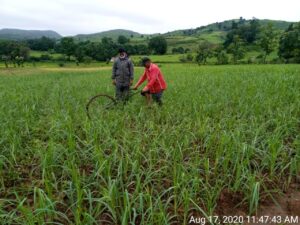
    By using cycle weeder he was able to reduce his labor cost towards weeding.

    Inspirational organic farmer grows millet
    The farmer using Cycle Weeder in his field.

    In my recent study, it was found that weeds are the major constraints in Finger Millet Cultivation. Under Odisha Millet Mission, he will receive incentives of Rs.5000/- per hectare for following the SMI method, and also he can sell his surplus produce in the mandi @ Rs.32.95 per kg of finger millet.

    On 13.11.2020, a Crop Cutting Experiment was conducted in his field and it was found that in 5m by 5m CCE, the green weight was 12.08 kg. I think it is a good yield looking into the factor of soil fertility. He is expecting 40 quintals from his 4-acre land.

    In the future, he has a plan for seed production and to supply the seeds to the farmers in his locality. His initiative is highly appreciated and the farmers of his village will be inspired by his work in Millet Farming.

  • Odisha Millet Mission – Best Model showing the way forward in 2020

    Odisha Millet Mission – Best Model showing the way forward in 2020

    Odisha Millet Mission:

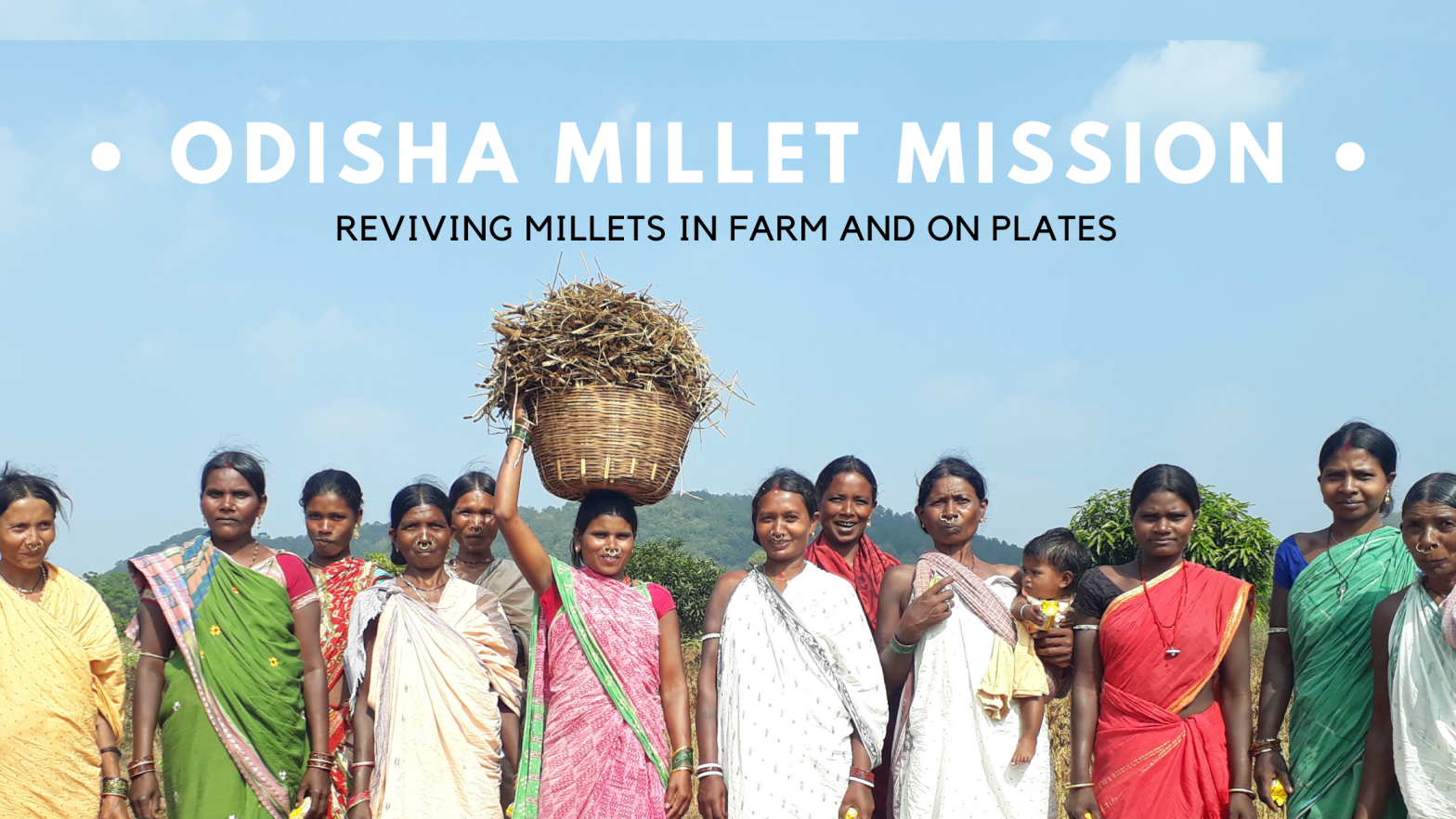
    Odisha Millet Mission working with a tag line “Reviving millets in farm and on plates”. This mission focussed on the tribals areas of Odisha where Millets were the priority crops. As you know that Millets are the only crops that can grow with minimal requirement of water and can withstand drought. No doubt, the crops were grown by the farmers but something was missing and giving a signal that to be addressed. These signals were Productivity, Consumption, Nutrition, Value Addition, Creating demand in the market, Right price, and Processing of millets.

    So, Odisha Millet Mission came forward wholeheartedly and ensuring the issues are rightly addressed.

    Major Objectives:

    • Promoting household-level consumption
    • Setting up decentralized Processing Unit
    • Improving the Productivity of Millet Crops
    • Promoting FPOs for marketing
    • Inclusion of millets in ICDS, Mid-day Meals and Public Distribution System

    The approach of the mission is totally different and it involved 3 agencies to be part of it so that it is executed properly at every level. A unique structure was developed and they were the 3 pillars.

    Unique Structure of Odisha Millet Mission:

    Role of Government:

    • Three-level selection processes of Facilitating Agency through presentation and Field Verification.
    • Policymaking, meticulous development of guidelines, implementing, and monitoring.
    • Involvement of all stakeholders in the participatory approach.

    Role of Civil Society – led by WASSAN:

    • Bridge the field level gap.
    • Active followup on daily basis.
    • Capacity building with the involvement of agencies.
    • Annual and Monthly participatory implementation plan.
    • Support for Departmental Agencies and co-ordination.

    Role of Academia – led by NCDs:

    • State/District Level Consultations
    • Policy Feedback
    • National/International partnerships – TIGR2ESS, CFTRI, IIMR

    The scale of Odisha Millet Mission:

    • Beneficiaries: 50 lakhs
    • Project Duration: 5 years
    • Reach: 76 Blocks in 14 Districts
    • Total Budget: Rs.224 Crores
    • Program Budget: Rs.224 Crores
    • Procurement/PDS/ICDS : 313 Crores

    Outreach:

    • 30 Blocks in 2017
    • 55 Blocks in 2018
    • 72 Blocks in 2019
    • 76 Blocks in 2020

    Policy Milestones of Odisha Millet Mission:

    1. Odisha became the first state to develop standard specifications for the millet machinery through a recognized panel of experts from different scientific institutions.
    2. The first state in the country to complete benchmarking of prices of Little Millet and Foxtail Millet.
    3. First State to declare direct incentives to farmers for 3 years through DBT.
    4. Odisha received an award for the best government initiative on millet promotion by MoFPI-IIFPT.
    5. Third State to distribute millets in the PDS in the country
    6. First State to include Ragi Lodoos in ICDS through the support of the District Mineral Fund.

    Strategies to Increase the Consumption in Urban and Rural Areas:

    Odisha Millet Mission
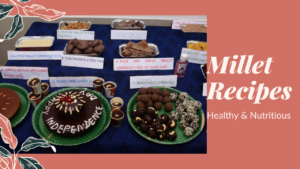
    Millet Recipes in an Exhibition
    • Inclusion in PDS and ICDS
    • Food Festivals at GP, Block, District, and State Level.
    • Participation in popular Exhibitions and Melas within and outside the State.
    • Development of recipes suitable for local culture and eating practices.
    • Training of home cooks and chefs on millet-based recipes.
    • Women-led consumption campaign and awareness.
    • Working with bakeries and popular sweet shops.
    • Engaging student interns and young people for popularising millets.

    The outreach of Consumption related activities:

    Odisha Millet Mission
    Distribution of Ragi in PDS
    1. Distribution of Ragi under PDS to 50 lakhs household in 14 districts.
    2. Ragi Laddu introduced as a morning snack for pre-school children under ICDS in Keonjhar and Sundargarh.
    3. More than 45 events organized and served millet-based food items to 4.4 lakh people in the last two years.
    4. Ragi bakeries in Bhubaneswar are selling Ragi Cookies at OMFED tea stalls and stores.
    5. Other products like Ragi Bread, Sandwiches, Malt, Laddoos, Murukku, etc. are available in the City.

    Plan for Millet Stores in Urban Areas under Odisha Millet Mission:

    Odisha Millet Mission
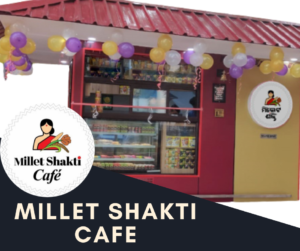
    Millet Shakti Cafe
    1. A Millets Cafe to run by SHGs supported by Mission Shakti.
    2. Millet Shakti as the proposed brand name to be common across products.
    3. Cafes across locations to be called ”Millet Shakti Cafe”.
    4. Millets based hot cooked items and bakery products to be the highlight.
    5. Will also have packaged millet grains and ready to cook products supplied by FPOs supported by Odisha Millet Mission.
    6. 15 quick-serve restaurants will be established within the next year with Women Self Help Groups in Urban Areas.
    7. Kiosks at Block towns and Tribal Haat locations serving breakfasts and snacks items.
    8. Mobile Sales Units at District and town levels selling dry and value-added products made by SHGs and FPOs.
    9. More than 100 WSHG entrepreneurs will be trained and supported.
    Odisha Millet Mission
    SHG trained to make Millet Mix

    Recently Odisha released the State Agriculture Policy-2020 (Samrudhi) in which the Vision aimed at continuously raising farmers’ income and welfare while ensuring nutritional security. Nutrition has become mainstream in different agricultural activities and Odisha Millet Mission will be ensuring that said by Dr.Saurabh Garg, Principal Secretary, Agriculture, Government of Odisha.


  • Millet farmer reaps good harvest and earns profit in Kharif-2019

    Millet farmer reaps good harvest and earns profit in Kharif-2019

    Millet Farmer of Koraput, Odisha:

    Bareng Jani (47) is from the Bhejapadar village of Mujanga Grampanchayat, Dasamantpur Block of Koraput District. He is a tribal farmer who owns 1 acre and takes 2 acres in a lease to cultivate millet. In 1 acre he cultivates Finger Millet and in 2 acres, the Little Millet.

    Millet cultivation was not new to us and it was been cultivated by our forefathers. But the yield per acre was very low as we were just sowing the seeds as the monsoon approached us. Once we sowed the seeds we never went to see the crop again and only went at the time of harvest. We never gave attention to timely transplanting, weeding, and nutrition management said by Bareng Jani.

    Millet Farmer of Koraput
    SMI in the field of Bareng Jani

    Adopting a new technology might be heard easy for a progressive farmer but it was not the case for a tribal farmer like Bareng Jani who had studied up to the primary level. Under Odisha Millet Mission, he was been approached by DHAN Foundation and their team in their village and was provided training on System of Millet Intensification(SMI) in Finger Millet.

    Millet Farmers’ Initiative:

    After getting training on SMI, I changed my mind from traditional farming to modern technology farming. As per instruction, I made a raised nursery bed and sown the seeds after proper treatment with beejamrit. Only half kg of seeds was sufficient for planting one acre of the land.

    18 days seedlings were planted in a row by maintaining a spacing of 25cm X 25cm from plant to plant and row to row. FYM was applied at the time of transplanting. First, weeding was done with a cycle weeder after 20 days of transplanting, and second and third was done at an interval of 10 days.

    After each weeding vermicompost and pot manure(Handi Katha in Odia) was applied. In the beginning, I was not in favor of log rolling but after getting convinced about its importance done the activity followed by liquid manure application by spraying with a sprayer. It gave excellent results.

    Millet Farmers’ Happiness depends on the yield:

    I never have seen or expected such yield in my life. I am very happy to get 8 quintals per acre. Earlier I used to get only 2 to 2.5 quintal per acre which was sufficient for home consumption round the year. But now I am able to sell my produce at the rate of Rs.3150 per quintal under the Mandi system as well as keep for home consumption. This year I sold my produce and was able to get a profit of about Rs.10,000. This earning is a bonus for me as I was not able to get such a yield earlier.

    Procurement of Ragi in Odisha
    Procurement of Ragi

    This year in Odisha 93,000 quintals of Ragi were procured from farmers under Odisha Millet Mission and about 35,000 quintals of ragi were procured from Koraput alone. There is a huge potential of ragi in Koraput. The MSP increased to Rs.3295/- motivated the millet farmers to grow more ragi in Kharif-2020.

    Besides Finger Millet, I got a yield of 6 quintals of Little Millet from 2 acres and I was able to sell Little Millet in the local market at the rate of Rs.35 per kg and could earn a profit of Rs.15,000. This year I have broadcasted the seeds and I am thinking that in this coming season I will go for line sowing in Little Millet as it will be easy for weeding operations and nutrient management.

    Bareng Jani has totally grown these millets with organic fertilizers and he has used all the locally available resources. Even he has used his own seeds which he had conserved for 3 years. He says that the Bhairabi variety has the potential to give more yield if we manage the intercultural operations and nutrients properly.
    The Millet farmers of Bhejapadar are inspired and motivated to see the progress of Bareng Jani in Millet Cultivation.

  • Best Traditional Millet Recipes of the Tribals of Koraput and their Perception

    Best Traditional Millet Recipes of the Tribals of Koraput and their Perception

    Traditional Millet Recipes in Koraput:

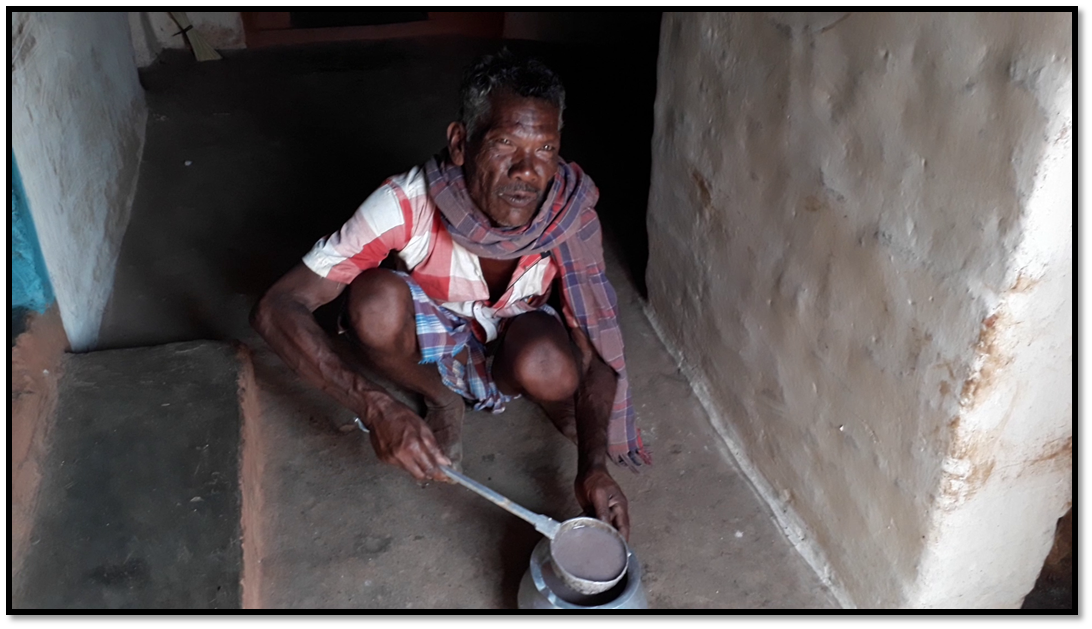
                                                            Odisha tribals possess knowledge of making different types of traditional millet recipes from finger millets for ages. In Odisha Millet Mission, Food festivals were conducted by DHAN Foundation in Dasamantpur Block of Koraput, where the tribal come out with the hidden talent of making food items with Finger Millet. Few feel shy, as they don’t want that someone should know their food items. To encourage them some prizes were kept for the best recipe.

           
    (Figure: Distribution of prize to the first awardee for best recipe)
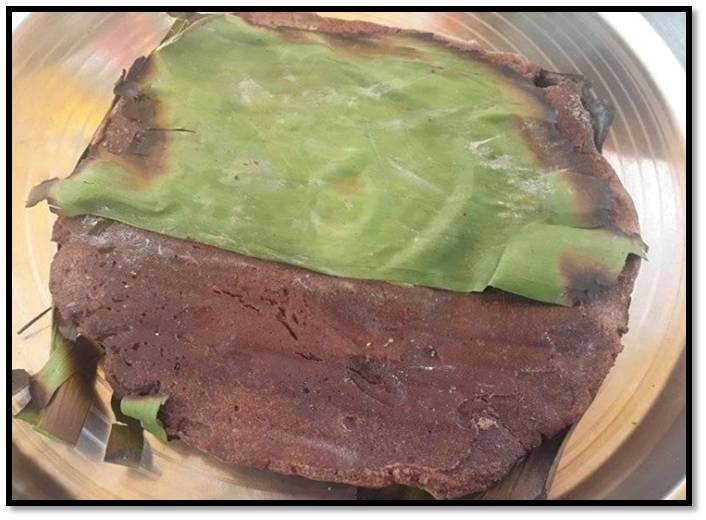
                                            Information related to the traditional millet recipe out of finger millet was collected from 100 sample households. It was seen that most of them consumed one recipe most about 38 percent that is Jau (Finger Millet mixed with warm water). About 35 percent of household samples consumed Jau, Mudde & Tampa (1Rice:2Ragi flour). Few consumed Pitha occasionally. It was interesting to note that they also consumed other items like Ragi in between Jackfruit leaf (Water+Ragi Flour+Salt+Jaggery+Chilli). Cakes are made by wrapping ragi flour in maize husks or banana leaves and then roasted.

                           (Figure: Consumption of traditional local recipe by the sample households)

    Photos of Tribal’s Traditional Millet Recipes:

    Mandia Anda (Ragi flour with broken Rice)
    Mandia Tampa (Ragi flour with broken rice and warm water)


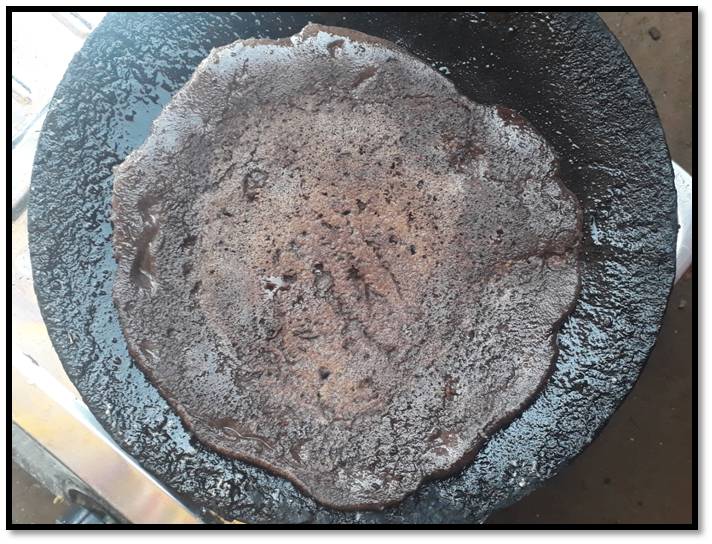
    Mandia Roti (Ragi flour roti)
    Mandia Pitha (Ragi flour in between Banana Leaves)
    Mandia Kandul Raav (Ragi flour with Whole Arhar dal with some masala)


    Mandia Sukua Raav (Ragi with dried fish and masala)

    Consumption of Finger Millet:

                                                 This section is based on the facts and figures collected through the survey in addition to that through observation and discussion with people at the village level. It focuses on consumption-related indicators such as frequency and time of consumption, the quantity of consumption, and reasons for consumption.

    Frequency and time of finger millet consumption: (100 respondents)

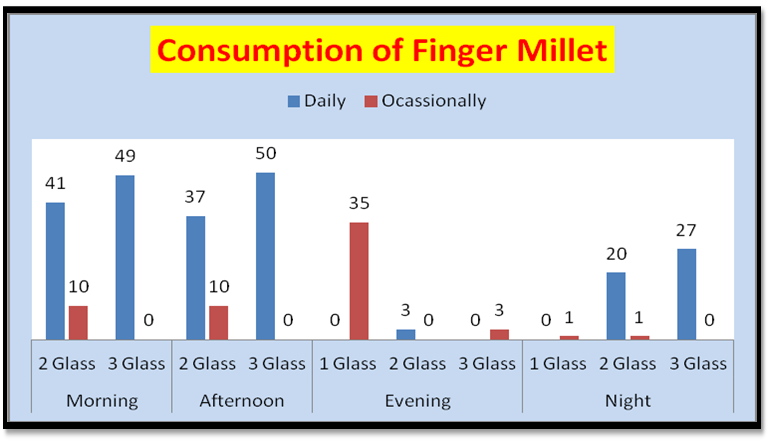
    Information related to frequency and quantity of finger millet consumption is available for 100 sample households. All households had reported having consumed finger millet last year. Around 90 percent of them consumed it on a daily basis. Around 10 percent of households consumed it occasionally. To understand the time and quantity of consumption of the sample households, the quantity was taken in terms of the number of glasses, and the time was taken in the morning, afternoon, evening, and night.
    It was observed that 41 percent of sample households had taken two glasses and 49 percent took 3 glasses in the morning. The rest details of consumption are in the figure below. So it is understood that most of the sample households take ragi during morning and afternoon time and few during night time.

    But it was also observed that the quantity intake increases during the summer season and less or negligible during rainy days.

    (Figure: Ragi consumption pattern on terms frequency, time and quantity)

    Perception of Finger Millet Consumption: (100 respondents)

                          To understand the reasons for the consumption of Finger Millet from the 100 households, a ranking system of the reasons was taken into consideration. The reasons were:
    1.More energetic than other food
    2.Healthy food
    3.Highly nutritious
    4.Easy to digest
    5.Controls blood sugar.
    It is understood from the figure below that most of the household sample consumed finger millet as it gives more energy than other food and the least were unaware of the control of blood sugar.


    (Figure: Ranking of perception on the finger millet consumption)
    Millets are the storehouse of nutrients as they contain protein, fiber as well as micro-nutrients such as beta carotene, iron, and calcium. Ragi containing the highest amount of calcium i.e. 344 mg in 100 grams of Ragi. No doubt, the consumption of ragi is playing a good role to address malnutrition in tribals.
    Odisha Millet Mission
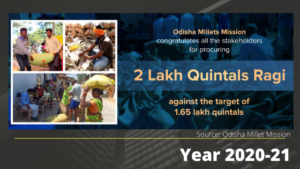
    Odisha Millet Mission, taking the lead role to provide ragi in the Public Distribution System in Odisha at just Rs.1/kg. In the year 2019-20, around one lakh quintals and 2 lakh quintals in 2020-21 have been procured from the farmers of Odisha which will surely add momentum to address the consumption, malnutrition, and Nutritional Security.
    (Figure: Farmer showing his local Finger Millet recipe)

    Conclusion:

    Traditional millet recipes of tribals play an important role to address malnutrition in Koraput. But my concern is that children of tribals must be made more aware of the nutritional aspects of millets and introducing millets in the mid-day will be a wonderful step. Odisha Millet Mission has taken the step and getting an overwhelming response for this initiative.

    Author: Tapas Chandra Roy, Certified Farm Advisor on Millets


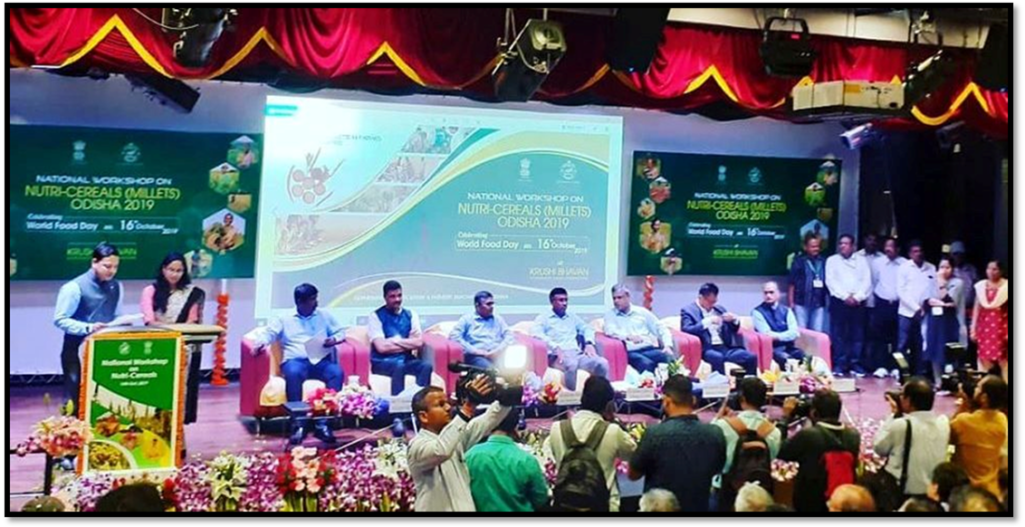
  • Nutri-Cereals- National Workshop in Odisha in 2019 a Grand Success

    Nutri-Cereals- National Workshop in Odisha in 2019 a Grand Success

    Nutri-Cereals – National Workshop in Odisha:

    Inaugurating a national workshop on Nutri-cereals, Chief Secretary Asit Tripathy said Odisha is the first State to introduce millets in the public distribution system and Niti Aayog has recognized it as a model State in this regard. The Odisha Millet Mission, launched in 2017, has now been extended to 72 blocks in 14 tribal-dominated districts. The National Millet Mission started in 2018 has given a further boost to the campaign in the State.

    Odisha Millet Mission:

    “Odisha Millet Mission” is a unique initiative for the revival and promotion of millet production. The Centre has recommended other states to follow the Odisha model,” said Pradeepta Kumar Mohapatra, Agriculture Production Commissioner.
    Principal Secretary of Agriculture & Farmers’ Empowerment Sourabh Garg said the Odisha Millet Mission is a unique partnership model wherein the Government, academia, and civil society have joined together to implement the programs through farmer producer organizations.
    “It is built on a comprehensive approach that includes production, processing, consumption, value addition and marketing,” he said. Around 50,000 farmers have been mobilized to take up millet cultivation with improved agronomic practices. The State Government has already started procurement of surplus millet from the farmers and the procurement target has been enhanced to one lakh tonne. Plans are afoot for the inclusion of millets in supplementary nutrition programs under ICDS, MDM, and PDS. 

    Deliberations on National Workshop on Nutri-Cereals:

    Director, Country Relations of International Crops Research Institute for the Semi-Arid Tropics (ICRISAT) Arabinda Kumar Padhi said millets are climate-resilient crops and can be grown under stressed rain-fed conditions, and people of South and West Odisha have traditional skills in millet production undertaken over generations. “The highlands of the State have vast scope for millet cultivation as well. ICRISAT would provide the technology and international best practices for improving productivity in the State’’. 
    In the national workshop on Nutri-cereals, deliberations were held on the promotion of seed diversity, policy initiatives, challenges in the inclusion of millet in PDS, millet marketing, and value chain through framers organizations. There were also experience sharing sessions among farmers and NGOs on agronomic practices.

    On the occasion, 14 leading millet farmers of the State along with representatives of leading NGOs namely Pragati and Pradhan were awarded.
    Focusing on the role of agriculture and food production with nutrition and security, FAO, Country Representative, Tomio Shichiri said: ‘’While food grain production in India has increased over five times since Independence to almost284 million tonnes in 2018-19, there is a high rate of malnutrition in the country, Therefore, there is a need for diversification toward Nutri-rich crop production such as Nutri-Cereals and pulses.’’ The focus must not only be on increased food grain production of targeted Nutri-cereals such as millets. Promotion of homestead gardens and diversification of agriculture production towards fruits, vegetables, and aquaculture can contribute towards addressing the malnutrition.
    Meera Mishra, Country Coordinator, International Fund for Agricultural Development (IFAD) India Country Office, said the changing patterns of consumption directly benefit farmer’s production system and income. Quoting an example of millet production in Madhya Pradesh, she said the tribal Baiga women in the remote Dindori district in MP grew minor millets – Kodo and Kutki – using traditional practices. Support from the government and IFAD program has increased production and engagement. Earlier only 750 farmers were doing millet farming on 750 acres and today these numbers have increased by 10 times to 7,500 farmers and 7,500 acres.

    “Nutri-Cereals: Challenges in Inclusion to ICDS/MDM/PDS- Nutritional Perspective”.

    Dr.Paras Sharma, Scientist, ICMR-National Institute of Nutrition presented about nutritional perspective and gave the Solutions and future actions to improve millet consumption. Millet Production should be increased in order to maintain supply. Identification and development of high micronutrient varieties with low anti-nutrients are necessary.
    Biofortification of millets crop is required to enhance micronutrients. There is a need for the development of millet processing technology at rural and urban levels. Degree of milling optimization to retain maximum nutrients and to reduce phytate and voluntarily adopted by the millet processing units.
    The role of other inositols Phosphates (IP5, IP4, and IP3) needs to be looked in for mineral bioavailability. There is a need to develop cooking methods to maximize nutrient retention and bioavailability. A combination of suitable food to enhance the bioavailability of nutrients can be explored. Development of recipes according to the region such as chapattis for the northern part of the country. Improvement of protein quality of millets through genetic approaches.  Blending with other cereals to enhance the organoleptic properties and ease in novel food product development.
    Germinated/sprouted/ malted or fermented millets have high bioavailability of micronutrients which may be served in MDM HTST processed foods including popping/puffing and roasting also reported to improve the mineral bioavailability and such products also have a longer shelf life so these may be included in the food supply system.

    Diverse Seed Systems for Millets:

    Mr.Ravindra A, WASSAN, presented on “Diverse Seed Systems for Millets” and why there is a need for diversity. How a seed system can be managed by the community and its replication in biodiversity blocks.

    ICRISAT initiatives in connecting crops in semi-arid tropics to meet nutritional requirements:

    Dr. A K Padhee, Director, Country Relationspresented on ‘’ICRISAT initiatives in connecting crops in semi-arid tropics to meet nutritional requirements”. There is a need for demand-driven innovation and this can be done by mainstreaming nutrition, empowering women, and attracting youth into agriculture. Pointed out the approaches for adoption by participatory and partnering, building capacity at state and local level, integrating communications, monitoring, and evaluation & finally policy support.

    Promotion of Production & Consumption of Nutri-Cereals:

    NITI Aayog, Government of India, presented on‘’ Promotion of Production & Consumption of Millets’’. In this, the key recommendations of the committee were focused.
    • Decentralized procurement of millets by State Government
    • Promotion of millets under schemes like Mid-Day Meal Scheme (MDM), Integrated Child Development Scheme (ICDS) to address the nutritional security of vulnerable groups.  
    • Enhancing public awareness about health, nutritional, environmental & other important benefits of consuming & cultivating millets
    • Development of new hybrid and high yielding varieties to improve productivity, increase shelf-life improved nutritional content, and promote crop diversity
    • Increasing incentives to farmers for millet cultivation and addressing issues related to the MSP of millets
    • Development of improved, technology-driven millet processing units to retain nutritional value and make millets ready for consumption and sale
    • Encouraging women’s, marginalized sections, and tribal communities to undertake millet production, supported by initiatives by NGOs and other organizations.
    • Gradual introduction under PDS- Once the supply of millets under PDS improves, out of 5 kg basket per person entitlement, 1 kg may be made mandatory for millets.
                      The suggested roadmap that can be achieved in short/medium term duration:
    • Inclusion of Millet based products in MDM & ICDS menus- Replicate initiatives of States already doing this
    • Engagement of Private sector & Industries- Creating a demand-pull among consumers    
    • Advocacy and Awareness generation about multifaceted benefits of Millets- Running a campaign
    • Establish “National Millets Board”- Link all stakeholders & create a certification mechanism
    • Improving procurement of Millets under PDS (beginning with Millet producing areas & gradually expanding)
    Finally, in the long term duration, the production of millets is to be increased.
    Odisha Millet Mission presented the Future roadmap- taking millets to million.
    • Making Odisha a “Centre for Excellence” on Millets.
    • Landscape based Agro Biodiversity.
    • Inclusion of suitable millets in ICDS, MDM, and PDS.
    • Start-Up Odisha – Millet Odisha.
    • Millet Value Chain – Seed to Storage to Supply.
    • Women SHGs led the Nutrition revolution. 
    Dr. Usha Dharmaraj, Sr. Technical Officer, Department of Grain Science and Technology CSIR-CFTRI, Mysore presented“ Millets in Community Feeding- Challenges and Interventions”.
    Challenges:
    • All millets but for pearl and finger millet contains husk (non-edible portion) as a separate entity- dehusking is necessary
    • No well-defined machinery set up for dehusking of millets
    •  Pearl, foxtail, and little millet  contains a higher amount of fat and also undergo rancidity at  faster rate-shelf stability is necessary
    •  The presence of bran and a high amount of dietary fiber affects its cooking quality and sensory attributes-Techno interventions are required
    •  Lack of diversified products from millets on the shelf-needs attention to promoting millet usage
    • Lack of awareness about millets and millet-based products
    Interventions:
    • Inclusion of a separator; either color sorter or gravity separator
    • Polishing judicially  to improve  both  the shelf-life and cooking properties
    • Suitable processing to improve the quality of the products
    • Preparation of diversified products from millets

    Promotion of Millet Diversity:

    Dr.Vilas Tonapi, Director, ICAR- Indian Institute of Millets Research, Hyderabad presented on the ‘’Promotion of Millet Diversity’’. ICAR-IIMR has undertaken a millet germplasm exploration in the Dong district in Gujarat and collected 37 accessions of five different millets from 27-28th October 2018. In which, the maximum of 16 acc. of Little millet followed by Finger millet (14 acc.), Sorghum (5 acc.), Foxtail millet and Barnyard millet (1 acc. each). The exploration has covered 27 villages in 4 Taluks in Dong district. The altitude ranged between 161-526 m MSL

    Overall, the Workshop on Nutri-Cereals was a grand success.

    ***Please put your valuable comments and suggestions for the development of Millets in India.