Category: Millet Processing

  • First Ever Solar Millet Processing Unit under Odisha Millet Mission

    First Ever Solar Millet Processing Unit under Odisha Millet Mission

    Solar Millet Processing Unit:

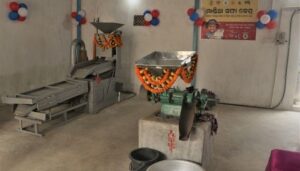
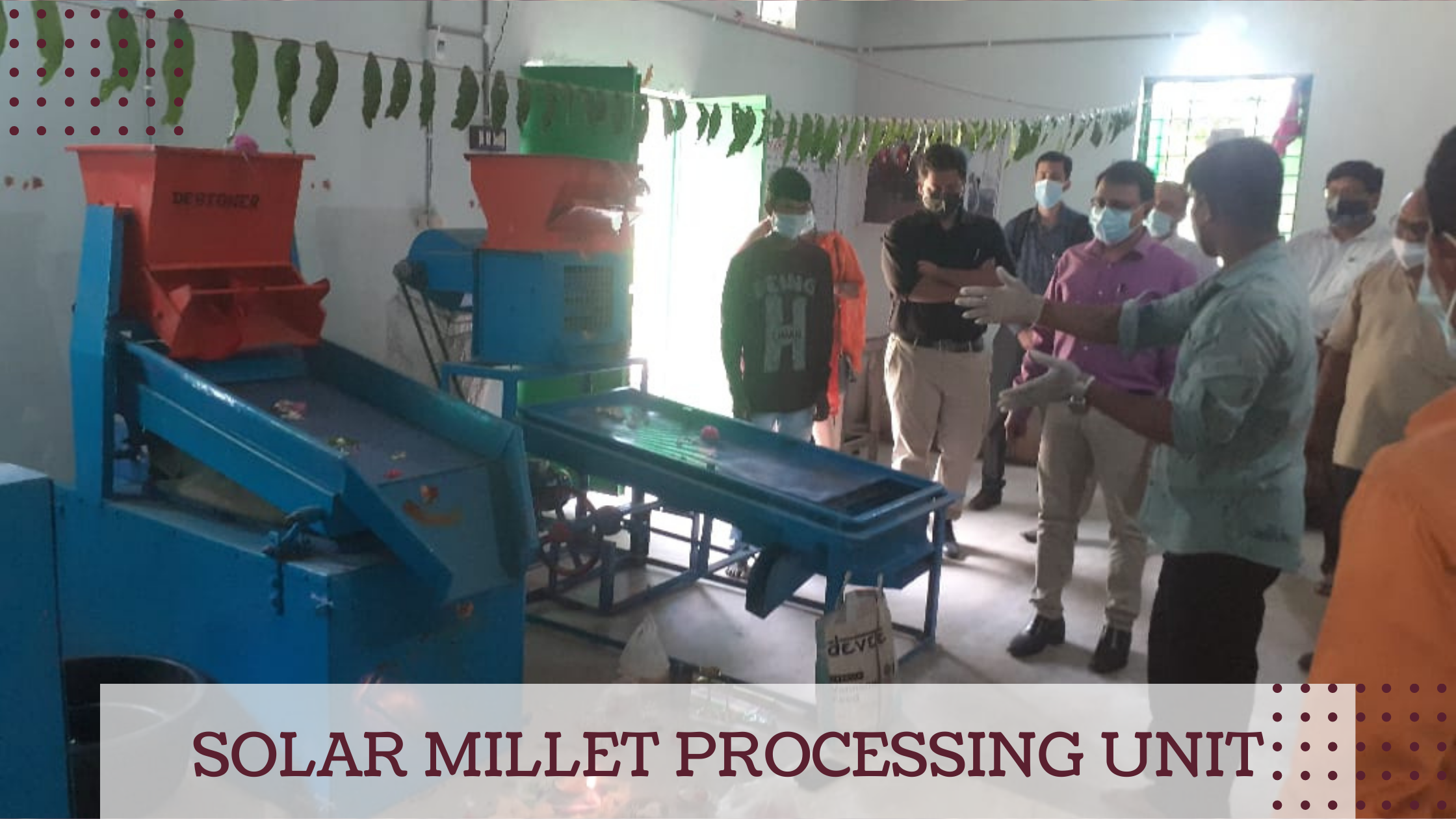
    The first-ever solar millet processing unit was inaugurated on 10th, August 2021 in the village Gobindapur of Manikapur GP, Mohana Block of Gajapati district in Odisha. This unit is established with support from Odisha Millet Mission, Watershed Support Services and Activities Network(WASSAN), and SELCO Foundation, to be managed by Taptapani Farmer Producer Company(FPC) and facilitated by SACAL.

    This unit was inaugurated in presence of the Sub-Collector, Block Development Officer, Tahasildar, and other government officials.

    This center is the first new project and it will reduce drudgery in women and the most important aspect, it will reduce the carbon footprint. As we know processing millets is a difficult task and processing in a traditional way involves drudgery and consumes a lot of time. It takes about one hour to process one kilo of millet grains.

    Odisha Millet Mission’s main objective is to promote household millet consumption, establishing decentralized millet processing units, promoting the Farmer Producer Organisation for marketing, and the inclusion of millets in the ICDS Programme and Mid-day meals. This solar millet processing unit will cater to all the purposes of the millet mission.

    With the help of Mission Shakti, Self Help Groups(SHG) can become self-reliant and independent by opening Millet Shakti Shop. They can get the processed millet grains like Foxtail Millet, Little Millet, Sorghum, and Finger Millet(Ragi), and millets grain flours.

    In the inaugural session, the Sub-Collector announced to make this unit a profitable enterprise by providing a better road and godowns. The Block Development Officer encouraged the branding of millet products and others praised Odisha Millet Mission for working for health and nutritional security.

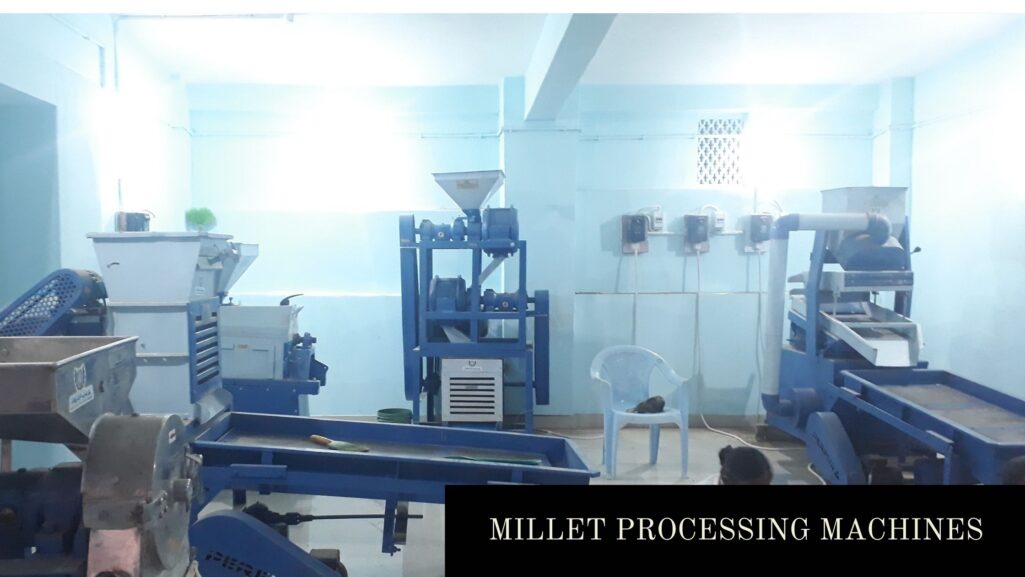
    Machines in the Solar Millet Processing Unit:

    1. A set of Millet Grader: The grader will help in separating the inert materials like big stones, sticks, sand, grass, etc from the millet grains.
    2. Destonner with Aspirator: It will help in separating the same size stones, mud balls from the grains.
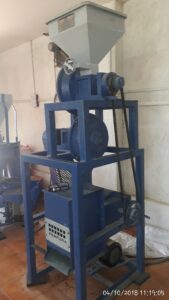
    3. Multigrain Huller: For removing the husk and separate the millets from the husk. It has a capacity of 100-150kg/hour.
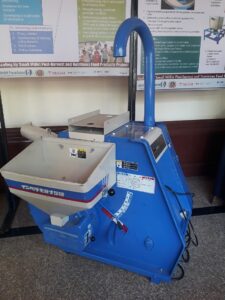
    4. Polisher: It will help in removing the thin glome layer or the upper thin layer from millet grains and produce polished grains and it has the capacity of 50-100 kg/hour.
    5. Pulverizer: It will be used for grinding the millet grains into powder form. The capacity of the pulverizer is 10 to 15 kg/hour.

    Related Post: Millet Processing Machines

    The solar millet processing unit can run for 4 hours with full capacity with a full day charge. One machine can be operated at once with battery backup.

    Grading, destoning, polishing, and pulverizing of Ragi, Foxtail Millet, Little millet, Sorghum, etc can be done in this unit. FPO can get processing charges for processing and can also use for self-business purposes. FPO is currently planning for processing that will support local consumption and marketing of millet in local and nearby urban markets.

    Nowadays, there is a demand for healthy food, and millets can provide better nutrition as compared to other grains. This solar millet processing unit will not only help for the processing of millets but will also encourage farmers to grow millets in their area.

    In the coming days, more millet processing units are to be installed in Odisha under Odisha Millet Mission and this initiative will definitely help millet growing farmers and also empower women in Odisha.


    Author: Tapas Chandra Roy, A Certified Farm Advisor on Millets, ‘Promoting Millets from Farm to Plate’. In a mission to take the forgotten grains- Millets to Millions. To remain updated on my blogs on millets you can join my Telegram Channel – Millet Advisor.



  • First Millets Processing Unit under Odisha Millet Mission in 2021

    First Millets Processing Unit under Odisha Millet Mission in 2021

    First Millets Processing Unit under Odisha Millet Mission – Inaugurated in Keonjhar District, Odisha:

    The Special Programme for Promotion of Millets in Tribal Areas of Odisha (Odisha Millet Mission) was launched by the Department of Agriculture and Farmers Empowerment, Government of Odisha in 2017 to revive millets in farms and on plates. It was the first agriculture program with a priority on increasing millet consumption in Odisha.

    Odisha Millet Mission was initiated in Keojhar District from Kharif 2019. This five-year project is funded by the District Mineral Foundation of Keonjhar covering 7 blocks in this district (Banspal, Champua, Joda, Jhumpura, Harichandanpur, Hatadihi, and Sadar)

    One of the main objectives was developing millet enterprises and establishing market linkages to rural/urban markets with a focus on women entrepreneurs through FPOs and SHGs. The first Millets Processing Unit Inauguration in Keojhar District of Odisha has shown a way forward. It was inaugurated by the Collector and District Magistrate of Keonjhar.

    Millets Processing Unit:

    The first Millets Processing Unit is now fully functional and ready to supply clean Ragi for different flagship programs of the District Administration. It is a joint venture of Odisha Millet Mission and Mission Shakti.

    Millets Processing Unit
    First Millets Processing Unit Inaugurated under Odisha Millet Mission
    • This Unit is being managed by Krishna Self Help Group of Sadar Block and supported by Mission Shakti.
    • The Unit has the capacity of cleaning about 2 quintals of Millets per hour and can clean over 500 quintals in a month.
    • This Unit has been established to ensure the supply of clean Ragi for the flagship ICDS Ragi Laddu Programme.
    •  The Unit has been provided under the Odisha Millet Mission, supported by the District Mineral Foundation.
    • Technical support is being provided by the Department of Agriculture and Farmers Empowerment and WASSAN.

    Machines Installed in the Millets Processing Unit:

    Cleaner-cum-Aspirator with Grader and Integrated Destoner.Make of the model by INDOSAW (Osaw Industrial Products Ltd, Ambala)

    Millets Processing Unit

    • Capacity up to 250kg/hr
    • The heavy structure makes the machine sturdy and more stable. Deck mounted on foundation frame for the stability of the machine.
    • Feeding system provided with a feed hopper, a regulator for the inflow of grains across the entire width of the deck.
    • Fitted with a five-stage cleaning facility.
    • 2 HP motor of reputed make to run on 415V, 50 HZ, 3 Phase AC Supply.
    • A vibratory system with aspiration and size grading system to separate the finer impurities.
    • Vibratory deck with well balanced built-in fan for air volume adjustment for accurate final separation of grains by the counter current.
    • Vacuum type dust collector with variable sludge gate and dust trapper.
    • Separate collection bins for different outputs.
    • One set of 2 removable screens.

    Related Post: Millets Processing Machines

    Millets Processing Machine
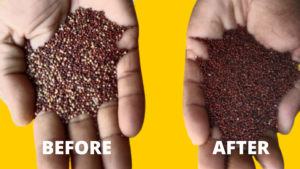
    Before and After Processing of Ragi

    In this Unit, a dehuller is also installed to remove the husk. First of all, the ragi grains are put into the dehuller and next to the Cleaner-cum-Aspirator with Grader and Integrated Destoner. The grader is used for separating inert materials like big stones, sticks, sand, grass, etc. from the grains. These are separated by sieves of different sizes. The top sieve helps in separating the big sticks, stones, and grasses, the middle one separates the good quality grains, and the bottom separates the fine and coarse sand particles.

    The aspirator has a small fan that sends the dust and light particles to the rear end.

    The Destoner helps in removing the small stones and mud balls which are identical to the size of the grains. Destoner works based upon gravitational principles.

    Contribution of Funds:

    The total cost of the Millets Processing Unit is about 5.2 lakhs. 2.2 lakhs is the cost of the Cleaner-cum-Aspirator with Grader and Integrated Destoner and about 3 lakhs is the contribution of Self Help Group towards the construction of Hall, Godown, Electricity and Huller Machine(for removing the outer husk from the Ragi grains).

    Conclusion:

    No doubt, Millets processing is a tedious job and involves lots of drudgeries. But processing machines make the work easier with less effort. Previously, the women farmers were using hand pounding tools to remove the husk and then the bamboo hand winnower to separate the dust, stones, and other impurities. For Ragi, they use to wash with water. The entire process is time-consuming.

    I hope this Millets Processing Unit will help the women in getting a clean and nice end product and ultimately the end consumer will be happy.


    Author: Tapas Chandra Roy, A Certified Farm Advisor on Millets.


  • Best Millet Processing Machine in 2020

    Best Millet Processing Machine in 2020

    Millet Processing Machine:

    When it comes to millet processing it is a tedious job. As you know the demand for millets is increasing day by day in India and abroad. People are becoming health conscious and searching for the best quality millet grains. It is possible only with the advancement and up gradation in the millet processing machine.

    Now, let’s understand the millet grains. As you know there are 9 types of millets grown in India. It is categorized into two, one is naked and the other is husked millets. Sorghum(Jowar), Pearl Millet(Bajra), and Finger Millet(Ragi) come under naked grains, and the rest millets like Foxtail Millet, Little Millet, Barnyard Millet, Kodo Millet, Browntop Millet, and Proso Millet comes under husked grains as it contains a husk layer on it.

    Why Processing is required?

    Processing of husked millets is essential to make it suitable for human consumption. It starts with cleaning, grading, and removing husks. As you know husks cannot be digested by human beings. To understand the processing of millets  I went to a tribal village in Koraput, Odisha. I could find a single wooden grinding mill in this village and all the people depend upon this mill to process their millets.

    Millet Processing Machine
    Understanding the Traditional Millet Processing

    Nowadays, we don’t process much as processing is tedious and takes a long time. We only consume finger millet(Ragi) as it is easy to clean and ground into flour and also easy to cook said tribal women of Bhejapadar village.

    Really it involves a lot of drudgeries. If you see the process starting from cleaning, separating the stones and inert materials from the grains, and finally putting it into the grinding mill. I documented the entire processing so that we can understand it in a better way.


    Methods of Processing Millets:

    As the husk is firmly attached to the grains so, it requires force to remove it. In this millet processing, two forces are applied one is shear force and the other is impact force. As you saw in the above video, the shear force is applied in this process whereas in the below photograph, the impact force.

    Manual Hand Pounding
    Manual Hand Pounding by a woman in a village

    Manual hand pounding is a hard job to do. We don’t have other options. On special occasions, we do the processing of millets. But the food is tastier as compared to the millets available in the market said by tribal women.

    The millet processing machine works with centrifugal force. The husked grains hit the cast iron and the outer covering breaks. We can say it uses the impact force.

    Hope you understood the basic of millet processing in the rural areas. Now, it’s time to go through the machines required for millet processing. We will discuss setting up a millet processing unit, its layout, and design.

    Millet Processing Machinery required for setting up a small scale Unit:

    To understand millet processing, I had an opportunity to visit the Primary Processing Unit at the Indian Institute of Millets Research, Hyderabad. Basically, to set up a unit we require machines for cleaning, grading, dehulling, and finally the quality product. Let us know about these machines.

    • Grader-cum-Aspirator:

    The grader is used for separating the inert materials like big stones, sticks, sand, grass, etc. from the grains. These are separated by sieves of different sizes. Care should be taken to select the right sieve size and the operator should see that the holes of the sieve are not clogged.

    Generally, a triple deck grader with three sieves is used. The top sieve helps in separating the big sticks, stones, and grasses, the middle one separates the good quality grains, and the bottom separates the fine and coarse sand particles.

    The aspirator has a small fan that sends the dust and light particles to the rear end.

    • Destoner-cum-Aspirator:

    The grains coming from the grader are put into destoner for removing the small stones and mud balls which are identical to the size of the grains. Destoner works based upon gravitational principles. There are two sieves in this machine. The millet grains after falling on the destoner bed, the lighter material moves to the front and the heavy materials towards the back. The air adjustment slot is to be adjusted as per requirement.

    It is better to have a Variable Frequency Drive, which lessens the mechanical and electrical stress on the machine. This reduces the wear and tear of the machine.

    • Dehuller-cum-Aspirator:

    After proper cleaning and grading, the millet grains are put into dehuller for husk removal. There are two types of dehuller, one is the Centrifugal and the other is the Abrasive dehuller.

    • Centrifugal Dehuller :

    It has an impeller that is responsible for the removal of husk from the millet grains. When the grains are put into the hopper, it enters the impeller, where it is thrown with a great centrifugal force onto the hard casing of the impeller. Due to heavy impact force, the husk gets separated. The lighter husk is collected at the back and the dehulled grains are collected at the front.

    The efficiency of the machine is measured based on the hulling recovery and the retention of bran on the grains.

    • Abrasive Dehuller:

    They are classified into two types, one is the  Emery abrasive, and the other is the rubber roller type. In Emery type, two grinding stones are used. One stone is stationary and the other rotates at a constant speed.

    Manufacturers of Millet Processing Machine:

    1. Perfura Technologies (India) Pvt. Ltd
    2. AVM Engineering Industries
    3. Victor Agro Sales
    4. Agromech Engineers
    5. KMS Industries
    6. Borne Technologies Private Ltd

    In addition to these, there are organizations that have developed a millet processing machine. DHAN Foundation has developed India’s First Table Top Dehuller.

    DHAN Foundation implemented ‘Scaling up Small Millet Post Harvest and Nutritious Food Products Project in collaboration with Tamil Nadu Agriculture University and McGill University, Canada.

    Millet Huller by McGill University
    Millet Huller by McGill University

    Millet Processing Machine Requirements and Infrastructure at a different level:

    1. Village/Community Level: We require a space of 200 square feet floor area. Destoner-cum-Grader with Aspirator and a Dehuller is sufficient. It may cost around 2 lakhs. Tabletop dehuller will fit into this project. Its capacity is around 50kg/hr and two-person can easily operate it. It can work in a single phase.
    2. Small Scale Level: It requires a minimum of 1200 square feet floor area to operate the machines. Destoner, Grader, and Dehuller 2 number each is required. Its capacity is around 100 kg/hour. It may cost around 4-5 lakhs.
    3. Medium Scale Level: The capacity of this enterprise may be around 500-1000 kg/hour. 5000 to 10,000 square feet is required with godowns to stock raw materials up to 10-20 tonnes. In this enterprise, we can keep Destoner and Grader of 4 to 8 Nos, Dehuller 2 to 4 machines. For value addition, we can keep Pulveriser, Semolina Machine, Flakes Making Machine. It cost maybe around 20-30 lakhs.
    4. Large Scale Level: Most of the large scale Enterprises are found in Nashik. It may cost around 60-70 lakhs.

    Points to be considered before purchasing Millet Processing Machine:

    1. Do a survey and research of the market potential before taking up the project.
    2. Visit some successful enterprises and study the difficulties faced in the initial stage.
    3. Buy the machines only after checking the performance.
    4. New Entrepreneurs should take training before starting the project.
    5. A better understanding of the sieve size and the size of the millet grains.


    Author: Tapas Chandra Roy, A Certified Farm Advisor on Millets

  • The revival of Millet Grain on Farm to Plates addressing Nutritional Security

    The revival of Millet Grain on Farm to Plates addressing Nutritional Security

     Odisha Millets Mission in Sundargarh:

    “Special Programme for Promotion of Millets in Tribal Areas of Odisha” (Odisha Millets Mission)- Reviving Millets on Farm to Plates. It is a flagship programme supported by the Department of Agriculture & Food Production, (Govt of Odisha) to promote millets. It was launched in Sundargarh district in the year 2018-19. The programme initially covered 4 blocks, that is, Nuagaon, Kuarmunda, Rajgangpur and Kutra, which was gradually extended to another 4 blocks (Lephripada, Hemgir, Tangarpali & Balisankara) with financial assistance from District Mineral Foundation, Sundargarh.

    The programme covers all aspects of millet ecosystem that includes production, consumption, processing, marketing and inclusion of millets in State Nutrition Programmes.
    Ragi Ladoos for Nutritional Security
    Ragi Ladoos for Pre-School Children


    The objectives of the Millet Mission:
    1. Improving the productivity of Millet crops to secure household level surplus.
    2. Setting up of decentralized processing facilities for easy access to processed millets.
    3. Promoting Household-level consumption to increase food and nutrition security.
    4. Promoting farmer collectives and marketing to further the millet economy with a focus on women entrepreneurs.
    5. Inclusion of millets in the State Nutrition Programme and Public Distribution System.
    The success of Odisha Millets Mission owes to its unique design of programme delivery involving various stakeholders like Government agencies, Civil Society Organisations, Community Based Organisations and Academic institutions. In Sundargarh, 8 Community-Based Organisations have been implementing the programme with the support of 6 Facilitating NGOs.
    The Agricultural Technology Management Agency (ATMA), Sundargarh acts as the nodal organisation for implementation of the programme at the district level. The State Secretariat for Odisha Millets Mission is hosted at Nabakrushna Choudhury Centre for Development Studies (NCDS), a social science research institute situated at Bhubaneswar. The State Secretariat comprises of Programme Secretariat and Research Secretariat anchored by WASSAN and NCDS respectively.
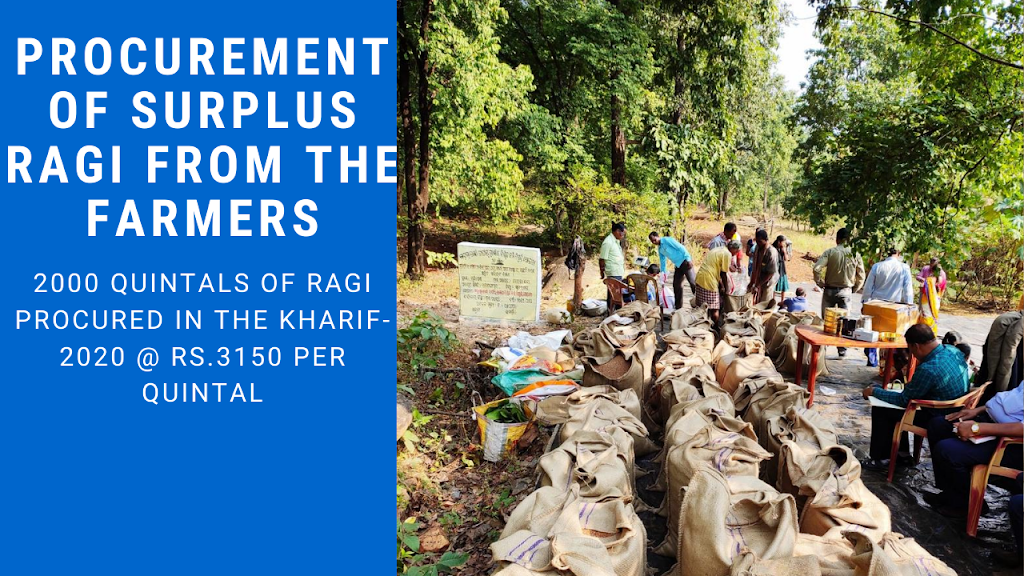
    In the first year of implementation (2018-19), millet (exclusively Ragi) was cultivated in 600 Hectares benefitting 1405 farmers in 4 blocks of the district. During 2019-20, 930 Hectares of millet was cultivated including Ragi, Little Millet, Foxtail Millet and Sorghum involving 2820 farmers. A surplus of around 500 quintals of Ragi was procured from farmers in the Kharif Marketing Season 2018-19 which increased 4 folds to just above 2000 quintals in Kharif Marketing Season 2019-20. 
    Procurement of Surplus Ragi from farmers
    Procurement of Surplus Ragi from the Farmers


    The millets, owing to its nutritional benefits, climate resilience characteristics and nostalgic sentiments about the grain being attached with their tribal culture have added to the other incentives provided by the programme to encourage farmers to cultivate and consume millets. The positive feedbacks from the agrarian community and successful implementation of the programme paved the way for an expansion of the scheme to 4 additional blocks with support from District Mineral Foundation, Sundargarh from 2020-21.
    Inclusion of Ragi Ladoo in ICDS, Sundargarh
    Background of Millet Mission:
    In a series of discussions at State level regarding utilization of the Ragi procured from farmers it was proposed that Ragi, for its nutritional values should be included in the ICDS using DMF and OMBADC funds, based on which the pilot programme for introducing Ragi Ladoo for pre-school children in Anganwadis Centres of Sundargah the district was planned.
    Ragi is extremely nutritious millet rich in Calcium(344 mg), Protein(7.3 gm), Fibre(3.6 gm), Iron(3.9 mg), Good carbohydrate(72 gms), and other essential minerals. In the process of hulling, the nutrition content of ragi is not lost. Hence, this is an excellent grain for the children.
    About the Project:
    The project envisages supplementing the nutritional requirements of pre-school children (3 to 6 years) enrolled in the Anganwadi Centres of the district. Each child shall be provided with 4 Ragi Ladoos per week comprising of 10.5 gms of Ragi in each Ladoo.
    The existing WSHGs engaged as the THR (Take Home Ration) making units or Chhatua Units in each ICDS project area, promoted by Mission Shakti (W&CD Dept, Govt of Odisha) shall be trained to prepare and supply the Ragi Ladoo Mix to the Anganwadi Centres.
    The Anganwadi helpers shall make ladoos out of the Ragi Ladoo Mix and provide to the children. As Anganwadi Centres are closed in the present pandemic situation, the Ragi Ladoo Mix is packaged and supplied to the beneficiaries’ home on a monthly basis.
    The project, supported by DMF, Sundargarh is a joint initiative involving 2 agencies, that is, Odisha Millets Mission (Directorate of Agriculture & Food Production, Odisha) & Mission Shakti / ICDS (Dept of Women & Child Development and Mission Shakti, Odisha).
    Odisha Millets Mission shall ensure enhancement in millet production in the district and thereby the availability of surplus Ragi in procurement Mandis. They shall also provide machinery required for cleaning, grading and destoning ragi grains to the selected WSHGs. Two WSHGs in the district have been empanelled as the cleaning units, which shall clean the ragi grains using the machinery and supply to the various Chhatua Units for preparation of Ragi Ladoo Mix. The project shall be implemented in a phased manner.
    Millet Ladoo making
    Preparation of the First batch of Ragi Ladoo Mix by Jyoti SHG of Bileimunda, Hemgir Block

    The first phase was inaugurated by the Minister of WCD&Mission Shakti on 15th August 2020 in which about 3000 children of Hemgir project were covered. From November 2020, the second phase shall be launched in 5 project areas (primarily urban) and in the third phase, starting from January 2020 all 21 project areas are planned to be covered.

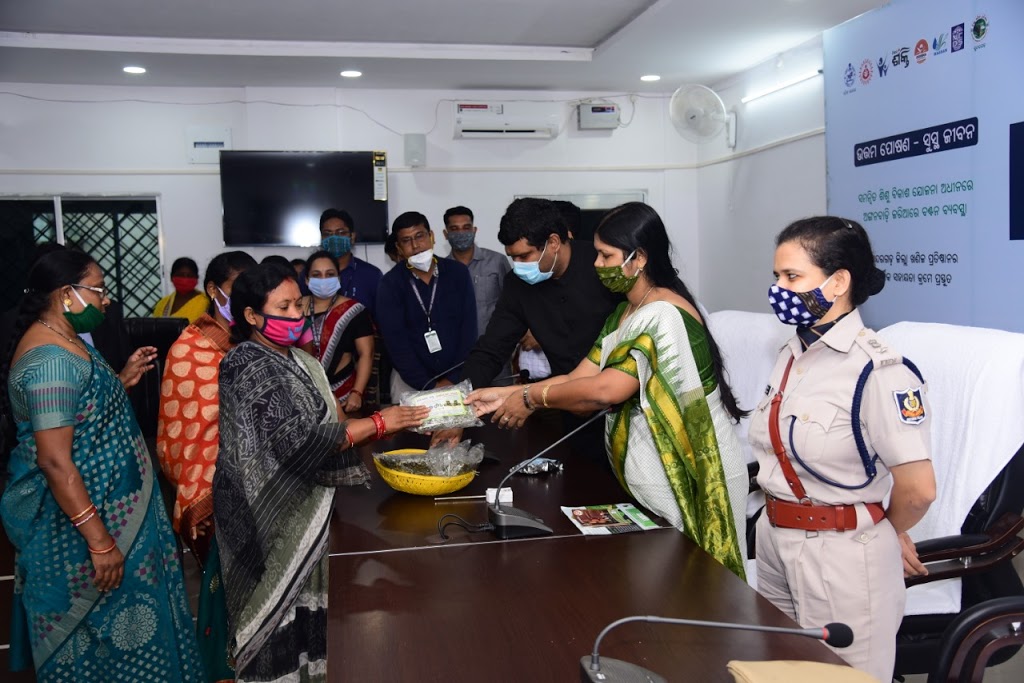
    Millet ladoo mix distribution
    Distribution of Ragi Ladoo mix by the Honourable Minister WCD & Mission Shakti to beneficiaries in the Inaugural Ceremony.


    This initiative was jointly undertaken by Odisha Millets Mission & Mission Shakti, with support from DMF, Sundargarh and Sundargarh District Administration has exemplified how convergence among different agencies have successfully revived the journey of a once-neglected the Nutri-cereal grain on-farm to plates and thus this initiative will address the Nutritional Security.
    Author: Arpan Das, District Project Coordinator, WASSAN, Odisha Millet Mission
  • Millets Market Analysis in 2020

    Millets Market Analysis in 2020

    MILLET MARKET ANALYSIS:

    Millets are ancient Super grains, nowadays known as Nutri-Cereals, is the reservoirs of nutrition for better health. They are classified into major and minor. Major Millets( Sorghum and Pearl Millet) and Minor Millets(Foxtail, Proso, Kodo, Little, Barnyard Millet). They are predominantly gaining more importance in the world and in India.

    Market  Analysis pertaining to Millet can be discussed by its:
    1. Demand and Consumption
    2. Use in Food Processing
    3.Online Distribution Channel
    4. Increase in Millet Production
    5. Market Forecast
    6. Market Competition.

    DEMAND & CONSUMPTION:

    Millets were considered as the Poor Man’s Food. Now it has shifted to Rich Man’s Food. The demand for it is increasing in urban areas not only due to its nutritional value but also enhancing immunity in the human body. They are considered to be promising sources as an immunity booster. The important elements that maintain our body’s immune system are those which contain all vitamins and minerals and a completely balanced diet.


    So, the first cereals that come to my mind which contain vitamins, minerals, fiber, and anti-oxidants are the MILLETS. The increase in awareness of the health benefits of Millets will directly boost the consumption and trigger the industry growth rapidly by 2025.


    USE OF MILLETS IN PROCESSING:
    Millets Beer
    Millet Beer

    Innovative millet products are taking their share in many segments like Infant Food, Bakery Products, Health Drinks, Ready to Eat Food, Breakfast Food, and the emerging industry i.e. Alcohol.

    Two mothers of India came forward with a yummy and healthy food for babies in the brand name  Slurrp Farm. Bringing their experience and imbibing their ideas into them. Many Startup Businesses have come with wonderful millet products in the market. The Toit Brewery of Bengaluru is the first to introduce Nutri grain-Millet into the beer jug. By this, there will be a reduction in the import of barley malt from abroad. As they are rich in nutrients, it is taking the place in the health drink segment.
    ONLINE DISTRIBUTION CHANNEL:
    Millet Market Share
    Market Share by Distribution Channel

    In 2018, millets market share by distribution channel shows that e-commerce online stores are gaining importance and likely to show promising above growth more than 3% CAGR by 2025. Previously people were dependant on traditional grocery stores for millet products but now in the situation of COVID-Pandemic, everyone is dependant on online stores. Keep in mind that Millets are the immunity booster and getting the product at the doorstep, Online Store will take the maximum share in the distribution channel.

    INCREASE IN MILLET PRODUCTION:

    India is the largest producer of millets with 41% market share in the world. The importance of millet is increasing day by day due to increased awareness among people and government policies supporting nutritional security. The only crop to withstand drought and climate change is the millet as it can be grown in every soil with less rainfall. Many states like Odisha, Karnataka are promoting millets on a large scale benefitting small and marginal farmers. There is an increase in MSP of millets for the last 3 years giving confidence to farmers to grow more millets.


    MILLET MARKET FORECAST:

    According to a report announced by the Reportlinker.com “North America Millets Market Forecast to 2027- COVID-19 Impact and Regional Analysis By Product; Application; Distribution Channel; and Country, where they have mentioned that The North America Millets Market was valued at US$ 841.87 million in 2018 and expected to grow at a CAGR of 4.0% during 2019-2027 to reach US$ 1,192.24 million by 2027.


    MARKET COMPETITION:

    The global millet market is unorganized and fragmented. The millet processors are generally small in size catering small export business. As the trend of growth in millet will bring more opportunities for the entrepreneurs and simultaneously have more competition in the market. The entrepreneur with the right strategy and good quality products will take the maximum market share. The organic millets with more traceability and transparency will win the game.

    BUY MILLET PRODUCTS FROM STOREFRONT IN AMAZON


  • India’s First Tabletop Millet Dehuller-SMF V3

    TABLETOP MILLET DEHULLER-SMF V3:


    Advantages:

    1.Processes all kinds of small millets.

    2.Higher head rice recovery.

    3. Can process small quantities(even 0.5kg)

    4.Retention of more nutrients.

    5.Energy-efficient. 6.Compact, low weight, and portable.

    7.Value for money.

    8.Safe, easy to operate, and maintain.

    9.Low noise.

    10.Ability to operate for long hours.

    11.Capacity:30 to 80 kg/hr depending on the millet.

    12.Hulling efficiency: more than 90%

     
  • Guidance for Millets Processing Machines-Best Layout and Design

    Guidance for Millets Processing Machines-Best Layout and Design

    MILLETS PROCESSING:

    The demand for millets is increasing rapidly due to raising health and nutrition awareness across the country. Entrepreneurs, SHGs, Government Institutions are exploring to initiate millet processing at their level. To establish a Millet Processing Unit we require different machines at every stage from cleaning, grading, removing husks, and making the final value-added products.
    This blog will let you know about the different machines required for millets processing and their layout and design.

    1. GRADER CUM ASPIRATOR:

    Primary cleaning is done using a grader cum aspirator with the support of different sieve sizes. Grader separates good quality grain from sticks, big stones, sand, grass, etc. Here the material with different shapes and sizes gets separated.

    The selection of the correct sieve type and size is crucial in this process. Proper care should be taken to prevent material from clogging. The machine operator should use a brush to make sure the material doesn’t clog.

    The good quality grains are sent for secondary cleaning for removing stones and mud balls. For small millet processing, we normally use a triple deck grader with three sieves.
    The top sieve will separate long sticks, big stones, grass, etc which are bigger in size than the grain, the middle sieve will separate the good grain and the bottom sieve will separate coarse and fine sand.
    The aspirator attached to the grader will have a small fan that will send the fine dust and sand particles to the rear end.

    2.DESTONER CUM ASPIRATOR

    The material coming from the grader is sent to a de-stoner for removing small stones and mud balls that are identical in size. Destoner is a gravity separator that separates material based on the weight of the material.

    The cleaned grain from the de-stoner is sent for dehulling/dehusking. A de-stoner has two sieves under the hopper which grades the material coming from the hopper.

    The graded material falls on the de-stoner bed where the lighter material moves towards the front end and the heavier material moves towards the rear end. The aspirator attached to the Destoner will remove the fine dust and sand particles.

    The air adjustment slot has to be adjusted carefully depending upon the material. If there is no flow backward, we have to open the slot and adjust to flow the stones backward.

    Destoner is suitable for removing stones and impurities from various Millets like Little Millet, Kodo Millet, Barnyard Millet, Proso Millet, Finger Millet, Foxtail Millet, etc.

    Here is one thing to add, it is better to have a Variable Frequency Drive. It is used in electro-mechanical drive systems to control AC motor speed and torque by varying motor input frequency and voltage. It will lessen mechanical and electrical stress, reducing maintenance and repair costs, and extending the life of the motor and the driven equipment.

    Millets Processing
    Destoner-cum-Aspirator

    3.DEHULLER CUM ASPIRATOR:

    The raw material after going through a rigorous process of cleaning in the Grader and Destoner is sent for husk removal to the dehuller.
    (a) Centrifugal dehullers- A centrifugal dehuller has an impeller that is responsible for the husk removal.
    The material is sent to the hopper which then enters the impeller, where it gets thrown with a great centrifugal force onto the impeller casing. Due to the heavy impact, the husk gets separated from the grain and is sent to the aspirator where the lighter husk is collected at the back and the grain is collected at the front.
    There are two types of MILLET DEHULLER –Single Stage This machine is most suitable for de-hulling small millets like Kodo, Proso, and Barnyard millets. MILLET DEHULLER – Double Stage This millet dehuller has two chambers for removing the skin on millets like little and foxtail millet.
    Millets Processing
    Double Stage Millet Dehuller

    4. PULVERISER:

    It is a double-stage pulverizer in which the grains, spices, rice, wheat, etc could be ground to a fine powder. A double chamber is provided in which the grinding process takes place.

    In the first chamber, the initial crushing process takes place and in the next chamber, grains are made into a fine powder. Millets (Little, Kodo, Foxtail, Proso, Barnyard, Finger, Pearl Millet & Sorghum)

    Related Post: Best Millet Processing Machines

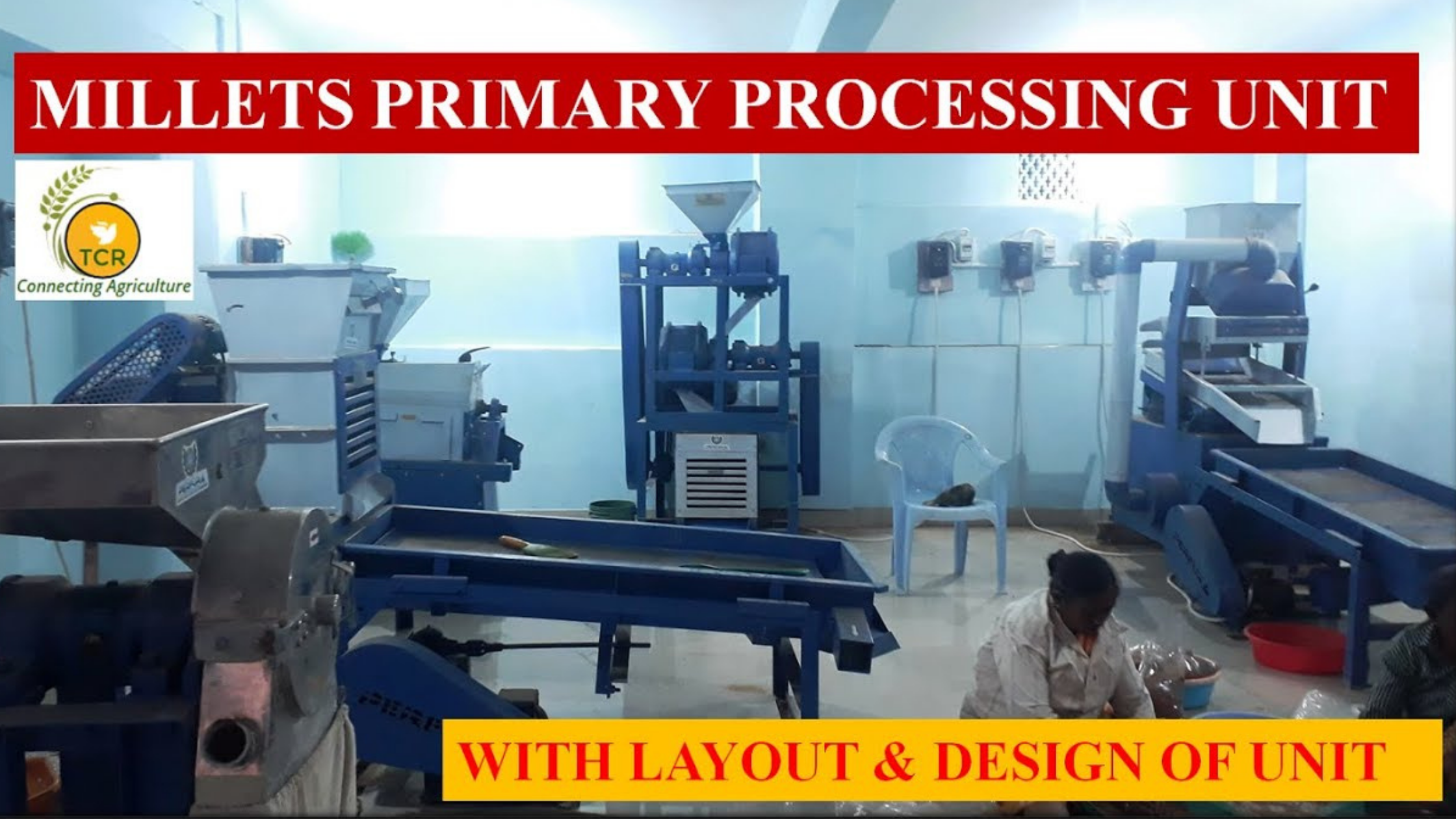
    MILLETS PROCESSING UNIT DESIGN & LAYOUT:

    To establish a millet processing unit you need at least 25*25ft space with proper flooring and at least half feet concrete laid under the flooring where the machines will be installed.

    The height of the walls should at least be 10ft tall with exhaust fans in all four corners. All machines have to be installed using foundation bolts to arrest vibrations and also balanced properly. Machine installation is critical because it would directly affect the life of the machine and also its performance.

    Author: Tapas Chandra Roy, A Certified Farm Advisor on Millets, ‘Promoting Millets from Farm to Plate’. In a mission to take the forgotten grains- Millets to Millions. To remain updated on my blogs on millets you can join my Telegram Channel – Millet Advisor.