Category: Millet News

  • Nutritious and Healthy Ragi Ladoos by EarthPoorna creating Food Sensation

    Nutritious and Healthy Ragi Ladoos by EarthPoorna creating Food Sensation

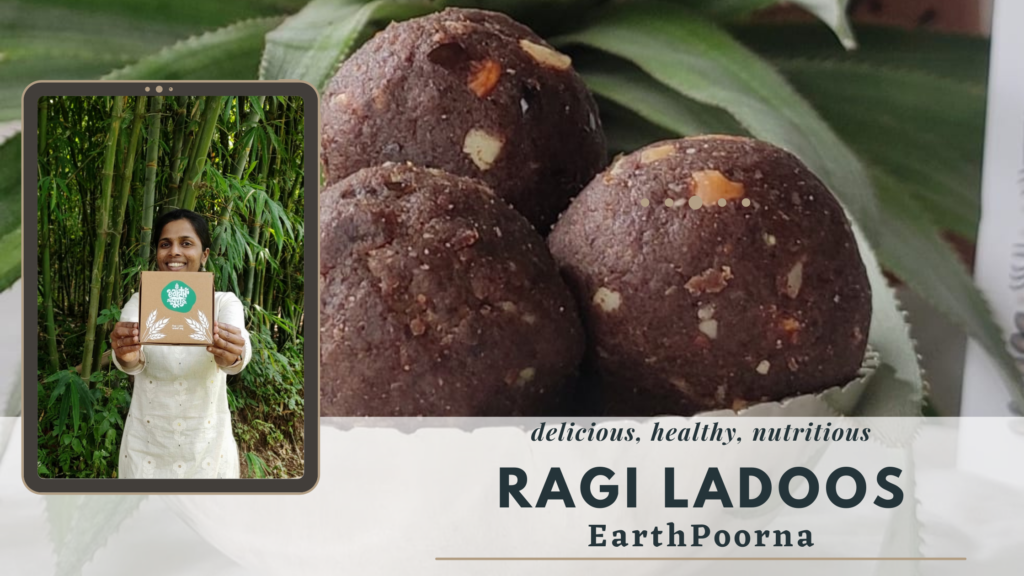
    Ragi Ladoos – Nutritious & Healthy

    Millets making a comeback due to their rise in demand by the people and the ability of millets to face climate change creating space on the farmers’ fields. Finger Millet (Ragi) is widely accepted in India due to its ease in processing and making different recipes. Ragi Lodoos made by EarthPorna are creating food sensations in people’s hearts.

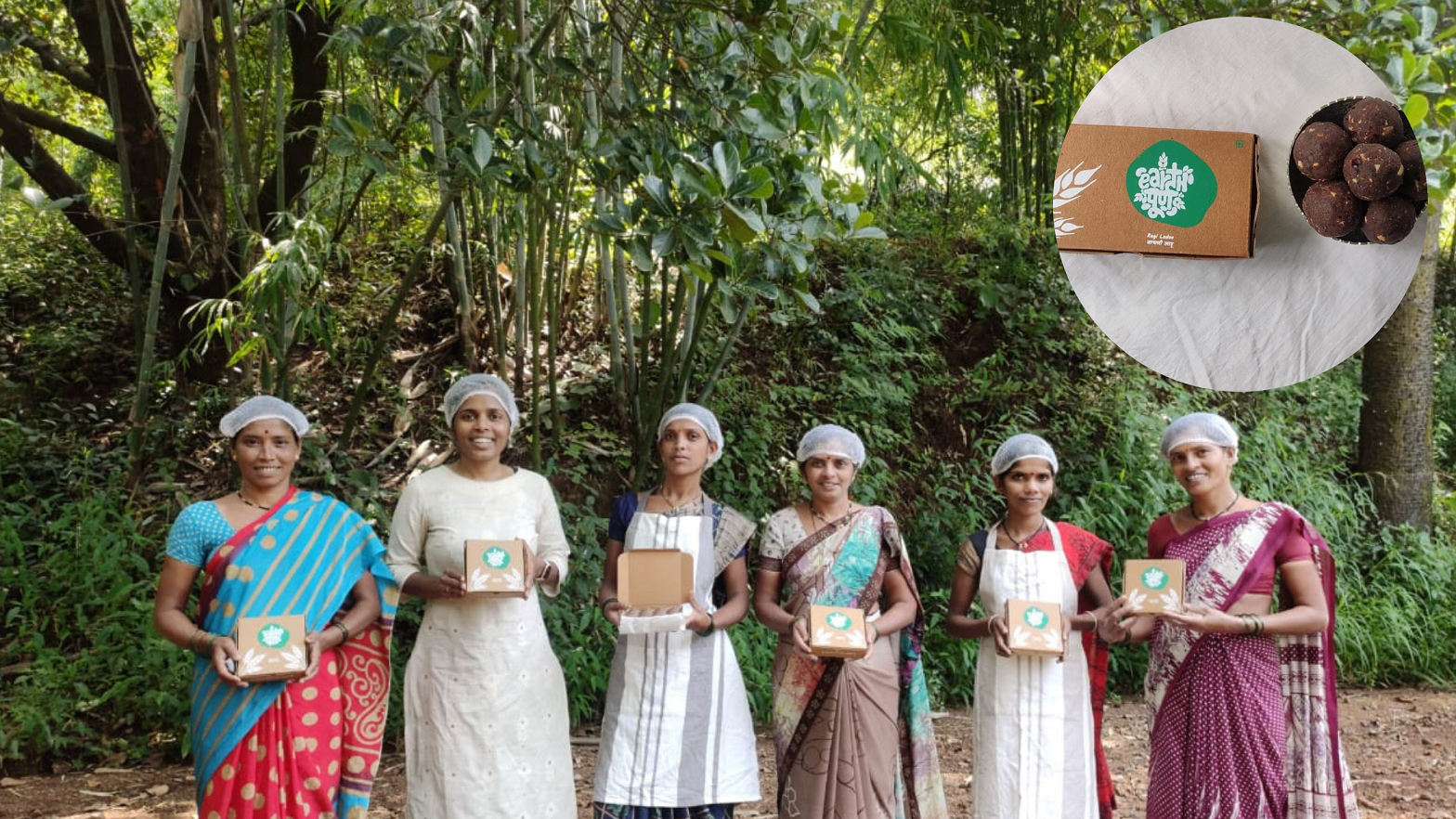
    EarthPoorna, a social venture by Sucheta Bhandare of Pune involving women in the business and procuring millets directly from farmers. Ensuring and supporting the livelihood of women and farmers.

    Before going to the story let us understand the health benefits of ragi ladoos and how it is helping people in their health.

    Health Benefits of Ragi Ladoos:

    • Rich in Calcium which is good for bones. It has been reported that 100 gm of ragi contains 364 mg of calcium.
    • It is gluten-free and it will be a good choice for people suffering from celiac disease.
    • Due to the low glycemic index, it is good for diabetic patients. The recent meta-analysis of millets has given us more evidence of their goodness in controlling blood sugar levels in our bodies.
    • It helps in maintaining good skin and prevents wrinkle formation and sagging.
    • Due to high fiber, it helps in better digestion and prevents constipation.
    • Ragi helps in checking the weight of the body by lowering the appetite and helps in the weight loss journey.

    Related Post: Health Benefits of Finger Millet (Ragi)


    After going through the health benefits of Ragi Ladoos, let us now listen to the Founder of EarthPoorna- Sucheta Bhandare a Social Entrepreneur who has taken the Ragi Ladoos to a great level and created a sensation among the people of India.
    Ragi Ladoos

    The short breaks at my school in Vadner used to be so interesting that even the thought of it makes me smile today. I used to take peanuts and jaggery, dates and grated coconut, roasted grams, and puffed rice some days, and seasonal fruits, pulses, and healthy and nutritious ladoos on other days.  During days-offs and holidays, my friends and I would go to the farms and happily devour whatever was growing there. Spending my childhood in a village in a village in the district of Nashik meant that I had no other option for the junk food that kids in the cities eat today.

    Today, although I live in a big city like Pune, my hunger pangs are still fulfilled by such simple preparation. During times of exertion and exercise, I have realized the benefits of consuming such simple yet healthy preparations. All this was easily available to me back at home because my mother made it a point to put it in my Dabba(tiffin box). In cities, there are many out there who want to incorporate such a healthy diet into their lifestyle but have no time and sources to get hold of such products.

    That is why we are bringing to you such preparations filled with love and health. A combination of your grandma’s recipe and expert advice on diets suitable to our lifestyle is what you will find in our natural and tasty preparations. We at ‘EarthPoorna Foods’ are glad to serve you delicious food in your office, school, gym, college, and at your home.


    EarthPoorna – Impact on the life of Women, Farmers, and Consumers:

    The best thing about EarthPoorna is that the chemical-free raw materials are procured directly from the farmers. In the initial days, it was difficult to get ragi grains, but slowly Sucheta Bhandare convinced the farmers of her locality to cultivate and promised to pay a better price. Farmers were happy and started cultivating ragi in their fields when they could find a better market for their produce.
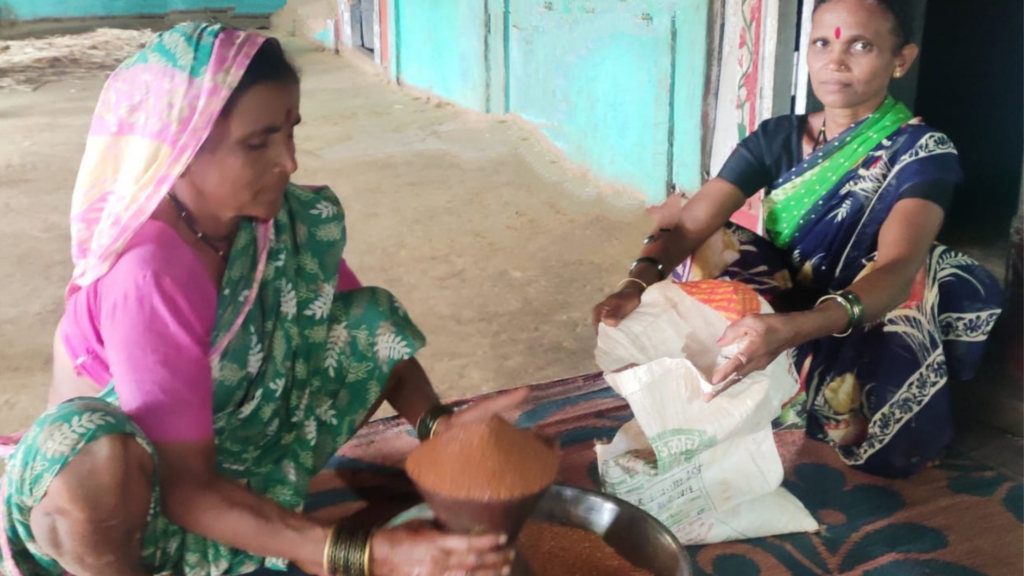
    Ragi Procurement directly from farmers
                                                                                        Photo: Ragi Procurement directly from farmers

    EarthPoorna has a team of dedicated and well-trained women who make delicious, healthy, and nutritious ragi ladoos. This venture has bought about a change in the life of the women and improved their livelihood status.

    The EarthPoorna Ragi Ladoos impacted the health of the consumers. Now, people have got a nice product to choose from. Ragi Ladoos has reached the different corners of the country. The feedback from the consumers is amazing and they are recommending it to their friends and relatives. They liked the taste of the Ragi Ladoos. It is becoming a part of every festival in India. It has created positive vibes among consumers.
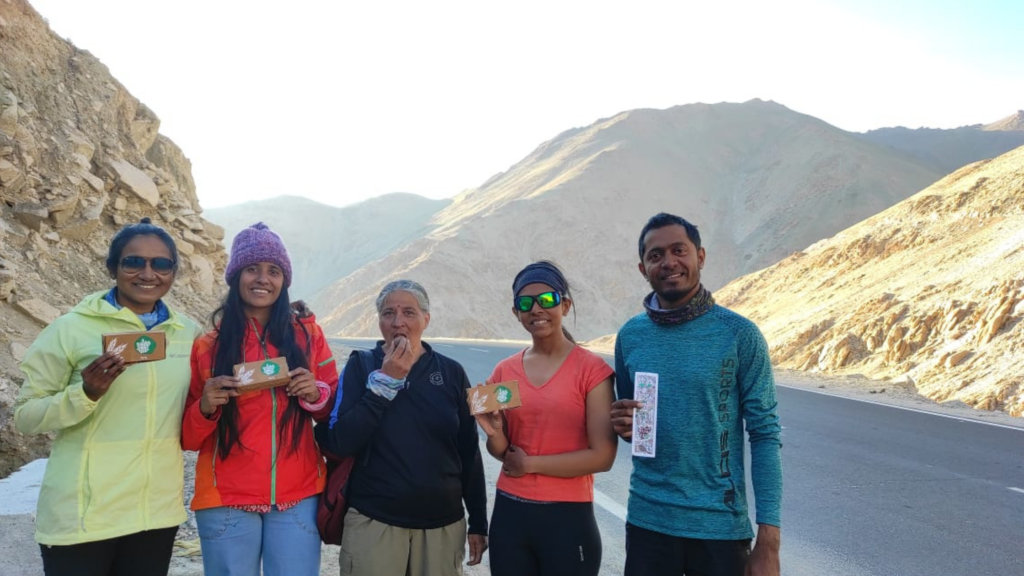
    Ragi Ladoos
    EarthPoorna’s Ragi Ladoos among the Trekking Group

    The uniqueness of EarthPoorna’s Ragi Ladoos:

    The Ragi Ladoos are made by maintaining proper hygiene and cleanliness. These products are tested in the Government Lab and a proper nutrients certificate is obtained and also certified by the Food Safety and Standards Authority of India (FSSAI). Ragi Ladoos is made under the guidance of a Nutritionist and Ayurveda practitioner.

    Ragi Ladoos are made in four variants. The main ingredients of the ladoos are Ragi flour, Jaggery, Cow Ghee, dry fruits, dry dates, flax seed powder, and Cardamom powder. One of them is the multigrain ladoo which is made with a combination of pulses, flax seeds, jaggery, ghee, and almonds. Research has found that millets in combination with pulses improve the bio-availability and absorption of nutrients in the body.

    This makes EarthPoorna’s Ragi Ladoos unique in the market.


    Online Presence of EarthPoorna’s Ragi Ladoos:

    The presence of ragi ladoos in the online platform connects consumers from different corners of the country.
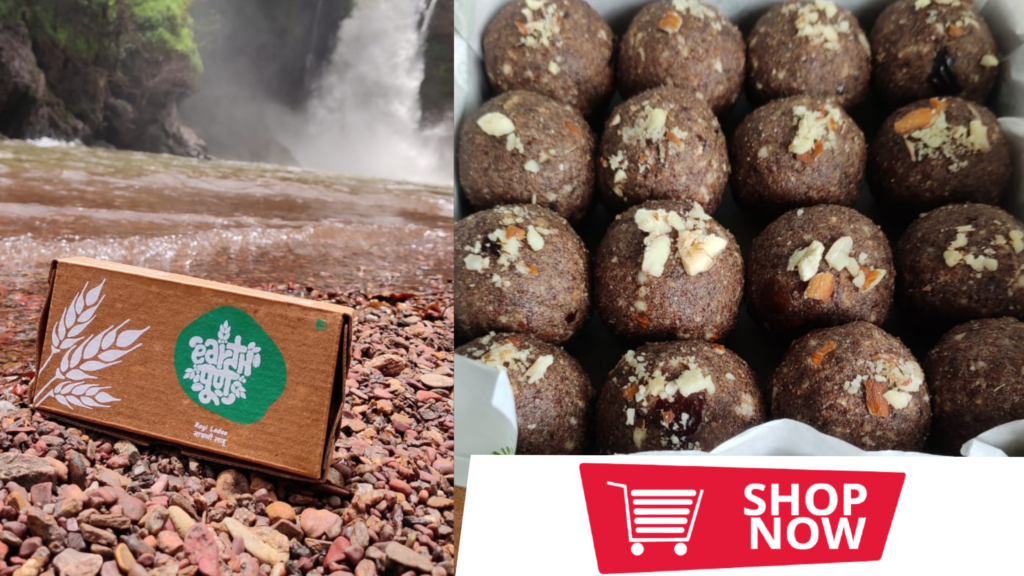
    Ragi Ladoos
                                                                                                                               Click to buy Online

    Adding Ragi Ladoos to your diet will definitely keep you and your family healthy. EarthPoorna’s venture works for the sustainable development of farmers and simultaneously provides you with wholesome and healthy food. I hope this social enterprise will flourish more in the days to come and bring smiles to the face of the farmers and keep us healthy.


    Author: Tapas Chandra Roy, A Certified Farm Advisor on Millets, ‘Promoting Millets from Farm to Plate’. In a mission to take the forgotten grains- Millets to Millions. To remain updated on my blogs on millets you can join my Telegram Channel – Millet Advisor.
     

  • First Ever Solar Millet Processing Unit under Odisha Millet Mission

    First Ever Solar Millet Processing Unit under Odisha Millet Mission

    Solar Millet Processing Unit:

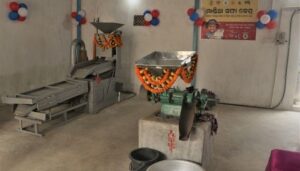
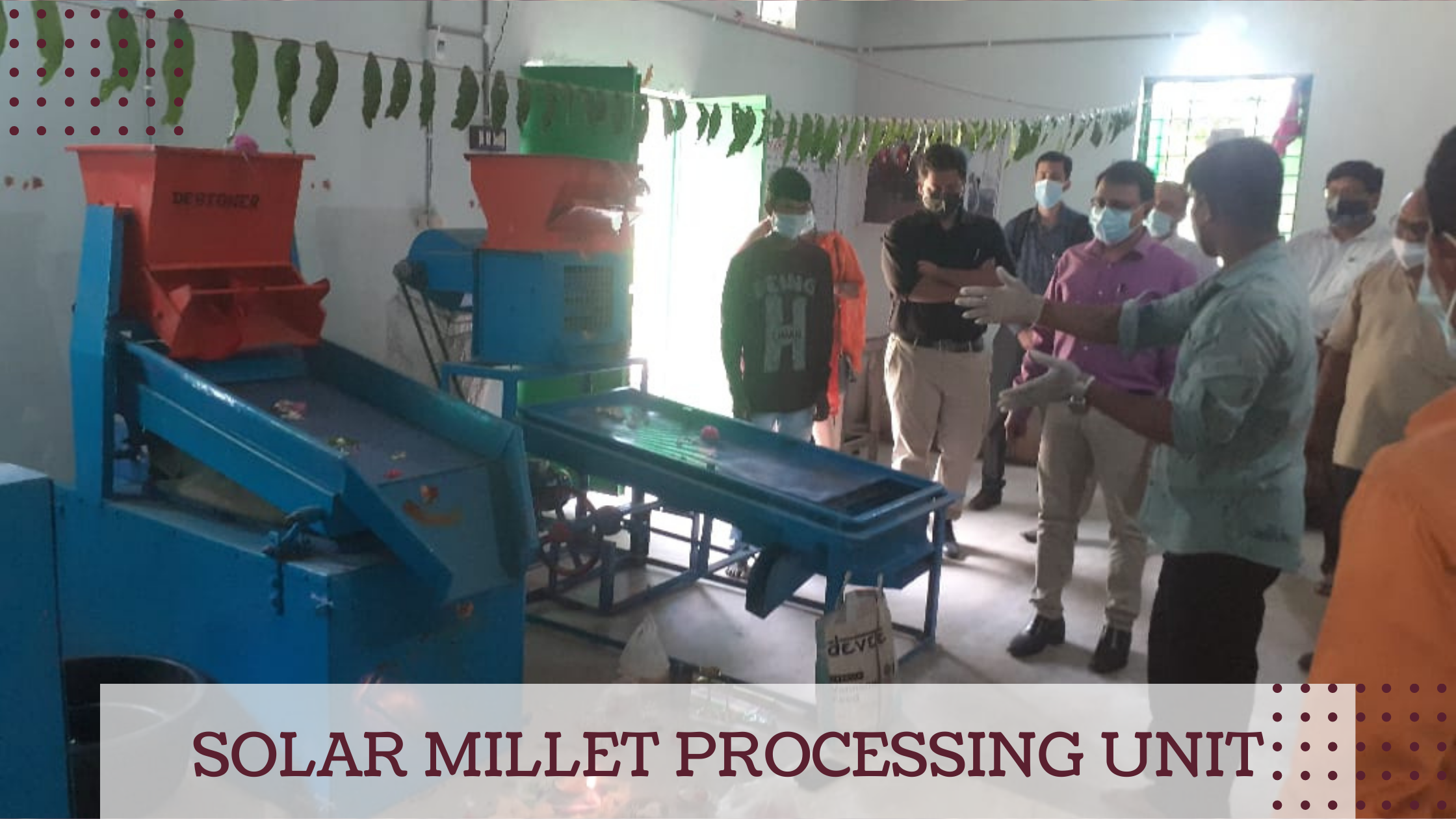
    The first-ever solar millet processing unit was inaugurated on 10th, August 2021 in the village Gobindapur of Manikapur GP, Mohana Block of Gajapati district in Odisha. This unit is established with support from Odisha Millet Mission, Watershed Support Services and Activities Network(WASSAN), and SELCO Foundation, to be managed by Taptapani Farmer Producer Company(FPC) and facilitated by SACAL.

    This unit was inaugurated in presence of the Sub-Collector, Block Development Officer, Tahasildar, and other government officials.

    This center is the first new project and it will reduce drudgery in women and the most important aspect, it will reduce the carbon footprint. As we know processing millets is a difficult task and processing in a traditional way involves drudgery and consumes a lot of time. It takes about one hour to process one kilo of millet grains.

    Odisha Millet Mission’s main objective is to promote household millet consumption, establishing decentralized millet processing units, promoting the Farmer Producer Organisation for marketing, and the inclusion of millets in the ICDS Programme and Mid-day meals. This solar millet processing unit will cater to all the purposes of the millet mission.

    With the help of Mission Shakti, Self Help Groups(SHG) can become self-reliant and independent by opening Millet Shakti Shop. They can get the processed millet grains like Foxtail Millet, Little Millet, Sorghum, and Finger Millet(Ragi), and millets grain flours.

    In the inaugural session, the Sub-Collector announced to make this unit a profitable enterprise by providing a better road and godowns. The Block Development Officer encouraged the branding of millet products and others praised Odisha Millet Mission for working for health and nutritional security.

    Machines in the Solar Millet Processing Unit:

    1. A set of Millet Grader: The grader will help in separating the inert materials like big stones, sticks, sand, grass, etc from the millet grains.
    2. Destonner with Aspirator: It will help in separating the same size stones, mud balls from the grains.
    3. Multigrain Huller: For removing the husk and separate the millets from the husk. It has a capacity of 100-150kg/hour.
    4. Polisher: It will help in removing the thin glome layer or the upper thin layer from millet grains and produce polished grains and it has the capacity of 50-100 kg/hour.
    5. Pulverizer: It will be used for grinding the millet grains into powder form. The capacity of the pulverizer is 10 to 15 kg/hour.

    Related Post: Millet Processing Machines

    The solar millet processing unit can run for 4 hours with full capacity with a full day charge. One machine can be operated at once with battery backup.

    Grading, destoning, polishing, and pulverizing of Ragi, Foxtail Millet, Little millet, Sorghum, etc can be done in this unit. FPO can get processing charges for processing and can also use for self-business purposes. FPO is currently planning for processing that will support local consumption and marketing of millet in local and nearby urban markets.

    Nowadays, there is a demand for healthy food, and millets can provide better nutrition as compared to other grains. This solar millet processing unit will not only help for the processing of millets but will also encourage farmers to grow millets in their area.

    In the coming days, more millet processing units are to be installed in Odisha under Odisha Millet Mission and this initiative will definitely help millet growing farmers and also empower women in Odisha.


    Author: Tapas Chandra Roy, A Certified Farm Advisor on Millets, ‘Promoting Millets from Farm to Plate’. In a mission to take the forgotten grains- Millets to Millions. To remain updated on my blogs on millets you can join my Telegram Channel – Millet Advisor.


  • First Millets Processing Unit under Odisha Millet Mission in 2021

    First Millets Processing Unit under Odisha Millet Mission in 2021

    First Millets Processing Unit under Odisha Millet Mission – Inaugurated in Keonjhar District, Odisha:

    The Special Programme for Promotion of Millets in Tribal Areas of Odisha (Odisha Millet Mission) was launched by the Department of Agriculture and Farmers Empowerment, Government of Odisha in 2017 to revive millets in farms and on plates. It was the first agriculture program with a priority on increasing millet consumption in Odisha.

    Odisha Millet Mission was initiated in Keojhar District from Kharif 2019. This five-year project is funded by the District Mineral Foundation of Keonjhar covering 7 blocks in this district (Banspal, Champua, Joda, Jhumpura, Harichandanpur, Hatadihi, and Sadar)

    One of the main objectives was developing millet enterprises and establishing market linkages to rural/urban markets with a focus on women entrepreneurs through FPOs and SHGs. The first Millets Processing Unit Inauguration in Keojhar District of Odisha has shown a way forward. It was inaugurated by the Collector and District Magistrate of Keonjhar.

    Millets Processing Unit:

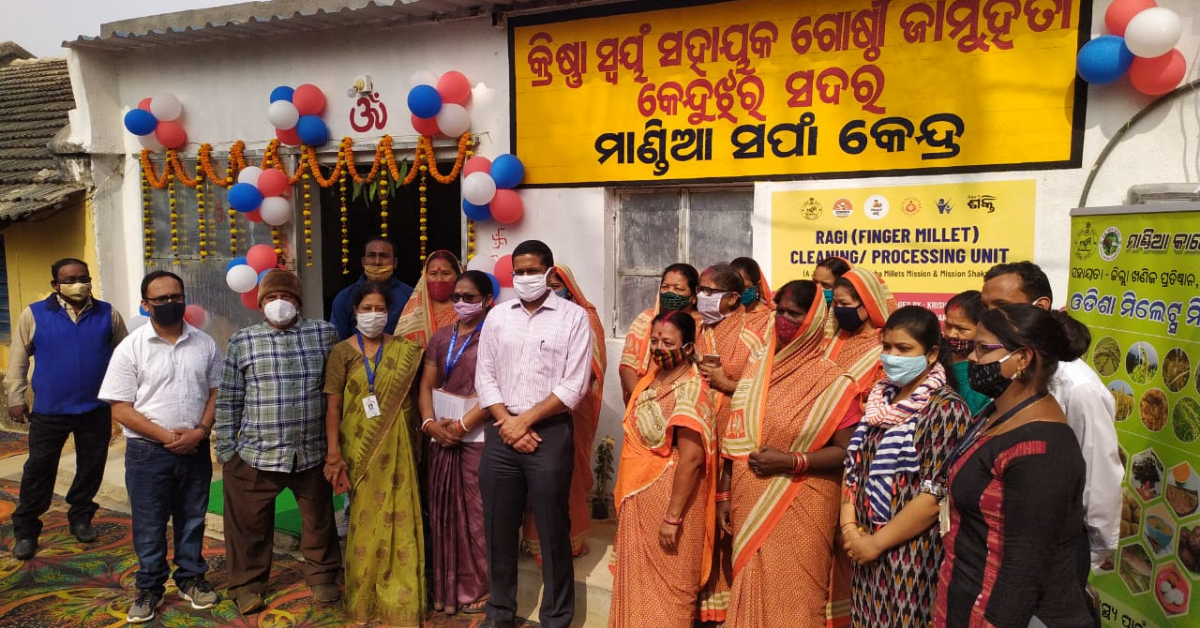
    The first Millets Processing Unit is now fully functional and ready to supply clean Ragi for different flagship programs of the District Administration. It is a joint venture of Odisha Millet Mission and Mission Shakti.

    Millets Processing Unit
    First Millets Processing Unit Inaugurated under Odisha Millet Mission
    • This Unit is being managed by Krishna Self Help Group of Sadar Block and supported by Mission Shakti.
    • The Unit has the capacity of cleaning about 2 quintals of Millets per hour and can clean over 500 quintals in a month.
    • This Unit has been established to ensure the supply of clean Ragi for the flagship ICDS Ragi Laddu Programme.
    •  The Unit has been provided under the Odisha Millet Mission, supported by the District Mineral Foundation.
    • Technical support is being provided by the Department of Agriculture and Farmers Empowerment and WASSAN.

    Machines Installed in the Millets Processing Unit:

    Cleaner-cum-Aspirator with Grader and Integrated Destoner.Make of the model by INDOSAW (Osaw Industrial Products Ltd, Ambala)

    Millets Processing Unit

    • Capacity up to 250kg/hr
    • The heavy structure makes the machine sturdy and more stable. Deck mounted on foundation frame for the stability of the machine.
    • Feeding system provided with a feed hopper, a regulator for the inflow of grains across the entire width of the deck.
    • Fitted with a five-stage cleaning facility.
    • 2 HP motor of reputed make to run on 415V, 50 HZ, 3 Phase AC Supply.
    • A vibratory system with aspiration and size grading system to separate the finer impurities.
    • Vibratory deck with well balanced built-in fan for air volume adjustment for accurate final separation of grains by the counter current.
    • Vacuum type dust collector with variable sludge gate and dust trapper.
    • Separate collection bins for different outputs.
    • One set of 2 removable screens.

    Related Post: Millets Processing Machines

    Millets Processing Machine
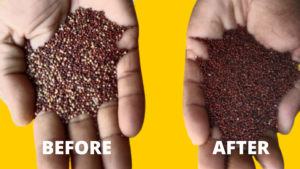
    Before and After Processing of Ragi

    In this Unit, a dehuller is also installed to remove the husk. First of all, the ragi grains are put into the dehuller and next to the Cleaner-cum-Aspirator with Grader and Integrated Destoner. The grader is used for separating inert materials like big stones, sticks, sand, grass, etc. from the grains. These are separated by sieves of different sizes. The top sieve helps in separating the big sticks, stones, and grasses, the middle one separates the good quality grains, and the bottom separates the fine and coarse sand particles.

    The aspirator has a small fan that sends the dust and light particles to the rear end.

    The Destoner helps in removing the small stones and mud balls which are identical to the size of the grains. Destoner works based upon gravitational principles.

    Contribution of Funds:

    The total cost of the Millets Processing Unit is about 5.2 lakhs. 2.2 lakhs is the cost of the Cleaner-cum-Aspirator with Grader and Integrated Destoner and about 3 lakhs is the contribution of Self Help Group towards the construction of Hall, Godown, Electricity and Huller Machine(for removing the outer husk from the Ragi grains).

    Conclusion:

    No doubt, Millets processing is a tedious job and involves lots of drudgeries. But processing machines make the work easier with less effort. Previously, the women farmers were using hand pounding tools to remove the husk and then the bamboo hand winnower to separate the dust, stones, and other impurities. For Ragi, they use to wash with water. The entire process is time-consuming.

    I hope this Millets Processing Unit will help the women in getting a clean and nice end product and ultimately the end consumer will be happy.


    Author: Tapas Chandra Roy, A Certified Farm Advisor on Millets.


  • ”Millet Finder” shows more Opportunities in 2020

    ”Millet Finder” shows more Opportunities in 2020

    ”Millet Finder” shows more opportunities for Entrepreneurs:

    Millets are ancient grains that are healthy and nutritious due to their rich content of antioxidants, nutrients, minerals, and other properties. I must say they are the ”Future Crops” because they are going to address important issues like food, feed, fuel, health, malnutrition, and climate change.

    With millets lot of value-added products are been made in India and abroad but we are aware of a few. To bridge this gap ”Millet Finder” is in your hand.

    Millet Finder Launched:

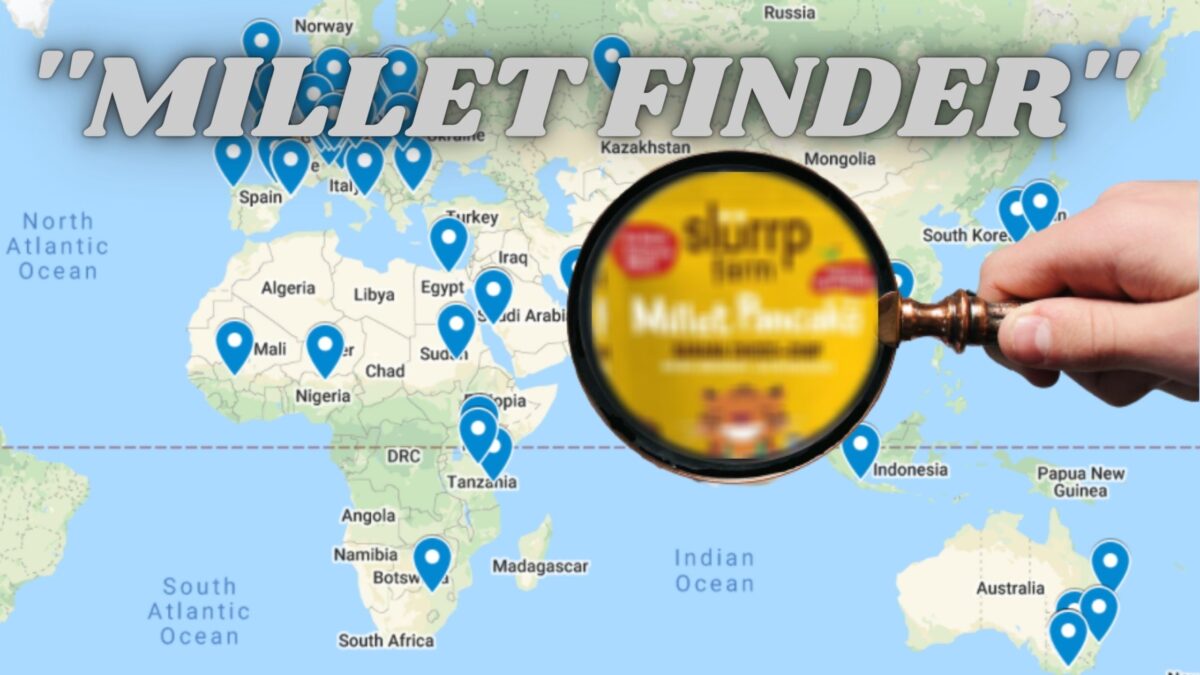
    ”Millet Finder” was launched at Food Tech Expo on 25th, November 2020 by the International Crops Research Institute of the Semi-Arid Tropics (ICRISAT) and ICAR-Indian Institute of Millets Research, Hyderabad. It will help the users in finding the 500 millet products across 30 countries. Millet products are categorized based on Country, Crops, and Type ( Baby Food, Baking, Beverages, Flakes, Flour, Grains, Multi grains, Pasta, Ready to Eat, and Ready to Cook).

    Millet Products around the World:

    Nowadays Millets are becoming consumer-driven as people are more health-conscious. This has made Entrepreneurs enter into this segment and innovative products are coming into the market. Definitely, Millet Finder will help the new entrepreneurs in their decision-making process.

    I still remember the day of my visit to ICRISAT, Hyderabad where I could find a lot of Millet products being displayed. I must thank Joanna Kane-Potaka, Executive Director, Smart Food, Assistant Director-General – Strategic Marketing and Communications, ICRISAT for explaining the products worldwide.

    Opportunities for Entrepreneurs:

    In my previous blog on Millet Market Analysis in 2020, where I had mentioned about the Millet Market Forecast Report by Reportlinker.com that North America Millets Market is expected to grow at a CAGR of 4% during 2019-2027 to reach US$ 1,192.24 million by 2027. The huge growth rate will encourage the new Entrepreneurs and tap the International Millet Market.

    • Millet Finder will give an idea about the millet products available in the concerned country.
    • It will help to know about the consumers’ tastes.
    • It will help to target the untapped millet markets.
    • It will help to know the nutritional value of the products.
    • It will help in knowing the consumer demand in a particular place.
    • It will bring awareness about a millet product for a consumer.
    • It will help new entrepreneurs to reach customers.

    In India, ICAR-IIMR, Hyderabad a premiere institute popularising Millets as healthy food and developed a millet brand Eatrite. The Nutrihub Incubation Program is helping startups to develop new millet products by providing technology and business support. The entrepreneurs have developed many innovative millet products and made them available in retail stores and online globally.

    Future of Millet Finder:

    The lead creator of ”Millet Finder” Parkavi Kumar, has a plan to add more millet products around the world in the coming days and automate the system using Artificial Intelligence(AI) so that it becomes easy to operate and find the right information.

    If you want to add your company/product to this database of Millet Finder, you can send your details to k.parkavi@cgiar.org.

    To explore the millet products of the world, you can just click on Millet Finder.

    Author: Tapas Chandra Roy, Certified Farm Advisor on Millets (To subscribe Youtube Channel: TCR Connecting Agriculture)


  • 3 Millet Varieties Released on World Food Day

    3 Millet Varieties Released on World Food Day

    3 Millet Varieties Released:

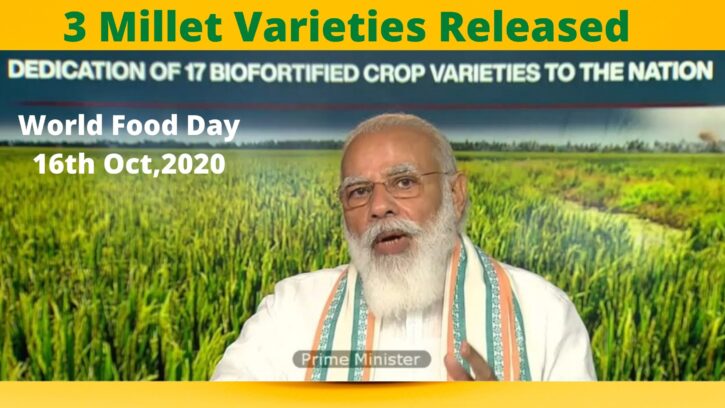
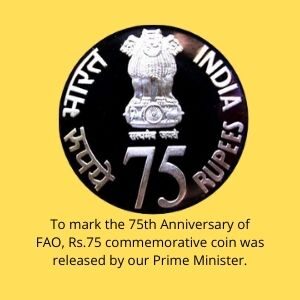
    On World Food Day, Prime Minister Narendra Modi dedicated 17 new Biofortified Varieties of 8 crops to the Nation out of which 3 millet varieties released were 2 Finger Millet and One Little Millet. It was the day to mark the 75th Anniversary of the Food and Agriculture Organisation of the United Nations. The theme of the day was Grow, Nourish, Sustain Together.

    As per FAO, we produce enough food to feed everyone but still, there is an imbalance in the food system due to hunger, obesity, environmental degradation, loss of agro-biological diversity, food loss and waste, and lack of security of food chain workers.

    Recently, the World Food Programme was awarded Nobel Peace Prize for 2020 for its efforts to combat hunger, for its contribution to bettering conditions for peace in conflict-affected areas, and for acting as the driving force in efforts to prevent the use of hunger as a weapon of war and conflict.

    Noble Prize turns the eyes of the international community towards the millions of people who suffer from or face the threat of food security said by FAO, Director General, QU Dongyu.

    To mark the 75th Anniversary of FAO, Rs.75 commemorative coin was released by our Prime Minister.

    Rs.75 Coin Released
    Rs.75 Coin Released

    The best part of the day has given me happiness, seeing the release of 3 Millets Varieties of premier agricultural research Insitute – Indian Institute of Millets Research, Hyderabad. As you know Millets are the future generation crops that will be addressing the imbalance of the food system as mentioned above.

    Now let us see the millet varieties released and their qualities:

    1. Finger Millet – CFMV 1 (Indravathi): This variety has the potential of 35-40 quintal per hectare grain yield. It is resistant to finger and neck blast disease. It has 7-8 fingers with an ear length of 8-9 cm. The variety attains its maturity at 110-115 days. It is recommended in the state of Andhra Pradesh, Tamil Nadu, Karnataka, Puducherry, and Odisha.
    2. Finger Millet – CFMV 2 (Gira): The grain yield potential of this variety is 32-35 quintal per hectare and dry stover yield of 85-90 quintal per hectare. It is resistant to blast disease and stem borer. It has profused tillering and non-lodging characteristics. This variety is recommended in the state of Andhra Pradesh, Chattisgarh, Gujarat, Maharashtra, and Odisha.
    3. Little Millet – CLMV 1 (JAICAR Sama 1): This variety has the grain yield potential of 18-20 quintal per hectare. This variety can give a high tillering of 8-9 tillers. It is tolerant of insect pests and foliar diseases. The amazing characteristic of this variety is that it contains high protein(14.4%) and high grain iron(58 ppm). It is recommended in the state of Maharashtra, Andhra Pradesh, Telangana, Tamil Nadu, and Puducherry.

    Related Post: Finger Millet Production Factors and Constraints


  • Odisha Millet Mission – Best Model showing the way forward in 2020

    Odisha Millet Mission – Best Model showing the way forward in 2020

    Odisha Millet Mission:

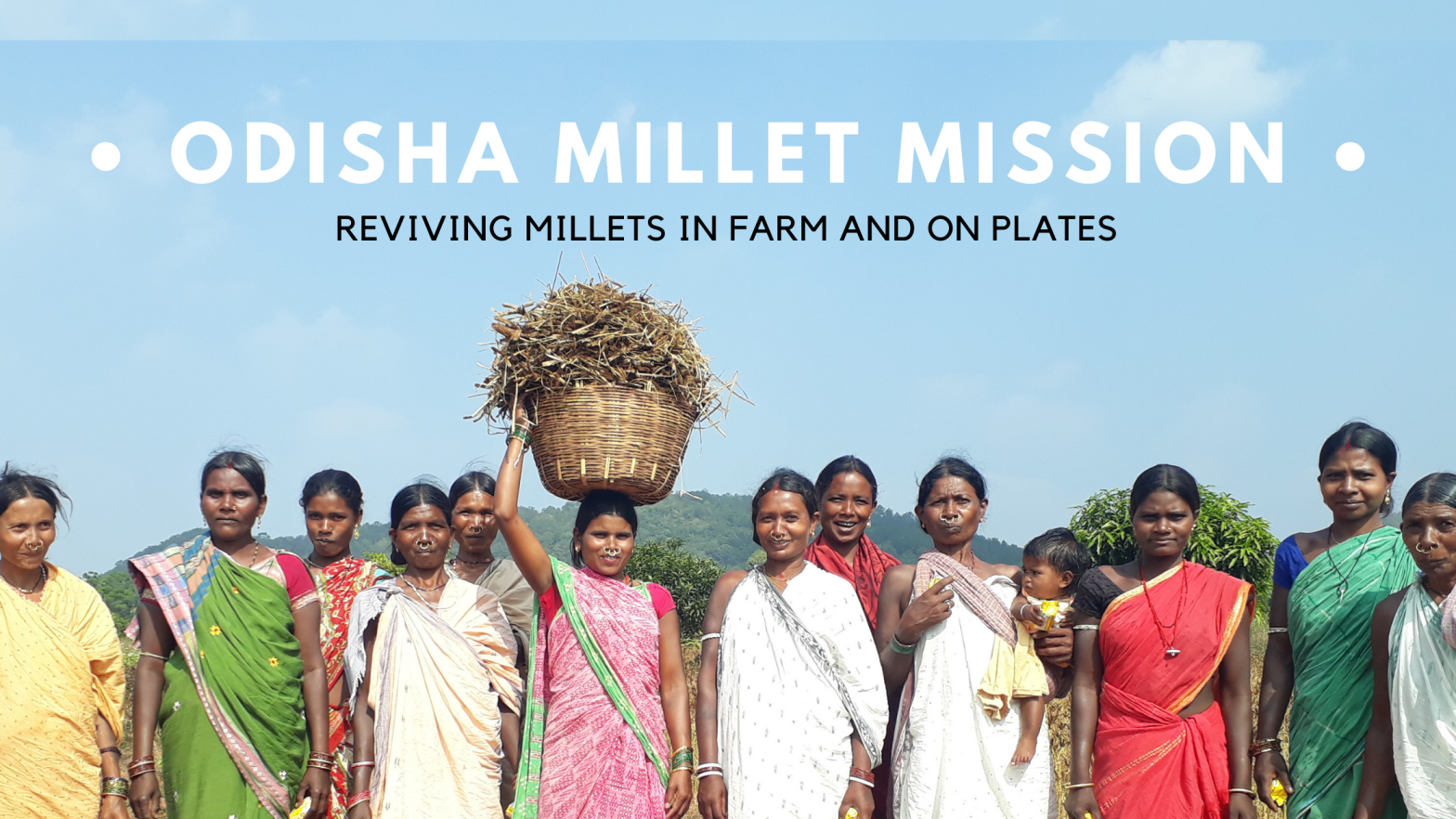
    Odisha Millet Mission working with a tag line “Reviving millets in farm and on plates”. This mission focussed on the tribals areas of Odisha where Millets were the priority crops. As you know that Millets are the only crops that can grow with minimal requirement of water and can withstand drought. No doubt, the crops were grown by the farmers but something was missing and giving a signal that to be addressed. These signals were Productivity, Consumption, Nutrition, Value Addition, Creating demand in the market, Right price, and Processing of millets.

    So, Odisha Millet Mission came forward wholeheartedly and ensuring the issues are rightly addressed.

    Major Objectives:

    • Promoting household-level consumption
    • Setting up decentralized Processing Unit
    • Improving the Productivity of Millet Crops
    • Promoting FPOs for marketing
    • Inclusion of millets in ICDS, Mid-day Meals and Public Distribution System

    The approach of the mission is totally different and it involved 3 agencies to be part of it so that it is executed properly at every level. A unique structure was developed and they were the 3 pillars.

    Unique Structure of Odisha Millet Mission:

    Role of Government:

    • Three-level selection processes of Facilitating Agency through presentation and Field Verification.
    • Policymaking, meticulous development of guidelines, implementing, and monitoring.
    • Involvement of all stakeholders in the participatory approach.

    Role of Civil Society – led by WASSAN:

    • Bridge the field level gap.
    • Active followup on daily basis.
    • Capacity building with the involvement of agencies.
    • Annual and Monthly participatory implementation plan.
    • Support for Departmental Agencies and co-ordination.

    Role of Academia – led by NCDs:

    • State/District Level Consultations
    • Policy Feedback
    • National/International partnerships – TIGR2ESS, CFTRI, IIMR

    The scale of Odisha Millet Mission:

    • Beneficiaries: 50 lakhs
    • Project Duration: 5 years
    • Reach: 76 Blocks in 14 Districts
    • Total Budget: Rs.224 Crores
    • Program Budget: Rs.224 Crores
    • Procurement/PDS/ICDS : 313 Crores

    Outreach:

    • 30 Blocks in 2017
    • 55 Blocks in 2018
    • 72 Blocks in 2019
    • 76 Blocks in 2020

    Policy Milestones of Odisha Millet Mission:

    1. Odisha became the first state to develop standard specifications for the millet machinery through a recognized panel of experts from different scientific institutions.
    2. The first state in the country to complete benchmarking of prices of Little Millet and Foxtail Millet.
    3. First State to declare direct incentives to farmers for 3 years through DBT.
    4. Odisha received an award for the best government initiative on millet promotion by MoFPI-IIFPT.
    5. Third State to distribute millets in the PDS in the country
    6. First State to include Ragi Lodoos in ICDS through the support of the District Mineral Fund.

    Strategies to Increase the Consumption in Urban and Rural Areas:

    Odisha Millet Mission
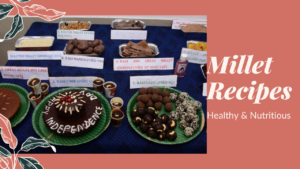
    Millet Recipes in an Exhibition
    • Inclusion in PDS and ICDS
    • Food Festivals at GP, Block, District, and State Level.
    • Participation in popular Exhibitions and Melas within and outside the State.
    • Development of recipes suitable for local culture and eating practices.
    • Training of home cooks and chefs on millet-based recipes.
    • Women-led consumption campaign and awareness.
    • Working with bakeries and popular sweet shops.
    • Engaging student interns and young people for popularising millets.

    The outreach of Consumption related activities:

    Odisha Millet Mission
    Distribution of Ragi in PDS
    1. Distribution of Ragi under PDS to 50 lakhs household in 14 districts.
    2. Ragi Laddu introduced as a morning snack for pre-school children under ICDS in Keonjhar and Sundargarh.
    3. More than 45 events organized and served millet-based food items to 4.4 lakh people in the last two years.
    4. Ragi bakeries in Bhubaneswar are selling Ragi Cookies at OMFED tea stalls and stores.
    5. Other products like Ragi Bread, Sandwiches, Malt, Laddoos, Murukku, etc. are available in the City.

    Plan for Millet Stores in Urban Areas under Odisha Millet Mission:

    Odisha Millet Mission
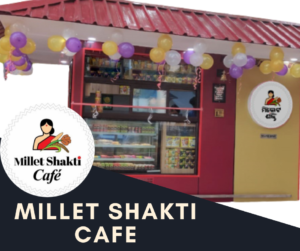
    Millet Shakti Cafe
    1. A Millets Cafe to run by SHGs supported by Mission Shakti.
    2. Millet Shakti as the proposed brand name to be common across products.
    3. Cafes across locations to be called ”Millet Shakti Cafe”.
    4. Millets based hot cooked items and bakery products to be the highlight.
    5. Will also have packaged millet grains and ready to cook products supplied by FPOs supported by Odisha Millet Mission.
    6. 15 quick-serve restaurants will be established within the next year with Women Self Help Groups in Urban Areas.
    7. Kiosks at Block towns and Tribal Haat locations serving breakfasts and snacks items.
    8. Mobile Sales Units at District and town levels selling dry and value-added products made by SHGs and FPOs.
    9. More than 100 WSHG entrepreneurs will be trained and supported.
    Odisha Millet Mission
    SHG trained to make Millet Mix

    Recently Odisha released the State Agriculture Policy-2020 (Samrudhi) in which the Vision aimed at continuously raising farmers’ income and welfare while ensuring nutritional security. Nutrition has become mainstream in different agricultural activities and Odisha Millet Mission will be ensuring that said by Dr.Saurabh Garg, Principal Secretary, Agriculture, Government of Odisha.


  • The revival of Millet Grain on Farm to Plates addressing Nutritional Security

    The revival of Millet Grain on Farm to Plates addressing Nutritional Security

     Odisha Millets Mission in Sundargarh:

    “Special Programme for Promotion of Millets in Tribal Areas of Odisha” (Odisha Millets Mission)- Reviving Millets on Farm to Plates. It is a flagship programme supported by the Department of Agriculture & Food Production, (Govt of Odisha) to promote millets. It was launched in Sundargarh district in the year 2018-19. The programme initially covered 4 blocks, that is, Nuagaon, Kuarmunda, Rajgangpur and Kutra, which was gradually extended to another 4 blocks (Lephripada, Hemgir, Tangarpali & Balisankara) with financial assistance from District Mineral Foundation, Sundargarh.

    The programme covers all aspects of millet ecosystem that includes production, consumption, processing, marketing and inclusion of millets in State Nutrition Programmes.
    Ragi Ladoos for Nutritional Security
    Ragi Ladoos for Pre-School Children


    The objectives of the Millet Mission:
    1. Improving the productivity of Millet crops to secure household level surplus.
    2. Setting up of decentralized processing facilities for easy access to processed millets.
    3. Promoting Household-level consumption to increase food and nutrition security.
    4. Promoting farmer collectives and marketing to further the millet economy with a focus on women entrepreneurs.
    5. Inclusion of millets in the State Nutrition Programme and Public Distribution System.
    The success of Odisha Millets Mission owes to its unique design of programme delivery involving various stakeholders like Government agencies, Civil Society Organisations, Community Based Organisations and Academic institutions. In Sundargarh, 8 Community-Based Organisations have been implementing the programme with the support of 6 Facilitating NGOs.
    The Agricultural Technology Management Agency (ATMA), Sundargarh acts as the nodal organisation for implementation of the programme at the district level. The State Secretariat for Odisha Millets Mission is hosted at Nabakrushna Choudhury Centre for Development Studies (NCDS), a social science research institute situated at Bhubaneswar. The State Secretariat comprises of Programme Secretariat and Research Secretariat anchored by WASSAN and NCDS respectively.
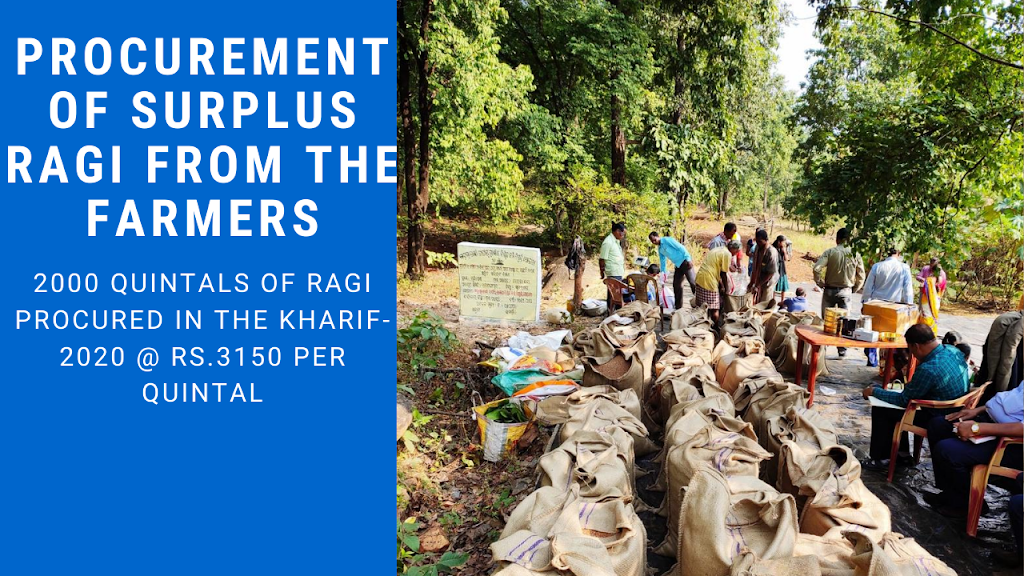
    In the first year of implementation (2018-19), millet (exclusively Ragi) was cultivated in 600 Hectares benefitting 1405 farmers in 4 blocks of the district. During 2019-20, 930 Hectares of millet was cultivated including Ragi, Little Millet, Foxtail Millet and Sorghum involving 2820 farmers. A surplus of around 500 quintals of Ragi was procured from farmers in the Kharif Marketing Season 2018-19 which increased 4 folds to just above 2000 quintals in Kharif Marketing Season 2019-20. 
    Procurement of Surplus Ragi from farmers
    Procurement of Surplus Ragi from the Farmers


    The millets, owing to its nutritional benefits, climate resilience characteristics and nostalgic sentiments about the grain being attached with their tribal culture have added to the other incentives provided by the programme to encourage farmers to cultivate and consume millets. The positive feedbacks from the agrarian community and successful implementation of the programme paved the way for an expansion of the scheme to 4 additional blocks with support from District Mineral Foundation, Sundargarh from 2020-21.
    Inclusion of Ragi Ladoo in ICDS, Sundargarh
    Background of Millet Mission:
    In a series of discussions at State level regarding utilization of the Ragi procured from farmers it was proposed that Ragi, for its nutritional values should be included in the ICDS using DMF and OMBADC funds, based on which the pilot programme for introducing Ragi Ladoo for pre-school children in Anganwadis Centres of Sundargah the district was planned.
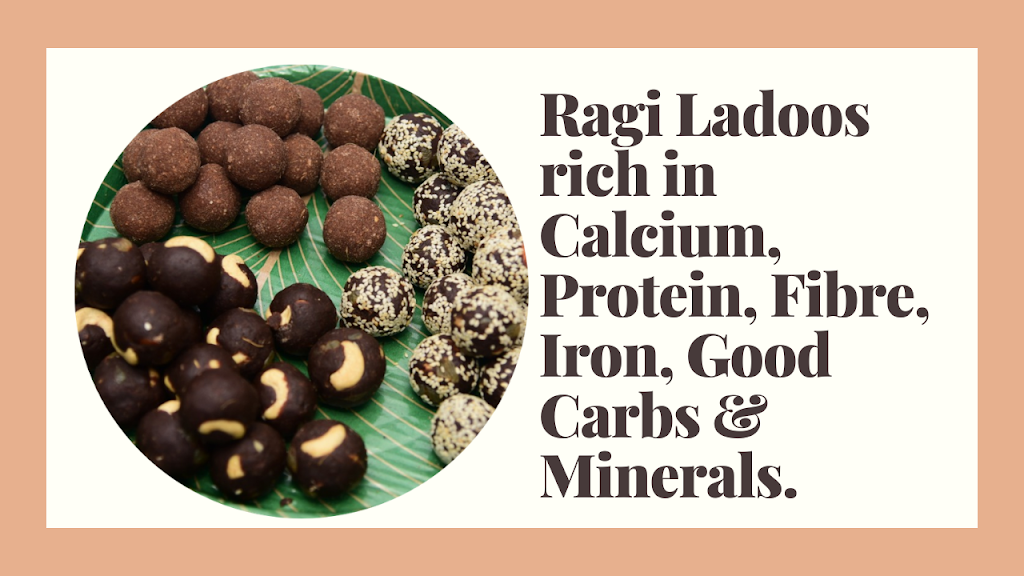
    Ragi is extremely nutritious millet rich in Calcium(344 mg), Protein(7.3 gm), Fibre(3.6 gm), Iron(3.9 mg), Good carbohydrate(72 gms), and other essential minerals. In the process of hulling, the nutrition content of ragi is not lost. Hence, this is an excellent grain for the children.
    About the Project:
    The project envisages supplementing the nutritional requirements of pre-school children (3 to 6 years) enrolled in the Anganwadi Centres of the district. Each child shall be provided with 4 Ragi Ladoos per week comprising of 10.5 gms of Ragi in each Ladoo.
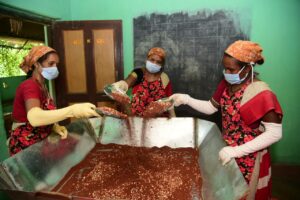
    The existing WSHGs engaged as the THR (Take Home Ration) making units or Chhatua Units in each ICDS project area, promoted by Mission Shakti (W&CD Dept, Govt of Odisha) shall be trained to prepare and supply the Ragi Ladoo Mix to the Anganwadi Centres.
    The Anganwadi helpers shall make ladoos out of the Ragi Ladoo Mix and provide to the children. As Anganwadi Centres are closed in the present pandemic situation, the Ragi Ladoo Mix is packaged and supplied to the beneficiaries’ home on a monthly basis.
    The project, supported by DMF, Sundargarh is a joint initiative involving 2 agencies, that is, Odisha Millets Mission (Directorate of Agriculture & Food Production, Odisha) & Mission Shakti / ICDS (Dept of Women & Child Development and Mission Shakti, Odisha).
    Odisha Millets Mission shall ensure enhancement in millet production in the district and thereby the availability of surplus Ragi in procurement Mandis. They shall also provide machinery required for cleaning, grading and destoning ragi grains to the selected WSHGs. Two WSHGs in the district have been empanelled as the cleaning units, which shall clean the ragi grains using the machinery and supply to the various Chhatua Units for preparation of Ragi Ladoo Mix. The project shall be implemented in a phased manner.
    Millet Ladoo making
    Preparation of the First batch of Ragi Ladoo Mix by Jyoti SHG of Bileimunda, Hemgir Block

    The first phase was inaugurated by the Minister of WCD&Mission Shakti on 15th August 2020 in which about 3000 children of Hemgir project were covered. From November 2020, the second phase shall be launched in 5 project areas (primarily urban) and in the third phase, starting from January 2020 all 21 project areas are planned to be covered.

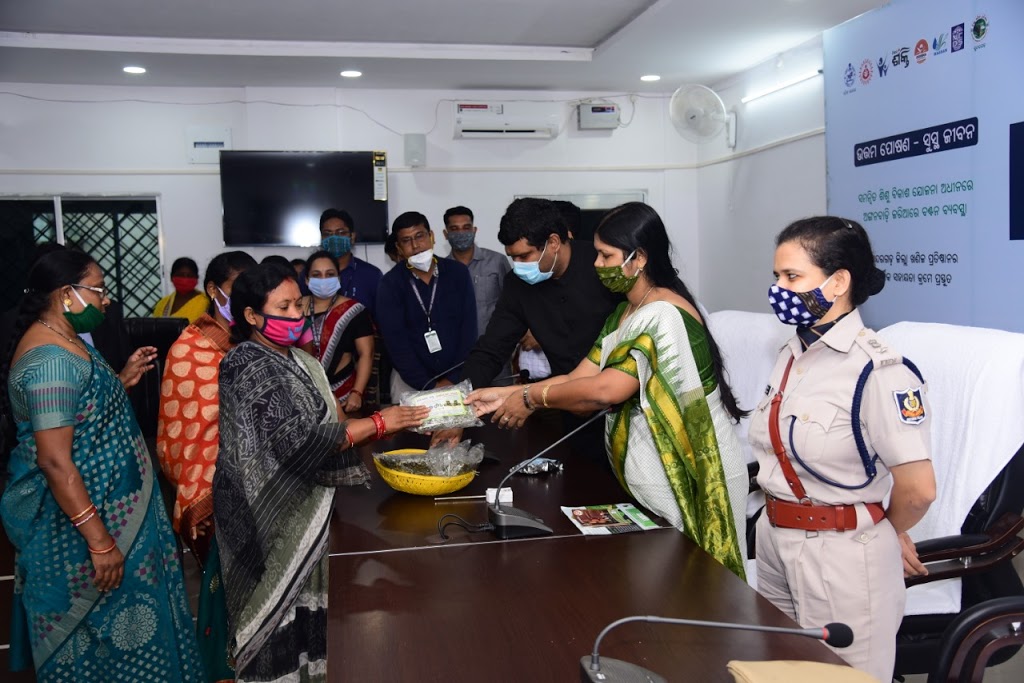
    Millet ladoo mix distribution
    Distribution of Ragi Ladoo mix by the Honourable Minister WCD & Mission Shakti to beneficiaries in the Inaugural Ceremony.


    This initiative was jointly undertaken by Odisha Millets Mission & Mission Shakti, with support from DMF, Sundargarh and Sundargarh District Administration has exemplified how convergence among different agencies have successfully revived the journey of a once-neglected the Nutri-cereal grain on-farm to plates and thus this initiative will address the Nutritional Security.
    Author: Arpan Das, District Project Coordinator, WASSAN, Odisha Millet Mission
  • MSP of Millets – Bringing Hope to the Small and Marginal Farmers

    MSP of Millets – Bringing Hope to the Small and Marginal Farmers

    Minimum Support Price of Millets:

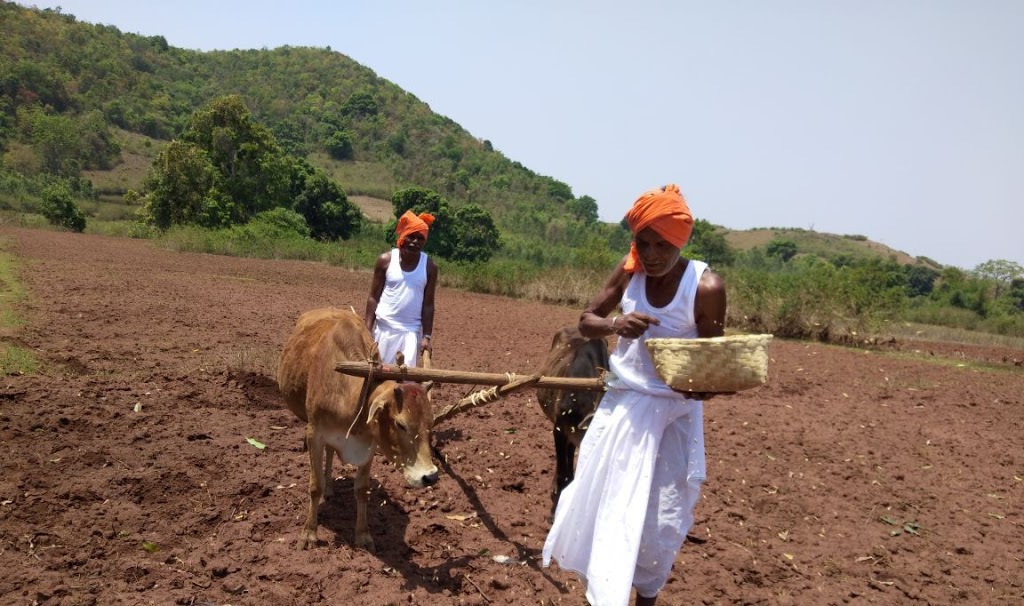
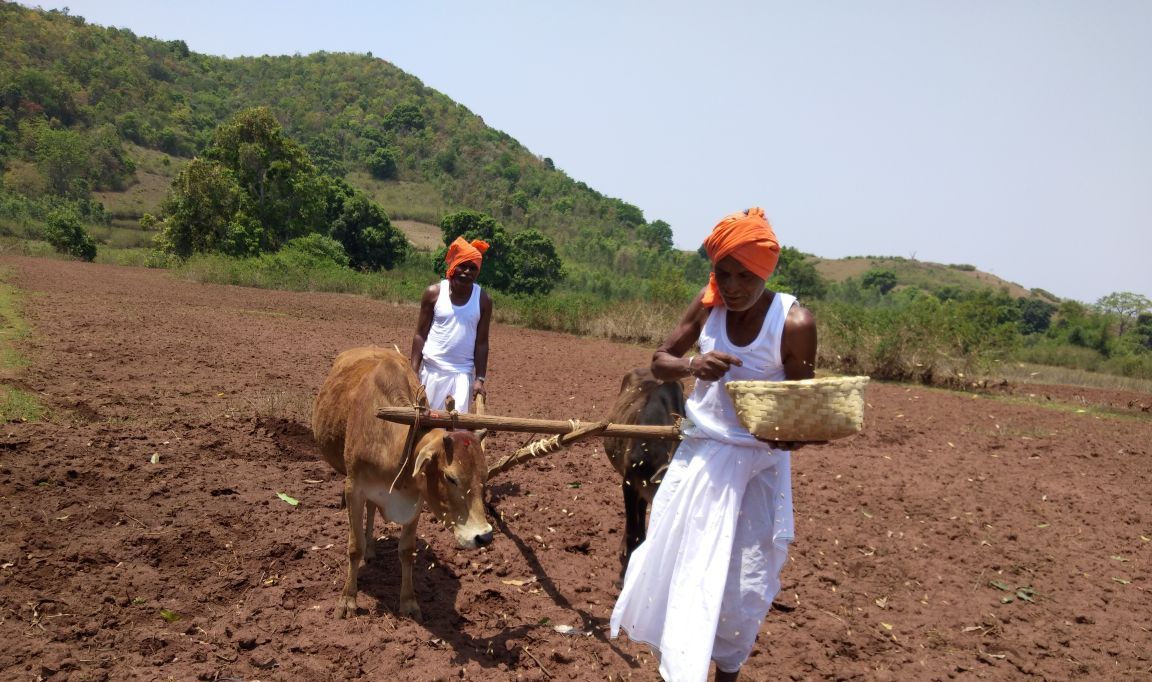
    Farmer sowing seeds
    Farmer sowing seeds on his field

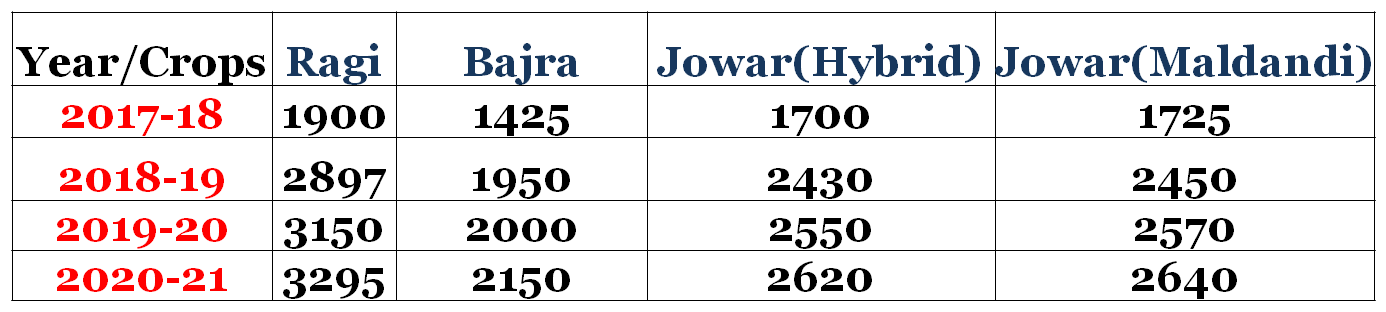
    The support for millets like Ragi(Finger Millet), Bajra(Pearl Millet) and Jowar(Sorghum) is increasing in a steady manner year after year. The Government of India has hiked the minimum support price(MSP) of Millets today based on the recommendation of the Commission for Agricultural Costs and Prices(CACP). The price of Ragi increased from Rs.3150 to Rs.3295, Bajra from Rs.2000 to Rs.2150, Jowar(Hybrid) from Rs.2550 to Rs.2620 and Jowar(Maldandi) from Rs.2570 to Rs.2640.

    minimum support price of millets
    MSP of Millets Year Wise

    The price hike in Millets crops will help the farmers to take the decision and plan accordingly in this Kharif season. Most of the farmers of our country depend on dryland farming and the suitable crops are the millets. This will definitely be helpful for small and marginal farmers.

    As you know that the demand for millets is increasing day by day due to its nutritional value and immunity booster properties. The forecast of Millet Market in the global is giving a good signal for these crops which I have mentioned in my previous Blog

    An initiative of Odisha Millet Mission:

    The support for Ragi procurement in Odisha has given a boost in the mind of the farmers for the two consecutive years under Odisha Millet Mission. This year the Odisha Government has procured about 93,000 quintals of Ragi from the farmers at the rate of Rs.3150 per quintal. Farmers of Odisha will be happy to hear the news on an increase of Rs.145 per quintal in Ragi.
    The Indian Metrological Department expects a normal monsoon this year and this will not affect the millet crops which are grown in dryland. The yield will definitely increase as farmers will focus more on these crops as they are sure of the price of their grains.
    minimum support price of millets
    Four Year MSP of Millets
  • Millets Market is Booming in 2020

    Millets Market is Booming in 2020

    MILLETS MARKET IS BOOMING:

    Millets are considered Superfoods as they are gluten-free and rich in many functional compounds like dietary fiber, slowly digestible carbohydrates, high protein content, B-complex vitamins, calcium, iron, magnesium, manganese, copper, and phytochemicals.

    They are having non-acid forming properties, easy to digest, and non-allergic.

    Millets Market is booming
    Types of Millets grown in India

    Millets are mostly grown in developing countries especially in Asia and Africa taking into a share of 97%. The Types of Millet grown in India which you can check in my previous blog.

    Potential of Millet Products:

    Millet based products such as flakes, cookies, and ready to eat products are getting more demand in India and around the globe. Nowadays when you tune to the youtube channel lots of millet-based recipes are coming forward as it is healthy and nutritious.

    But we cannot ignore the baby food market segment where a lot of products have launched in India and worldwide.

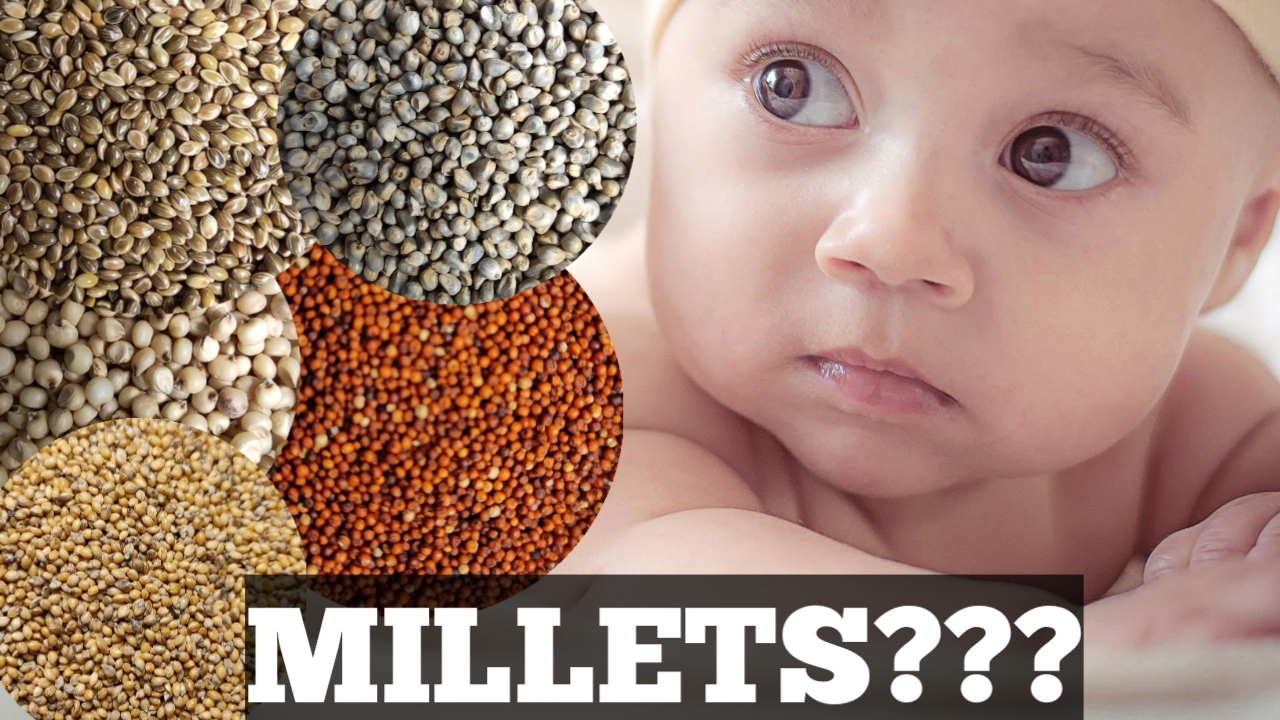
    Recently when I was going through the search on the Internet lot of questions were coming, Are Millets Good for Babies?? This shows the potential of Millets.

    Millet Market
    Millets are Good for Babies

    Millet Research & Forcast:

    In recent news published in The Hindu BusinessLine could find an article Strong immunity is a key weapon in the fight against COVID-19. Research reports suggest that patients with good immunity levels are able to fight the infection in a better way. A fair dose of millet intake would help people boost their immune system.

    According to a report announced by the Reportlinker.com “North America Millets Market Forecast to 2027- COVID-19 Impact and Regional Analysis By Product; Application; Distribution Channel; and Country, where they have mentioned that The North America Millets Market was valued at US$ 841.87 million in 2018 and expected to grow at a CAGR of 4.0% during 2019-2027 to reach US$ 1,192.24 million by 2027.

    I could also find the indication of Millets booming when I see my My Youtube Channel  Analytics where most of the audiences are from the United States, United Kingdom, Canada, Malaysia, Australia, Nigeria, and many more on the list.

    The search for Millets is increasing around the globe as now people have understood the importance and health benefits.

    So, the potential of millets and the market is going to boom in the coming days. The entrepreneurs who are into Millet Business and who are thinking to enter into this segment should grab the opportunity as soon as possible.

    The farmers growing Millets should focus more on this crop as it will be giving them more returns as compared to others.

    Finally, I must say that Millets are the crops of the Future. 

    Please give your valuable comment and feedback about this article.


  • Nutri-Cereals- National Workshop in Odisha in 2019 a Grand Success

    Nutri-Cereals- National Workshop in Odisha in 2019 a Grand Success

    Nutri-Cereals – National Workshop in Odisha:

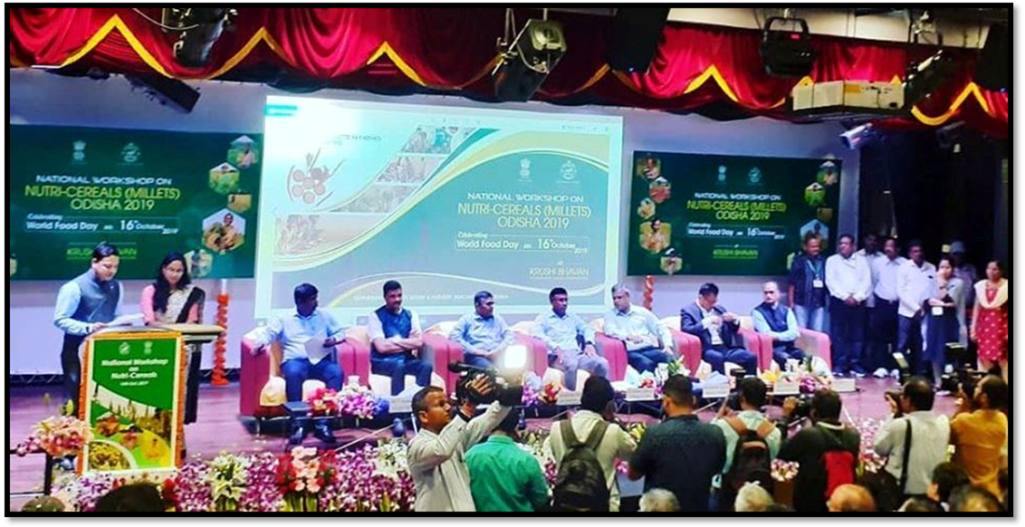
    Inaugurating a national workshop on Nutri-cereals, Chief Secretary Asit Tripathy said Odisha is the first State to introduce millets in the public distribution system and Niti Aayog has recognized it as a model State in this regard. The Odisha Millet Mission, launched in 2017, has now been extended to 72 blocks in 14 tribal-dominated districts. The National Millet Mission started in 2018 has given a further boost to the campaign in the State.

    Odisha Millet Mission:

    Odisha Millet Mission is a unique initiative for the revival and promotion of millet production. The Centre has recommended other states to follow the Odisha model,” said Pradeepta Kumar Mohapatra, Agriculture Production Commissioner.
    Principal Secretary of Agriculture & Farmers’ Empowerment Sourabh Garg said the Odisha Millet Mission is a unique partnership model wherein the Government, academia, and civil society have joined together to implement the programs through farmer producer organizations.
    “It is built on a comprehensive approach that includes production, processing, consumption, value addition and marketing,” he said. Around 50,000 farmers have been mobilized to take up millet cultivation with improved agronomic practices. The State Government has already started procurement of surplus millet from the farmers and the procurement target has been enhanced to one lakh tonne. Plans are afoot for the inclusion of millets in supplementary nutrition programs under ICDS, MDM, and PDS. 

    Deliberations on National Workshop on Nutri-Cereals:

    Director, Country Relations of International Crops Research Institute for the Semi-Arid Tropics (ICRISAT) Arabinda Kumar Padhi said millets are climate-resilient crops and can be grown under stressed rain-fed conditions, and people of South and West Odisha have traditional skills in millet production undertaken over generations. “The highlands of the State have vast scope for millet cultivation as well. ICRISAT would provide the technology and international best practices for improving productivity in the State’’. 
    In the national workshop on Nutri-cereals, deliberations were held on the promotion of seed diversity, policy initiatives, challenges in the inclusion of millet in PDS, millet marketing, and value chain through framers organizations. There were also experience sharing sessions among farmers and NGOs on agronomic practices.

    On the occasion, 14 leading millet farmers of the State along with representatives of leading NGOs namely Pragati and Pradhan were awarded.
    Focusing on the role of agriculture and food production with nutrition and security, FAO, Country Representative, Tomio Shichiri said: ‘’While food grain production in India has increased over five times since Independence to almost284 million tonnes in 2018-19, there is a high rate of malnutrition in the country, Therefore, there is a need for diversification toward Nutri-rich crop production such as Nutri-Cereals and pulses.’’ The focus must not only be on increased food grain production of targeted Nutri-cereals such as millets. Promotion of homestead gardens and diversification of agriculture production towards fruits, vegetables, and aquaculture can contribute towards addressing the malnutrition.
    Meera Mishra, Country Coordinator, International Fund for Agricultural Development (IFAD) India Country Office, said the changing patterns of consumption directly benefit farmer’s production system and income. Quoting an example of millet production in Madhya Pradesh, she said the tribal Baiga women in the remote Dindori district in MP grew minor millets – Kodo and Kutki – using traditional practices. Support from the government and IFAD program has increased production and engagement. Earlier only 750 farmers were doing millet farming on 750 acres and today these numbers have increased by 10 times to 7,500 farmers and 7,500 acres.

    “Nutri-Cereals: Challenges in Inclusion to ICDS/MDM/PDS- Nutritional Perspective”.

    Dr.Paras Sharma, Scientist, ICMR-National Institute of Nutrition presented about nutritional perspective and gave the Solutions and future actions to improve millet consumption. Millet Production should be increased in order to maintain supply. Identification and development of high micronutrient varieties with low anti-nutrients are necessary.
    Biofortification of millets crop is required to enhance micronutrients. There is a need for the development of millet processing technology at rural and urban levels. Degree of milling optimization to retain maximum nutrients and to reduce phytate and voluntarily adopted by the millet processing units.
    The role of other inositols Phosphates (IP5, IP4, and IP3) needs to be looked in for mineral bioavailability. There is a need to develop cooking methods to maximize nutrient retention and bioavailability. A combination of suitable food to enhance the bioavailability of nutrients can be explored. Development of recipes according to the region such as chapattis for the northern part of the country. Improvement of protein quality of millets through genetic approaches.  Blending with other cereals to enhance the organoleptic properties and ease in novel food product development.
    Germinated/sprouted/ malted or fermented millets have high bioavailability of micronutrients which may be served in MDM HTST processed foods including popping/puffing and roasting also reported to improve the mineral bioavailability and such products also have a longer shelf life so these may be included in the food supply system.

    Diverse Seed Systems for Millets:

    Mr.Ravindra A, WASSAN, presented on Diverse Seed Systems for Millets and why there is a need for diversity. How a seed system can be managed by the community and its replication in biodiversity blocks.

    ICRISAT initiatives in connecting crops in semi-arid tropics to meet nutritional requirements:

    Dr. A K Padhee, Director, Country Relationspresented on ‘’ICRISAT initiatives in connecting crops in semi-arid tropics to meet nutritional requirements”. There is a need for demand-driven innovation and this can be done by mainstreaming nutrition, empowering women, and attracting youth into agriculture. Pointed out the approaches for adoption by participatory and partnering, building capacity at state and local level, integrating communications, monitoring, and evaluation & finally policy support.

    Promotion of Production & Consumption of Nutri-Cereals:

    NITI Aayog, Government of India, presented on‘’ Promotion of Production & Consumption of Millets’’. In this, the key recommendations of the committee were focused.
    • Decentralized procurement of millets by State Government
    • Promotion of millets under schemes like Mid-Day Meal Scheme (MDM), Integrated Child Development Scheme (ICDS) to address the nutritional security of vulnerable groups.  
    • Enhancing public awareness about health, nutritional, environmental & other important benefits of consuming & cultivating millets
    • Development of new hybrid and high yielding varieties to improve productivity, increase shelf-life improved nutritional content, and promote crop diversity
    • Increasing incentives to farmers for millet cultivation and addressing issues related to the MSP of millets
    • Development of improved, technology-driven millet processing units to retain nutritional value and make millets ready for consumption and sale
    • Encouraging women’s, marginalized sections, and tribal communities to undertake millet production, supported by initiatives by NGOs and other organizations.
    • Gradual introduction under PDS- Once the supply of millets under PDS improves, out of 5 kg basket per person entitlement, 1 kg may be made mandatory for millets.
                      The suggested roadmap that can be achieved in short/medium term duration:
    • Inclusion of Millet based products in MDM & ICDS menus- Replicate initiatives of States already doing this
    • Engagement of Private sector & Industries- Creating a demand-pull among consumers    
    • Advocacy and Awareness generation about multifaceted benefits of Millets- Running a campaign
    • Establish “National Millets Board”- Link all stakeholders & create a certification mechanism
    • Improving procurement of Millets under PDS (beginning with Millet producing areas & gradually expanding)
    Finally, in the long term duration, the production of millets is to be increased.
    Odisha Millet Mission presented the Future roadmap- taking millets to million.
    • Making Odisha a “Centre for Excellence” on Millets.
    • Landscape based Agro Biodiversity.
    • Inclusion of suitable millets in ICDS, MDM, and PDS.
    • Start-Up Odisha – Millet Odisha.
    • Millet Value Chain – Seed to Storage to Supply.
    • Women SHGs led the Nutrition revolution. 
    Dr. Usha DharmarajSr. Technical Officer, Department of Grain Science and Technology CSIR-CFTRI, Mysore presented“ Millets in Community Feeding- Challenges and Interventions”.
    Challenges:
    • All millets but for pearl and finger millet contains husk (non-edible portion) as a separate entity- dehusking is necessary
    • No well-defined machinery set up for dehusking of millets
    •  Pearl, foxtail, and little millet  contains a higher amount of fat and also undergo rancidity at  faster rate-shelf stability is necessary
    •  The presence of bran and a high amount of dietary fiber affects its cooking quality and sensory attributes-Techno interventions are required
    •  Lack of diversified products from millets on the shelf-needs attention to promoting millet usage
    • Lack of awareness about millets and millet-based products
    Interventions:
    • Inclusion of a separator; either color sorter or gravity separator
    • Polishing judicially  to improve  both  the shelf-life and cooking properties
    • Suitable processing to improve the quality of the products
    • Preparation of diversified products from millets

    Promotion of Millet Diversity:

    Dr.Vilas Tonapi, Director, ICAR- Indian Institute of Millets Research, Hyderabad presented on the ‘’Promotion of Millet Diversity’’. ICAR-IIMR has undertaken a millet germplasm exploration in the Dong district in Gujarat and collected 37 accessions of five different millets from 27-28th October 2018. In which, the maximum of 16 acc. of Little millet followed by Finger millet (14 acc.), Sorghum (5 acc.), Foxtail millet and Barnyard millet (1 acc. each). The exploration has covered 27 villages in 4 Taluks in Dong district. The altitude ranged between 161-526 m MSL

    Overall, the Workshop on Nutri-Cereals was a grand success.

    ***Please put your valuable comments and suggestions for the development of Millets in India.