Category: Millets Story

  • Nutritious and Healthy Ragi Ladoos by EarthPoorna creating Food Sensation

    Nutritious and Healthy Ragi Ladoos by EarthPoorna creating Food Sensation

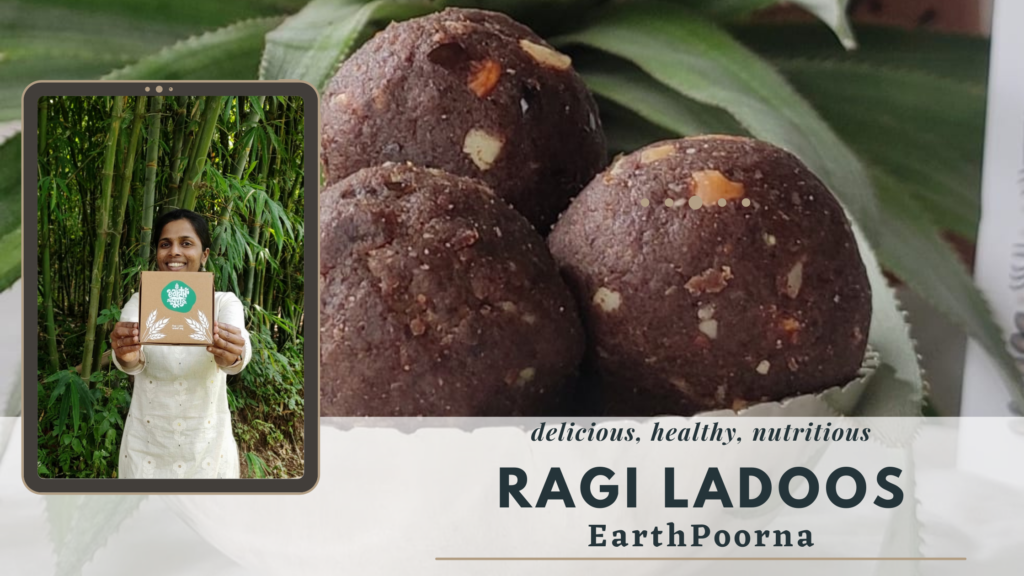
    Ragi Ladoos – Nutritious & Healthy

    Millets making a comeback due to their rise in demand by the people and the ability of millets to face climate change creating space on the farmers’ fields. Finger Millet (Ragi) is widely accepted in India due to its ease in processing and making different recipes. Ragi Lodoos made by EarthPorna are creating food sensations in people’s hearts.

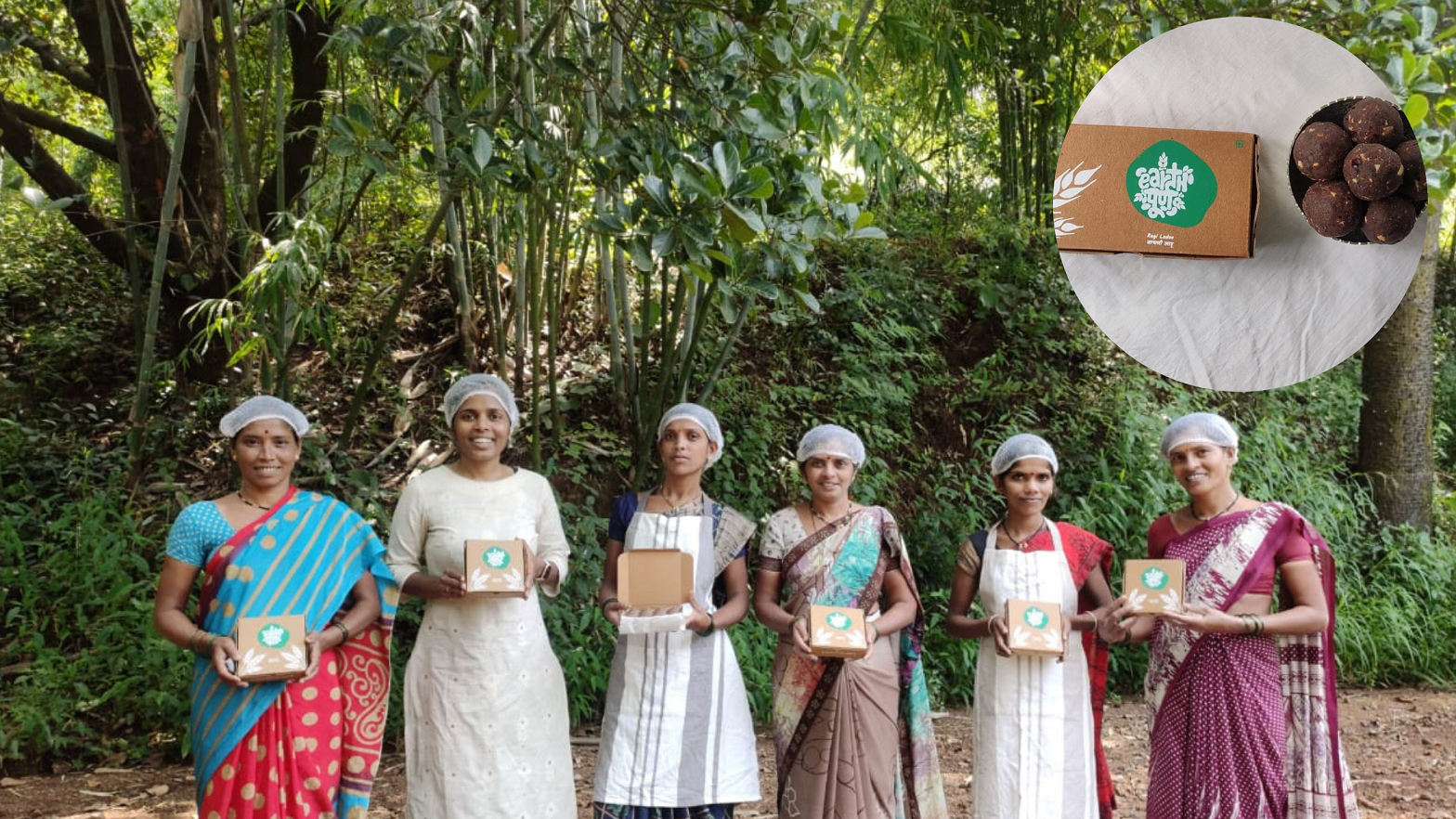
    EarthPoorna, a social venture by Sucheta Bhandare of Pune involving women in the business and procuring millets directly from farmers. Ensuring and supporting the livelihood of women and farmers.

    Before going to the story let us understand the health benefits of ragi ladoos and how it is helping people in their health.

    Health Benefits of Ragi Ladoos:

    • Rich in Calcium which is good for bones. It has been reported that 100 gm of ragi contains 364 mg of calcium.
    • It is gluten-free and it will be a good choice for people suffering from celiac disease.
    • Due to the low glycemic index, it is good for diabetic patients. The recent meta-analysis of millets has given us more evidence of their goodness in controlling blood sugar levels in our bodies.
    • It helps in maintaining good skin and prevents wrinkle formation and sagging.
    • Due to high fiber, it helps in better digestion and prevents constipation.
    • Ragi helps in checking the weight of the body by lowering the appetite and helps in the weight loss journey.

    Related Post: Health Benefits of Finger Millet (Ragi)


    After going through the health benefits of Ragi Ladoos, let us now listen to the Founder of EarthPoorna- Sucheta Bhandare a Social Entrepreneur who has taken the Ragi Ladoos to a great level and created a sensation among the people of India.
    Ragi Ladoos

    The short breaks at my school in Vadner used to be so interesting that even the thought of it makes me smile today. I used to take peanuts and jaggery, dates and grated coconut, roasted grams, and puffed rice some days, and seasonal fruits, pulses, and healthy and nutritious ladoos on other days.  During days-offs and holidays, my friends and I would go to the farms and happily devour whatever was growing there. Spending my childhood in a village in a village in the district of Nashik meant that I had no other option for the junk food that kids in the cities eat today.

    Today, although I live in a big city like Pune, my hunger pangs are still fulfilled by such simple preparation. During times of exertion and exercise, I have realized the benefits of consuming such simple yet healthy preparations. All this was easily available to me back at home because my mother made it a point to put it in my Dabba(tiffin box). In cities, there are many out there who want to incorporate such a healthy diet into their lifestyle but have no time and sources to get hold of such products.

    That is why we are bringing to you such preparations filled with love and health. A combination of your grandma’s recipe and expert advice on diets suitable to our lifestyle is what you will find in our natural and tasty preparations. We at ‘EarthPoorna Foods’ are glad to serve you delicious food in your office, school, gym, college, and at your home.


    EarthPoorna – Impact on the life of Women, Farmers, and Consumers:

    The best thing about EarthPoorna is that the chemical-free raw materials are procured directly from the farmers. In the initial days, it was difficult to get ragi grains, but slowly Sucheta Bhandare convinced the farmers of her locality to cultivate and promised to pay a better price. Farmers were happy and started cultivating ragi in their fields when they could find a better market for their produce.
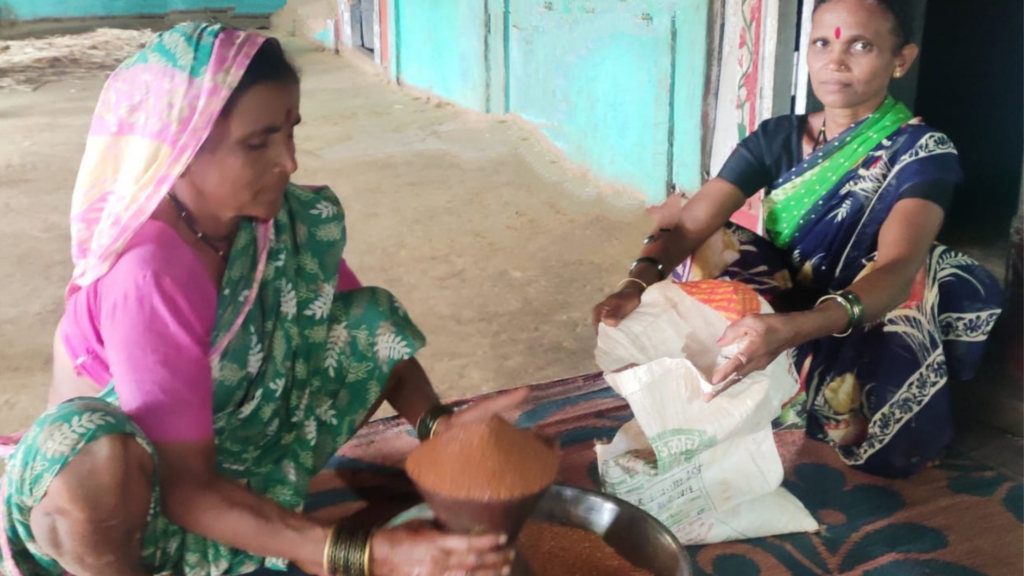
    Ragi Procurement directly from farmers
                                                                                        Photo: Ragi Procurement directly from farmers

    EarthPoorna has a team of dedicated and well-trained women who make delicious, healthy, and nutritious ragi ladoos. This venture has bought about a change in the life of the women and improved their livelihood status.

    The EarthPoorna Ragi Ladoos impacted the health of the consumers. Now, people have got a nice product to choose from. Ragi Ladoos has reached the different corners of the country. The feedback from the consumers is amazing and they are recommending it to their friends and relatives. They liked the taste of the Ragi Ladoos. It is becoming a part of every festival in India. It has created positive vibes among consumers.
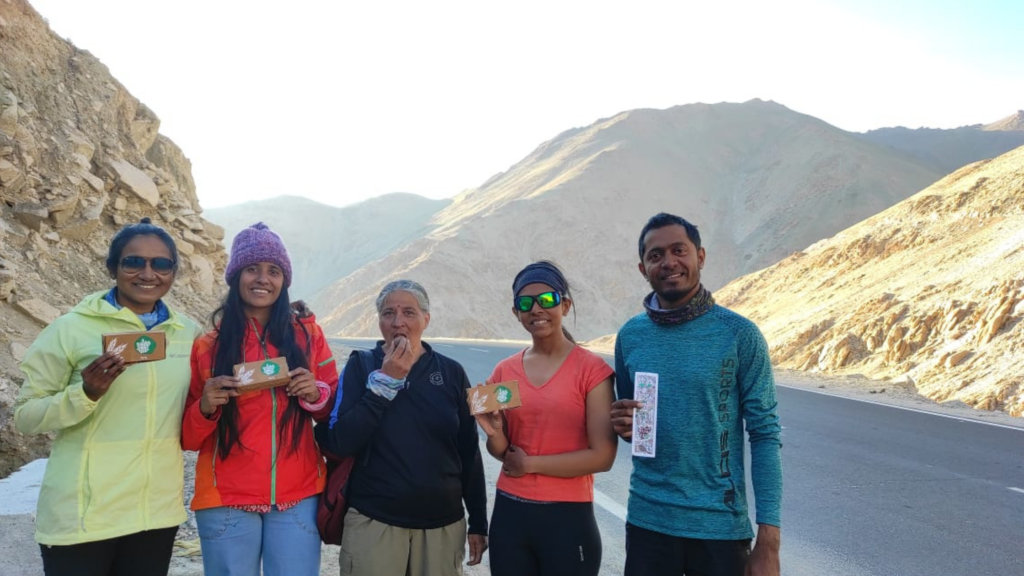
    Ragi Ladoos
    EarthPoorna’s Ragi Ladoos among the Trekking Group

    The uniqueness of EarthPoorna’s Ragi Ladoos:

    The Ragi Ladoos are made by maintaining proper hygiene and cleanliness. These products are tested in the Government Lab and a proper nutrients certificate is obtained and also certified by the Food Safety and Standards Authority of India (FSSAI). Ragi Ladoos is made under the guidance of a Nutritionist and Ayurveda practitioner.

    Ragi Ladoos are made in four variants. The main ingredients of the ladoos are Ragi flour, Jaggery, Cow Ghee, dry fruits, dry dates, flax seed powder, and Cardamom powder. One of them is the multigrain ladoo which is made with a combination of pulses, flax seeds, jaggery, ghee, and almonds. Research has found that millets in combination with pulses improve the bio-availability and absorption of nutrients in the body.

    This makes EarthPoorna’s Ragi Ladoos unique in the market.


    Online Presence of EarthPoorna’s Ragi Ladoos:

    The presence of ragi ladoos in the online platform connects consumers from different corners of the country.
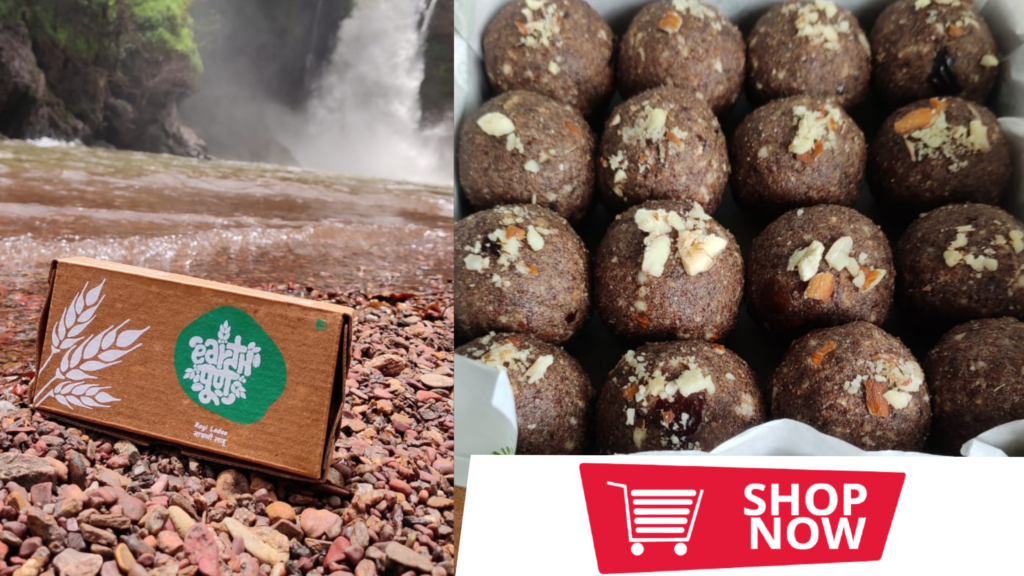
    Ragi Ladoos
                                                                                                                               Click to buy Online

    Adding Ragi Ladoos to your diet will definitely keep you and your family healthy. EarthPoorna’s venture works for the sustainable development of farmers and simultaneously provides you with wholesome and healthy food. I hope this social enterprise will flourish more in the days to come and bring smiles to the face of the farmers and keep us healthy.


    Author: Tapas Chandra Roy, A Certified Farm Advisor on Millets, ‘Promoting Millets from Farm to Plate’. In a mission to take the forgotten grains- Millets to Millions. To remain updated on my blogs on millets you can join my Telegram Channel – Millet Advisor.
     

  • Enthusiastic Tribal Inspirational Organic Farmer grows Millet in 4 acre

    Enthusiastic Tribal Inspirational Organic Farmer grows Millet in 4 acre

    Inspirational Organic Farmer grows Millet:

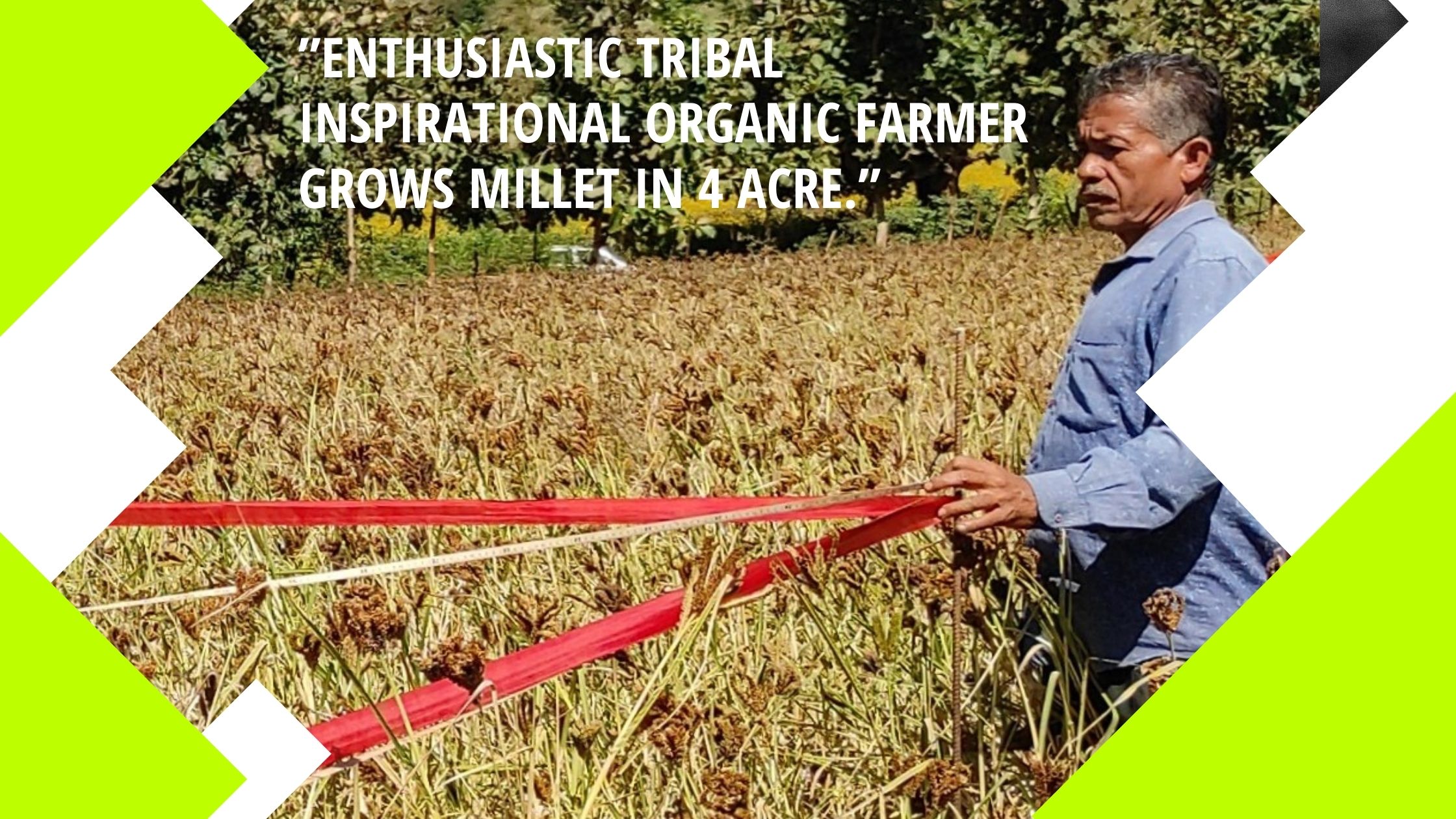
    You must have heard the slogan “Jai Jawaan Jai Kisaan”  by our second Prime Minister of India Lal Bahadur Shastri. The slogan was to enthuse soldiers to defend India and at the same time cheering farmers to increase agriculture production. This endeavor was carried forward by a tribal farmer of Koraput. Ratnakar Jani(55) of Paraja Godri Village of Gadiaguda Gram Panchayat of Dasamantpur Block, Koraput, Odisha. He is now growing Finger Millet on 4 acres of land and has become the inspirational organic farmer after retirement from the Defence Force.

    Serving in the Defence Forces:

    I joined the Defence Forces in Assam Rifles on 20th April 1989. I was selected based on the open rally test and physical fitness held at Jeypore, Koraput. In the tenure of my 22 years of service in the Defence Force, I had the opportunity to work in Jammu & Kashmir, Jabalpur, Hariyana, Manipur, and in the North-Eastern States(Assam, Nagaland, Tripura, Meghalaya) in the rank of Hawaldar.

    As you know that Assam Rifles is the oldest paramilitary force of India. I feel proud to be part of protecting our country from enemies said, Ratnakar Jani.

    Journey in Farming:

    After retirement, I had in my mind to do something good. I always had an interest in doing farming said, Jani. He has 7 acres of land in which 3 acres he grows mango, lemon, chilies, sweet potato and done teak plantation and in 4 acres he has completed devoted to Millet farming. He has grown finger millet totally organically. He has followed the System of Millet Intensification method. He has completely transplanted the 25 days seedlings maintaining a distance of 10 inches from plant to plant and row to row.

    Technologies followed in Finger Millet Cultivation:

    • Selected good finger millet variety( ML-365 & Jana Mandia)
    • Done the seed treatment with Bijamrit.
    • Raised the seedlings on a raised bed.
    • Transplanted the 25 days seedlings.
    • Followed the System of Millet Intensification(SMI) Method.
    • Used 2 ton of Farm Yard Manure per acre.
    • Sprayed Jeevamrit 3 times.
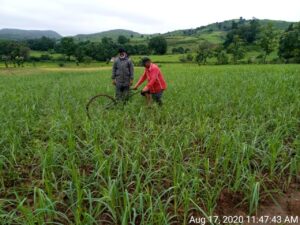
    • Used Cycle Weeder for weeding.

    Supported by Odisha Millet Mission:

    The 4-acre land was infertile and was full of stones and pebbles. The soil of his land was tested under Soil Health Card Scheme in the year 2016. It was found that the soil was acidic and contained less Organic Content, Nitrogen, Phosphorous but high Potassium. He wanted to do organic farming.

    Ratnakar Jani was supported by Odisha Millet Mission. The facilitating Agency under Odisha Millet Mission- DHAN Foundation came forward and guided him from seed to market. With support from DHAN Foundation, he was able to grow Finger Millet on his 4-acre land. He sprayed his crops 3 times with jeevamrut and done weeding using Cycle Weeder. The cycle weeder was provided under this project.

    By using cycle weeder he was able to reduce his labor cost towards weeding.

    Inspirational organic farmer grows millet
    The farmer using Cycle Weeder in his field.

    In my recent study, it was found that weeds are the major constraints in Finger Millet Cultivation. Under Odisha Millet Mission, he will receive incentives of Rs.5000/- per hectare for following the SMI method, and also he can sell his surplus produce in the mandi @ Rs.32.95 per kg of finger millet.

    On 13.11.2020, a Crop Cutting Experiment was conducted in his field and it was found that in 5m by 5m CCE, the green weight was 12.08 kg. I think it is a good yield looking into the factor of soil fertility. He is expecting 40 quintals from his 4-acre land.

    In the future, he has a plan for seed production and to supply the seeds to the farmers in his locality. His initiative is highly appreciated and the farmers of his village will be inspired by his work in Millet Farming.

  • Millet farmer reaps good harvest and earns profit in Kharif-2019

    Millet farmer reaps good harvest and earns profit in Kharif-2019

    Millet Farmer of Koraput, Odisha:

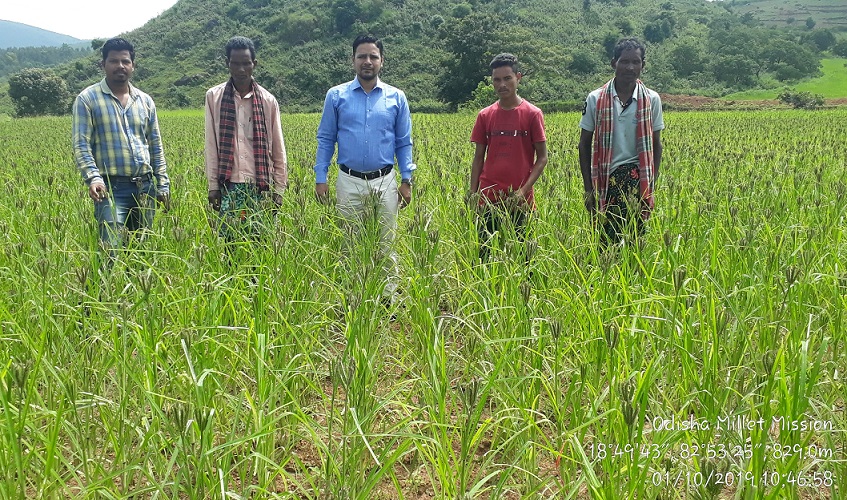
    Bareng Jani (47) is from the Bhejapadar village of Mujanga Grampanchayat, Dasamantpur Block of Koraput District. He is a tribal farmer who owns 1 acre and takes 2 acres in a lease to cultivate millet. In 1 acre he cultivates Finger Millet and in 2 acres, the Little Millet.

    Millet cultivation was not new to us and it was been cultivated by our forefathers. But the yield per acre was very low as we were just sowing the seeds as the monsoon approached us. Once we sowed the seeds we never went to see the crop again and only went at the time of harvest. We never gave attention to timely transplanting, weeding, and nutrition management said by Bareng Jani.

    Millet Farmer of Koraput
    SMI in the field of Bareng Jani

    Adopting a new technology might be heard easy for a progressive farmer but it was not the case for a tribal farmer like Bareng Jani who had studied up to the primary level. Under Odisha Millet Mission, he was been approached by DHAN Foundation and their team in their village and was provided training on System of Millet Intensification(SMI) in Finger Millet.

    Millet Farmers’ Initiative:

    After getting training on SMI, I changed my mind from traditional farming to modern technology farming. As per instruction, I made a raised nursery bed and sown the seeds after proper treatment with beejamrit. Only half kg of seeds was sufficient for planting one acre of the land.

    18 days seedlings were planted in a row by maintaining a spacing of 25cm X 25cm from plant to plant and row to row. FYM was applied at the time of transplanting. First, weeding was done with a cycle weeder after 20 days of transplanting, and second and third was done at an interval of 10 days.

    After each weeding vermicompost and pot manure(Handi Katha in Odia) was applied. In the beginning, I was not in favor of log rolling but after getting convinced about its importance done the activity followed by liquid manure application by spraying with a sprayer. It gave excellent results.

    Millet Farmers’ Happiness depends on the yield:

    I never have seen or expected such yield in my life. I am very happy to get 8 quintals per acre. Earlier I used to get only 2 to 2.5 quintal per acre which was sufficient for home consumption round the year. But now I am able to sell my produce at the rate of Rs.3150 per quintal under the Mandi system as well as keep for home consumption. This year I sold my produce and was able to get a profit of about Rs.10,000. This earning is a bonus for me as I was not able to get such a yield earlier.

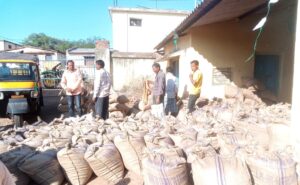
    Procurement of Ragi in Odisha
    Procurement of Ragi

    This year in Odisha 93,000 quintals of Ragi were procured from farmers under Odisha Millet Mission and about 35,000 quintals of ragi were procured from Koraput alone. There is a huge potential of ragi in Koraput. The MSP increased to Rs.3295/- motivated the millet farmers to grow more ragi in Kharif-2020.

    Besides Finger Millet, I got a yield of 6 quintals of Little Millet from 2 acres and I was able to sell Little Millet in the local market at the rate of Rs.35 per kg and could earn a profit of Rs.15,000. This year I have broadcasted the seeds and I am thinking that in this coming season I will go for line sowing in Little Millet as it will be easy for weeding operations and nutrient management.

    Bareng Jani has totally grown these millets with organic fertilizers and he has used all the locally available resources. Even he has used his own seeds which he had conserved for 3 years. He says that the Bhairabi variety has the potential to give more yield if we manage the intercultural operations and nutrients properly.
    The Millet farmers of Bhejapadar are inspired and motivated to see the progress of Bareng Jani in Millet Cultivation.