Category: Nutritional Security

  • How Millet Food Festival ensuring Nutritional Security of Tribals in Odisha

    How Millet Food Festival ensuring Nutritional Security of Tribals in Odisha

    Millet Food Festival Ensuring Nutritional Security:

    Nutritional Security is achieved ”when all people at all times consume food of sufficient quantity and quality in terms of variety, diversity, nutrient content and safety to meet their dietary needs and food preferences for an active and healthy life, coupled with a sanitary environment, adequate health, education and care” (FAO, 2012). No doubt, now India is self-sufficient in food grain production but we are facing the challenges of nutritional security.

    So, India is taking a lot of initiative for achieving Nutritional Security by 2030. In Odisha, it is clearly mentioned in Samrudhi (Agriculture Policy-2020) in which the Vision aimed at continuously raising farmers’ income and welfare while ensuring nutritional security. Nutrition has become the mainstream of all agriculture activities. Odisha Millet Mission Model is one of the programs ensuring nutritional security.

    Food Festival under Odisha Millet Mission:

    Special Programme for Promotion of Millets in Tribals Areas of Odisha (Odisha Millet Mission) was launched by the Government of Odisha in 2017 to revive millets in farms and on plates. Under this mission, Millet Food Festival is a program of 2 days. On the first day, the tribal women are trained in making millet recipes, and on the 2nd day, they come with their own millet recipes. This program helps in bringing the forgotten millet recipes and also it gives learning for other women.

    Related Post: Traditional Millet Recipes of Koraput and their Perceptions

    Millet Food Festival in Koraput:

    Millets are part of everyone’s diet in the tribal areas of Koraput. We cannot live without millets as it gives us more energy to do all the activities throughout the day. Every morning starts with Mandia Jau (Ragi Porridge) said by Jema Majhi of PaikaPuki village of Gadiaguda Gram Panchayat in Dasamantpur Block.

    Millet Food Festivals were organized by DHAN Foundation in Dasamantpur Block. The tribal women were trained on the importance of millets and their nutritional value. They were taught how to make murukkus, ragi pakodas, ragi ladoos, and many more. The children of the village liked the millet recipes which were made on the first day.

    In 2019, when I was doing my Project Work on “Utilization of Finger Millet in Nutritional Security” could find out that including millets in the mid-day meals and in ICDS will increase the consumption of millets among the children. Many farmers’ concern was that their children hesitate to take millet food at home and they recommended including it in mid-day meals. Many children said that they don’t like ”Mandia Jau” every day but like to have ragi ladoos, ragi biscuits, cake, idli, dosa, millet upma, etc.

    On this day, the tribal women came with many recipes made out of Finger Millet, Little Millet, and Foxtail Millet. Finger Millet is the main crop of most farmers in Koraput as it is easy in cultivating, processing and make food items. But it is not the same case with Little Millet and Foxtail Millet as these millets require processing and it is very difficult to do.

    I was very happy to see the millet recipes. Really they have the talent in making awesome recipes. Now, let us see some recipes made by them on the Millet Food Festival Day.
    Millet Food Festival in Odisha
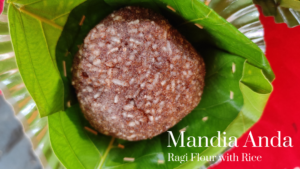
    Mandia Anda (Ragi Balls with Rice)
    Millet Food Festival in Odisha
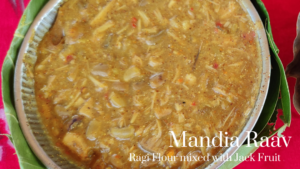
    Mandia Ponosh Raav( Ragi Flour mixed with Jack Fruit)

    The combination of Mandia Anda with Mandia Ponosh Raav is enjoyed by the children. As you know Jack fruit is known as the poor man’s fruit rich in vitamins A, B, C, and Calcium, potassium, proteins, iron, and carbohydrates. When millets mixed with fruits and vegetables it enhances the nutrition profile of the food.
    Millet Food Festival Odisha
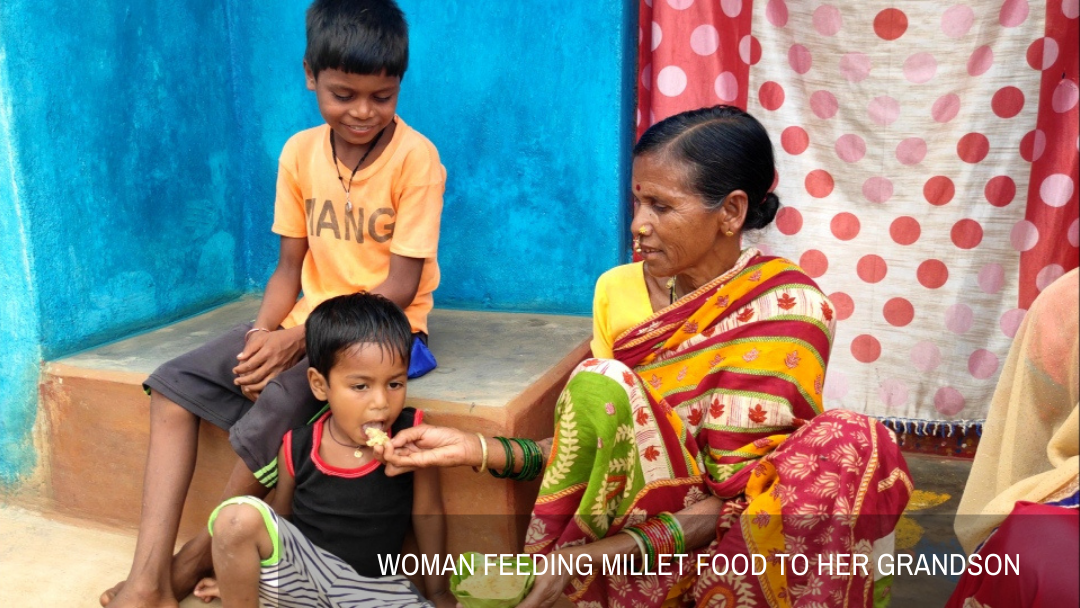
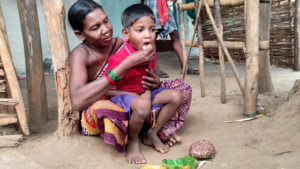
    Women feeding Millet food to her grandson

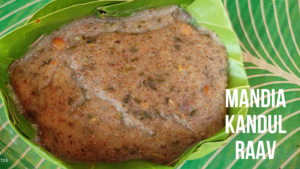
    Scientists have found out that a combination of Millets with Pulses increases the quality of protein. The proportion of essential amino acids in millets and pulses complement each other. One such recipe was with millets and arhar dal. In this recipe, water is taken in a kadai and heated up and then the greens and soaked arhar dal are put into it. Turmeric, chili, and salt are added. When it is cooked properly, ragi flour and tamarind are put into it. It is cooked for some time and the recipe is ready. The uniqueness I marked in most of the recipes is that they don’t use oil and spicy masala.
    Millet Food Festival in Odisha
    Mandia Kandul Raav (Ragi flour is mixed with Arhar Dal)

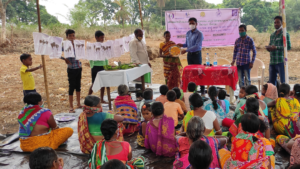
    In the beginning, they were a little shy to come out with the millet recipes but later on when they were encouraged and motivated. They were told that the best millet recipes will be awarded a prize. Few of them were excited to participate in this program. Looking into the uniqueness of the recipes, the first, second, and third were chosen and awarded. I could mark their happiness when distributing the prizes to the winners.
    Millet Food Festival in Odisha
    Distribution of Prize to the Winner

    Such Food Festival will encourage the women to make the forgotten millet recipes and it will be learning for other women when they exchange their ideas on how to make the millet recipes. In this way, we can revive the millets on plates and thus ensure Nutritional Security in the tribal areas of Odisha.


    Author: Tapas Chandra Roy, Certified Farm Advisor-Millets
  • The revival of Millet Grain on Farm to Plates addressing Nutritional Security

    The revival of Millet Grain on Farm to Plates addressing Nutritional Security

     Odisha Millets Mission in Sundargarh:

    “Special Programme for Promotion of Millets in Tribal Areas of Odisha” (Odisha Millets Mission)- Reviving Millets on Farm to Plates. It is a flagship programme supported by the Department of Agriculture & Food Production, (Govt of Odisha) to promote millets. It was launched in Sundargarh district in the year 2018-19. The programme initially covered 4 blocks, that is, Nuagaon, Kuarmunda, Rajgangpur and Kutra, which was gradually extended to another 4 blocks (Lephripada, Hemgir, Tangarpali & Balisankara) with financial assistance from District Mineral Foundation, Sundargarh.

    The programme covers all aspects of millet ecosystem that includes production, consumption, processing, marketing and inclusion of millets in State Nutrition Programmes.
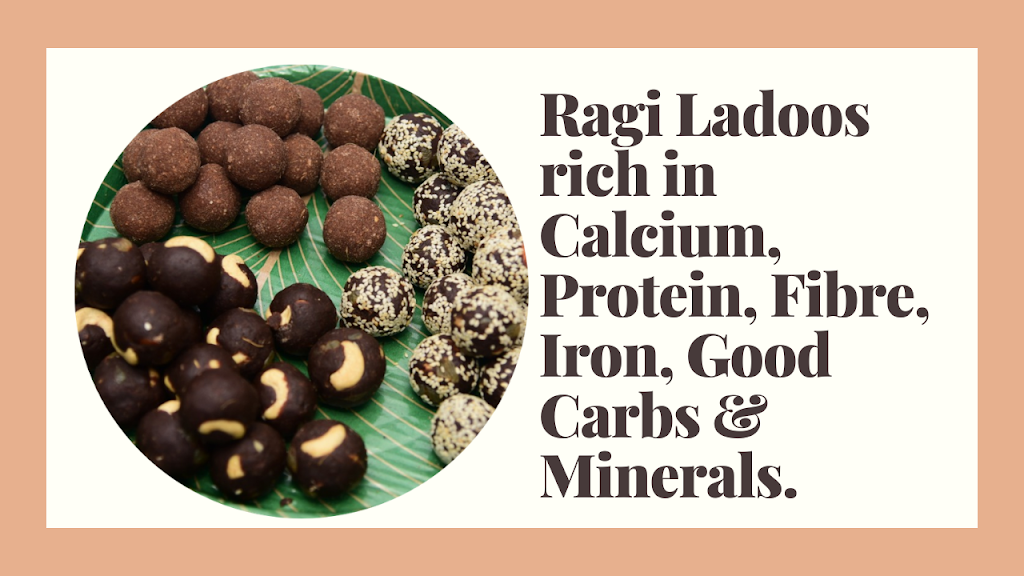
    Ragi Ladoos for Nutritional Security
    Ragi Ladoos for Pre-School Children


    The objectives of the Millet Mission:
    1. Improving the productivity of Millet crops to secure household level surplus.
    2. Setting up of decentralized processing facilities for easy access to processed millets.
    3. Promoting Household-level consumption to increase food and nutrition security.
    4. Promoting farmer collectives and marketing to further the millet economy with a focus on women entrepreneurs.
    5. Inclusion of millets in the State Nutrition Programme and Public Distribution System.
    The success of Odisha Millets Mission owes to its unique design of programme delivery involving various stakeholders like Government agencies, Civil Society Organisations, Community Based Organisations and Academic institutions. In Sundargarh, 8 Community-Based Organisations have been implementing the programme with the support of 6 Facilitating NGOs.
    The Agricultural Technology Management Agency (ATMA), Sundargarh acts as the nodal organisation for implementation of the programme at the district level. The State Secretariat for Odisha Millets Mission is hosted at Nabakrushna Choudhury Centre for Development Studies (NCDS), a social science research institute situated at Bhubaneswar. The State Secretariat comprises of Programme Secretariat and Research Secretariat anchored by WASSAN and NCDS respectively.
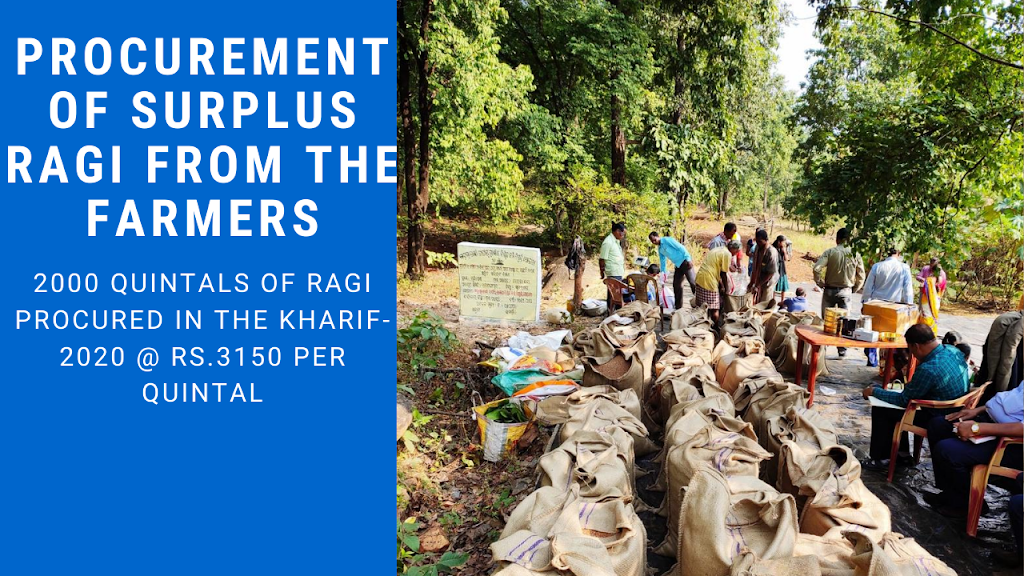
    In the first year of implementation (2018-19), millet (exclusively Ragi) was cultivated in 600 Hectares benefitting 1405 farmers in 4 blocks of the district. During 2019-20, 930 Hectares of millet was cultivated including Ragi, Little Millet, Foxtail Millet and Sorghum involving 2820 farmers. A surplus of around 500 quintals of Ragi was procured from farmers in the Kharif Marketing Season 2018-19 which increased 4 folds to just above 2000 quintals in Kharif Marketing Season 2019-20. 
    Procurement of Surplus Ragi from farmers
    Procurement of Surplus Ragi from the Farmers


    The millets, owing to its nutritional benefits, climate resilience characteristics and nostalgic sentiments about the grain being attached with their tribal culture have added to the other incentives provided by the programme to encourage farmers to cultivate and consume millets. The positive feedbacks from the agrarian community and successful implementation of the programme paved the way for an expansion of the scheme to 4 additional blocks with support from District Mineral Foundation, Sundargarh from 2020-21.
    Inclusion of Ragi Ladoo in ICDS, Sundargarh
    Background of Millet Mission:
    In a series of discussions at State level regarding utilization of the Ragi procured from farmers it was proposed that Ragi, for its nutritional values should be included in the ICDS using DMF and OMBADC funds, based on which the pilot programme for introducing Ragi Ladoo for pre-school children in Anganwadis Centres of Sundargah the district was planned.
    Ragi is extremely nutritious millet rich in Calcium(344 mg), Protein(7.3 gm), Fibre(3.6 gm), Iron(3.9 mg), Good carbohydrate(72 gms), and other essential minerals. In the process of hulling, the nutrition content of ragi is not lost. Hence, this is an excellent grain for the children.
    About the Project:
    The project envisages supplementing the nutritional requirements of pre-school children (3 to 6 years) enrolled in the Anganwadi Centres of the district. Each child shall be provided with 4 Ragi Ladoos per week comprising of 10.5 gms of Ragi in each Ladoo.
    The existing WSHGs engaged as the THR (Take Home Ration) making units or Chhatua Units in each ICDS project area, promoted by Mission Shakti (W&CD Dept, Govt of Odisha) shall be trained to prepare and supply the Ragi Ladoo Mix to the Anganwadi Centres.
    The Anganwadi helpers shall make ladoos out of the Ragi Ladoo Mix and provide to the children. As Anganwadi Centres are closed in the present pandemic situation, the Ragi Ladoo Mix is packaged and supplied to the beneficiaries’ home on a monthly basis.
    The project, supported by DMF, Sundargarh is a joint initiative involving 2 agencies, that is, Odisha Millets Mission (Directorate of Agriculture & Food Production, Odisha) & Mission Shakti / ICDS (Dept of Women & Child Development and Mission Shakti, Odisha).
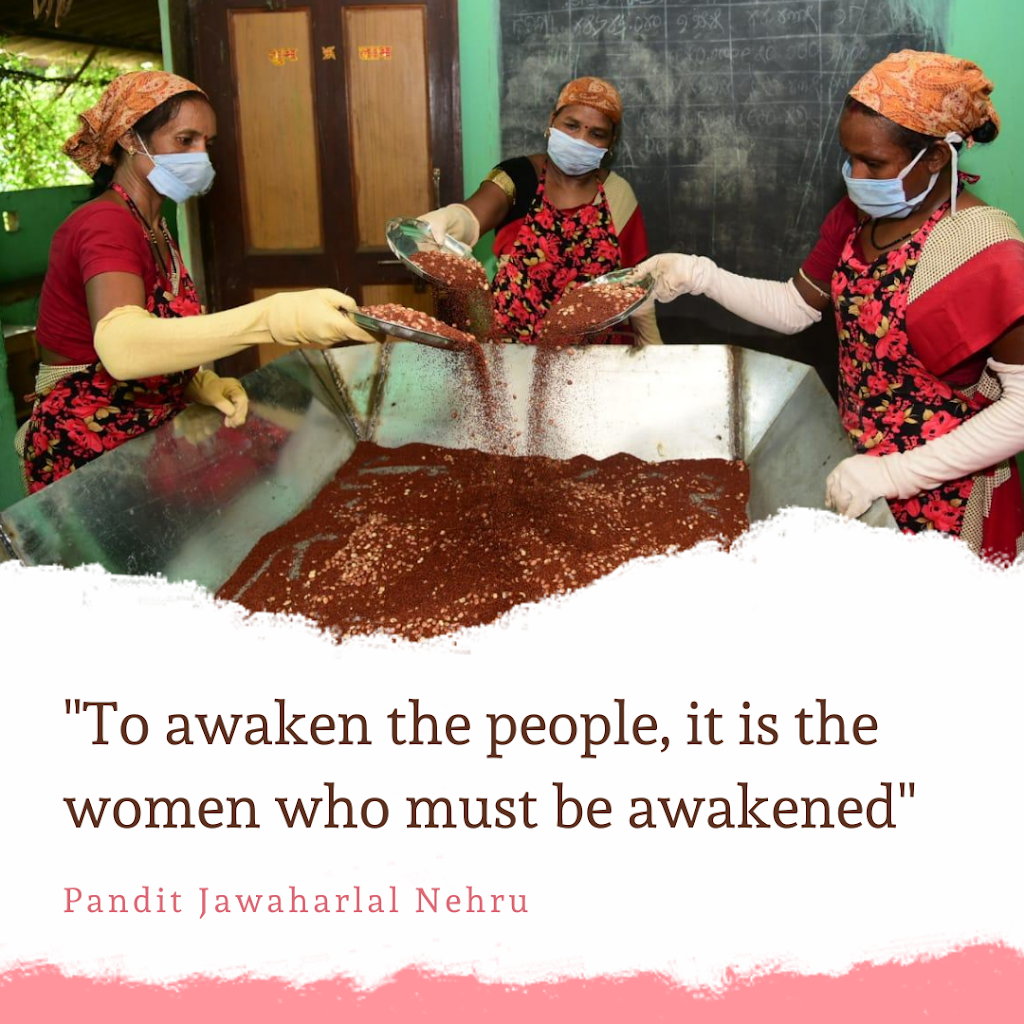
    Odisha Millets Mission shall ensure enhancement in millet production in the district and thereby the availability of surplus Ragi in procurement Mandis. They shall also provide machinery required for cleaning, grading and destoning ragi grains to the selected WSHGs. Two WSHGs in the district have been empanelled as the cleaning units, which shall clean the ragi grains using the machinery and supply to the various Chhatua Units for preparation of Ragi Ladoo Mix. The project shall be implemented in a phased manner.
    Millet Ladoo making
    Preparation of the First batch of Ragi Ladoo Mix by Jyoti SHG of Bileimunda, Hemgir Block

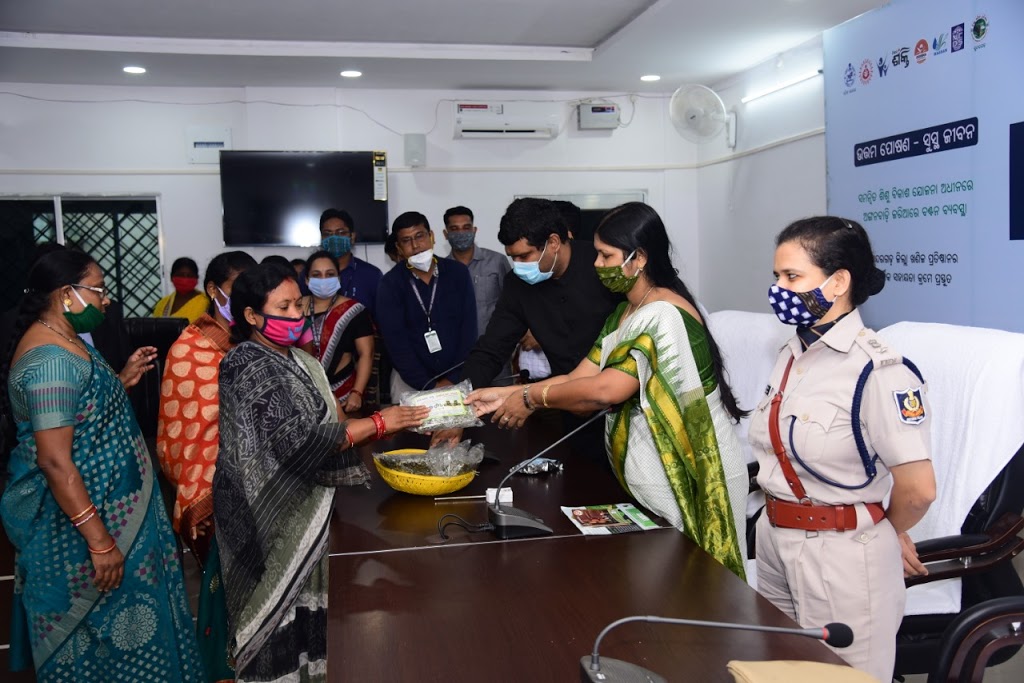
    The first phase was inaugurated by the Minister of WCD&Mission Shakti on 15th August 2020 in which about 3000 children of Hemgir project were covered. From November 2020, the second phase shall be launched in 5 project areas (primarily urban) and in the third phase, starting from January 2020 all 21 project areas are planned to be covered.

    Millet ladoo mix distribution
    Distribution of Ragi Ladoo mix by the Honourable Minister WCD & Mission Shakti to beneficiaries in the Inaugural Ceremony.


    This initiative was jointly undertaken by Odisha Millets Mission & Mission Shakti, with support from DMF, Sundargarh and Sundargarh District Administration has exemplified how convergence among different agencies have successfully revived the journey of a once-neglected the Nutri-cereal grain on-farm to plates and thus this initiative will address the Nutritional Security.
    Author: Arpan Das, District Project Coordinator, WASSAN, Odisha Millet Mission
  • Utilisation of Finger Millet in Nutritional Security

    Utilisation of Finger Millet in Nutritional Security

    To utilize Finger Millet for Nutritional Security we have to focus on the following points in the coming days:
    Utilisation of Finger Millet in Nutritional Security
    Crop Cutting of Finger Millet

    1. To increase the production and productivity of Finger Millet:

    • Awareness creation on the system of millet intensification(SMI) of finger millet as this the method is giving more yield as compared to traditional methods.
    • Conservation of local promising varieties which are giving more yields and sustaining from climate change.
    • Giving more priority for weed control as it is the main constraints in Finger Millet production.
    • Sowing/transplanting in time will enhance the production and productivity of finger millet.
    • More production of finger millet will bring change in the livelihood of the tribal’s by addressing the consumption part and also by selling in the market/mandi.
    • Farmers must be encouraged to use the finger millet residue as fodder as it contains more nutrients and fiber.
    • Development of context-specific improved varieties to improve productivity, increase shelf-life, improved nutritional content, and promote crop diversity.

    2. To address the consumption of finger millet:

    Utilisation of Finger Millet in Nutritional Security
    A farmer showing his Ragi Porridge(Mandia Jau in Odia)
     
    • Consumption of finger millet, every day is a tradition of tribal’s as they keep 75% of their finger millet produces for consumption. It is seen that, the availability of finger millet in their house is almost for 12 months (65% households) but we have to address the rest (35% households) for round the year availability.
    • The perception of most households is that they consumed finger millet as it gives more energy than other food and they can easily do the daily routine work and least were unaware of the control of blood sugar.
    • Odisha tribals possess traditional knowledge of making different types of recipes from finger millets for ages. But we have to encourage them by organizing a food festival.
    • As no modern recipe was available in the market neither they had any idea to make it. Only giving them training time to time will help to build their skill in cooking and simultaneously we can encourage the local entrepreneurs to come out with modern recipes at their local market. It is seen that most of them have the interest to have modern recipes like cakes, biscuits, and ladoos.
    Utilisation of Finger Millet in Nutritional Security
    Suggestions to increase the consumption of Finger Millet
    • All recommended to include ragi in mid-day meals and ICDS. The second suggestion (42 sample household) was to include ragi in PDS followed by awareness creation among farmers about health benefits, organizing food mela, an outlet of millet products in the local market, and finally training to farmers. They all had a concern that their children do not take ragi and including in mid-day meals and ICDS will surely address the nutritional security and malnutrition.
    •  

    3. To address the primary and secondary processing of Finger Millet:

    Utilisation of Finger Millet in Nutritional Security
    Understanding Traditional Millet Processing
    • 67% of households come under marginal and small farmers and 56% did not have any assets like farm implements, pump sets, motorcycles, and tractors. 86% do their threshing of finger millet manually by using sticks. This can be addressed by establishing community hiring centers and also encouraging entrepreneurs to establish an agriculture service center in the locality.
    • Most of the sample household (69 percent) do their milling by using traditional chhaki and rest (30 percent) by pulverizer. It was found that the sample households near to market availed the service of pulverizer. Community pulverizers can address this issue and can simultaneously reduce the drudgery of women.

    4. Initiatives are taken under Odisha Millet Mission:

    System of Millet Intensification in Farmer’s Field
    • Around 50,000 farmers have been mobilized to take up millet cultivation with improved agronomic practices. Incentives to farmers for millet cultivation. For SMI its Rs.5000/- per hectare in the first year and in the second year it’s Rs.3000/- per hectare. Similarly, for line sowing/line transplanting its Rs.2500/- per hectare and Rs.1500/- per hectare in the first and second years respectively.
    • The State Government has already started the procurement of surplus ragi from the farmers. Last year(2018) around 18,000 quintals of Ragi were procured from farmers @Rs.28.97/kg and in the year(2019) the procurement target was enhanced to one lakh quintal @Rs.31.50/kg and procurement of about 95,000 quintals was done. In this year 2020, the MSP of Ragi is bringing more hope for Small and marginal farmers. 
    • Introduced supply of 1kg ragi under PDS in addition to 5 kg basket per person entitlement.
    • Plans are afoot for the inclusion of millets in supplementary nutrition programs under mid-day meals and ICDS.
    • Started public awareness about health, nutritional, environmental & other important benefits of consuming & cultivating millets. Plan to set up decentralized millet processing units in the block and gram panchayat level.
    • Plan to form a Farmer Producer Organisation in the block level as this will be an extension arm of government in the future for delivery of services.
  • Nutri-Cereals- National Workshop in Odisha in 2019 a Grand Success

    Nutri-Cereals- National Workshop in Odisha in 2019 a Grand Success

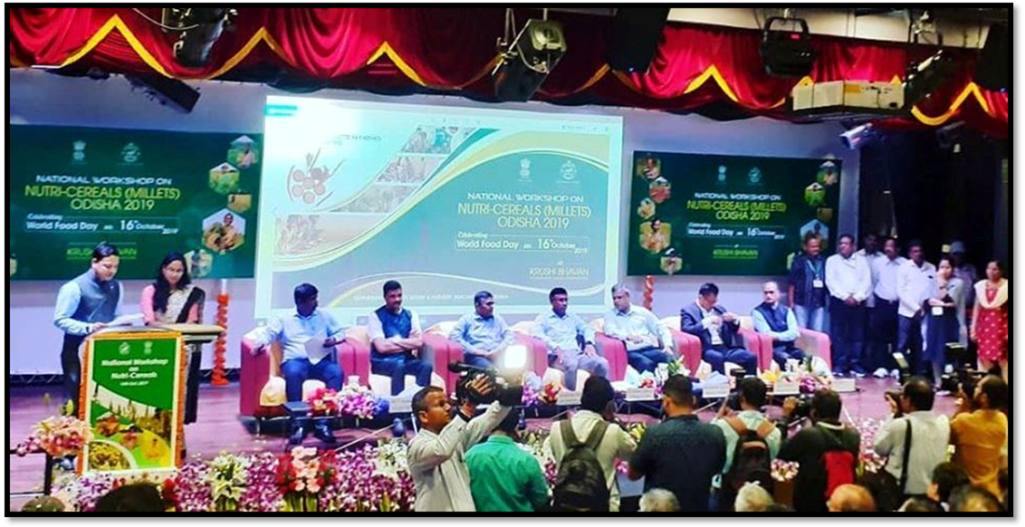
    Nutri-Cereals – National Workshop in Odisha:

    Inaugurating a national workshop on Nutri-cereals, Chief Secretary Asit Tripathy said Odisha is the first State to introduce millets in the public distribution system and Niti Aayog has recognized it as a model State in this regard. The Odisha Millet Mission, launched in 2017, has now been extended to 72 blocks in 14 tribal-dominated districts. The National Millet Mission started in 2018 has given a further boost to the campaign in the State.

    Odisha Millet Mission:

    Odisha Millet Mission is a unique initiative for the revival and promotion of millet production. The Centre has recommended other states to follow the Odisha model,” said Pradeepta Kumar Mohapatra, Agriculture Production Commissioner.
    Principal Secretary of Agriculture & Farmers’ Empowerment Sourabh Garg said the Odisha Millet Mission is a unique partnership model wherein the Government, academia, and civil society have joined together to implement the programs through farmer producer organizations.
    “It is built on a comprehensive approach that includes production, processing, consumption, value addition and marketing,” he said. Around 50,000 farmers have been mobilized to take up millet cultivation with improved agronomic practices. The State Government has already started procurement of surplus millet from the farmers and the procurement target has been enhanced to one lakh tonne. Plans are afoot for the inclusion of millets in supplementary nutrition programs under ICDS, MDM, and PDS. 

    Deliberations on National Workshop on Nutri-Cereals:

    Director, Country Relations of International Crops Research Institute for the Semi-Arid Tropics (ICRISAT) Arabinda Kumar Padhi said millets are climate-resilient crops and can be grown under stressed rain-fed conditions, and people of South and West Odisha have traditional skills in millet production undertaken over generations. “The highlands of the State have vast scope for millet cultivation as well. ICRISAT would provide the technology and international best practices for improving productivity in the State’’. 
    In the national workshop on Nutri-cereals, deliberations were held on the promotion of seed diversity, policy initiatives, challenges in the inclusion of millet in PDS, millet marketing, and value chain through framers organizations. There were also experience sharing sessions among farmers and NGOs on agronomic practices.

    On the occasion, 14 leading millet farmers of the State along with representatives of leading NGOs namely Pragati and Pradhan were awarded.
    Focusing on the role of agriculture and food production with nutrition and security, FAO, Country Representative, Tomio Shichiri said: ‘’While food grain production in India has increased over five times since Independence to almost284 million tonnes in 2018-19, there is a high rate of malnutrition in the country, Therefore, there is a need for diversification toward Nutri-rich crop production such as Nutri-Cereals and pulses.’’ The focus must not only be on increased food grain production of targeted Nutri-cereals such as millets. Promotion of homestead gardens and diversification of agriculture production towards fruits, vegetables, and aquaculture can contribute towards addressing the malnutrition.
    Meera Mishra, Country Coordinator, International Fund for Agricultural Development (IFAD) India Country Office, said the changing patterns of consumption directly benefit farmer’s production system and income. Quoting an example of millet production in Madhya Pradesh, she said the tribal Baiga women in the remote Dindori district in MP grew minor millets – Kodo and Kutki – using traditional practices. Support from the government and IFAD program has increased production and engagement. Earlier only 750 farmers were doing millet farming on 750 acres and today these numbers have increased by 10 times to 7,500 farmers and 7,500 acres.

    “Nutri-Cereals: Challenges in Inclusion to ICDS/MDM/PDS- Nutritional Perspective”.

    Dr.Paras Sharma, Scientist, ICMR-National Institute of Nutrition presented about nutritional perspective and gave the Solutions and future actions to improve millet consumption. Millet Production should be increased in order to maintain supply. Identification and development of high micronutrient varieties with low anti-nutrients are necessary.
    Biofortification of millets crop is required to enhance micronutrients. There is a need for the development of millet processing technology at rural and urban levels. Degree of milling optimization to retain maximum nutrients and to reduce phytate and voluntarily adopted by the millet processing units.
    The role of other inositols Phosphates (IP5, IP4, and IP3) needs to be looked in for mineral bioavailability. There is a need to develop cooking methods to maximize nutrient retention and bioavailability. A combination of suitable food to enhance the bioavailability of nutrients can be explored. Development of recipes according to the region such as chapattis for the northern part of the country. Improvement of protein quality of millets through genetic approaches.  Blending with other cereals to enhance the organoleptic properties and ease in novel food product development.
    Germinated/sprouted/ malted or fermented millets have high bioavailability of micronutrients which may be served in MDM HTST processed foods including popping/puffing and roasting also reported to improve the mineral bioavailability and such products also have a longer shelf life so these may be included in the food supply system.

    Diverse Seed Systems for Millets:

    Mr.Ravindra A, WASSAN, presented on Diverse Seed Systems for Millets and why there is a need for diversity. How a seed system can be managed by the community and its replication in biodiversity blocks.

    ICRISAT initiatives in connecting crops in semi-arid tropics to meet nutritional requirements:

    Dr. A K Padhee, Director, Country Relationspresented on ‘’ICRISAT initiatives in connecting crops in semi-arid tropics to meet nutritional requirements”. There is a need for demand-driven innovation and this can be done by mainstreaming nutrition, empowering women, and attracting youth into agriculture. Pointed out the approaches for adoption by participatory and partnering, building capacity at state and local level, integrating communications, monitoring, and evaluation & finally policy support.

    Promotion of Production & Consumption of Nutri-Cereals:

    NITI Aayog, Government of India, presented on‘’ Promotion of Production & Consumption of Millets’’. In this, the key recommendations of the committee were focused.
    • Decentralized procurement of millets by State Government
    • Promotion of millets under schemes like Mid-Day Meal Scheme (MDM), Integrated Child Development Scheme (ICDS) to address the nutritional security of vulnerable groups.  
    • Enhancing public awareness about health, nutritional, environmental & other important benefits of consuming & cultivating millets
    • Development of new hybrid and high yielding varieties to improve productivity, increase shelf-life improved nutritional content, and promote crop diversity
    • Increasing incentives to farmers for millet cultivation and addressing issues related to the MSP of millets
    • Development of improved, technology-driven millet processing units to retain nutritional value and make millets ready for consumption and sale
    • Encouraging women’s, marginalized sections, and tribal communities to undertake millet production, supported by initiatives by NGOs and other organizations.
    • Gradual introduction under PDS- Once the supply of millets under PDS improves, out of 5 kg basket per person entitlement, 1 kg may be made mandatory for millets.
                      The suggested roadmap that can be achieved in short/medium term duration:
    • Inclusion of Millet based products in MDM & ICDS menus- Replicate initiatives of States already doing this
    • Engagement of Private sector & Industries- Creating a demand-pull among consumers    
    • Advocacy and Awareness generation about multifaceted benefits of Millets- Running a campaign
    • Establish “National Millets Board”- Link all stakeholders & create a certification mechanism
    • Improving procurement of Millets under PDS (beginning with Millet producing areas & gradually expanding)
    Finally, in the long term duration, the production of millets is to be increased.
    Odisha Millet Mission presented the Future roadmap- taking millets to million.
    • Making Odisha a “Centre for Excellence” on Millets.
    • Landscape based Agro Biodiversity.
    • Inclusion of suitable millets in ICDS, MDM, and PDS.
    • Start-Up Odisha – Millet Odisha.
    • Millet Value Chain – Seed to Storage to Supply.
    • Women SHGs led the Nutrition revolution. 
    Dr. Usha DharmarajSr. Technical Officer, Department of Grain Science and Technology CSIR-CFTRI, Mysore presented“ Millets in Community Feeding- Challenges and Interventions”.
    Challenges:
    • All millets but for pearl and finger millet contains husk (non-edible portion) as a separate entity- dehusking is necessary
    • No well-defined machinery set up for dehusking of millets
    •  Pearl, foxtail, and little millet  contains a higher amount of fat and also undergo rancidity at  faster rate-shelf stability is necessary
    •  The presence of bran and a high amount of dietary fiber affects its cooking quality and sensory attributes-Techno interventions are required
    •  Lack of diversified products from millets on the shelf-needs attention to promoting millet usage
    • Lack of awareness about millets and millet-based products
    Interventions:
    • Inclusion of a separator; either color sorter or gravity separator
    • Polishing judicially  to improve  both  the shelf-life and cooking properties
    • Suitable processing to improve the quality of the products
    • Preparation of diversified products from millets

    Promotion of Millet Diversity:

    Dr.Vilas Tonapi, Director, ICAR- Indian Institute of Millets Research, Hyderabad presented on the ‘’Promotion of Millet Diversity’’. ICAR-IIMR has undertaken a millet germplasm exploration in the Dong district in Gujarat and collected 37 accessions of five different millets from 27-28th October 2018. In which, the maximum of 16 acc. of Little millet followed by Finger millet (14 acc.), Sorghum (5 acc.), Foxtail millet and Barnyard millet (1 acc. each). The exploration has covered 27 villages in 4 Taluks in Dong district. The altitude ranged between 161-526 m MSL

    Overall, the Workshop on Nutri-Cereals was a grand success.

    ***Please put your valuable comments and suggestions for the development of Millets in India.