Category: Millet Value Addition

  • Nutritious and Healthy Ragi Ladoos by EarthPoorna creating Food Sensation

    Nutritious and Healthy Ragi Ladoos by EarthPoorna creating Food Sensation

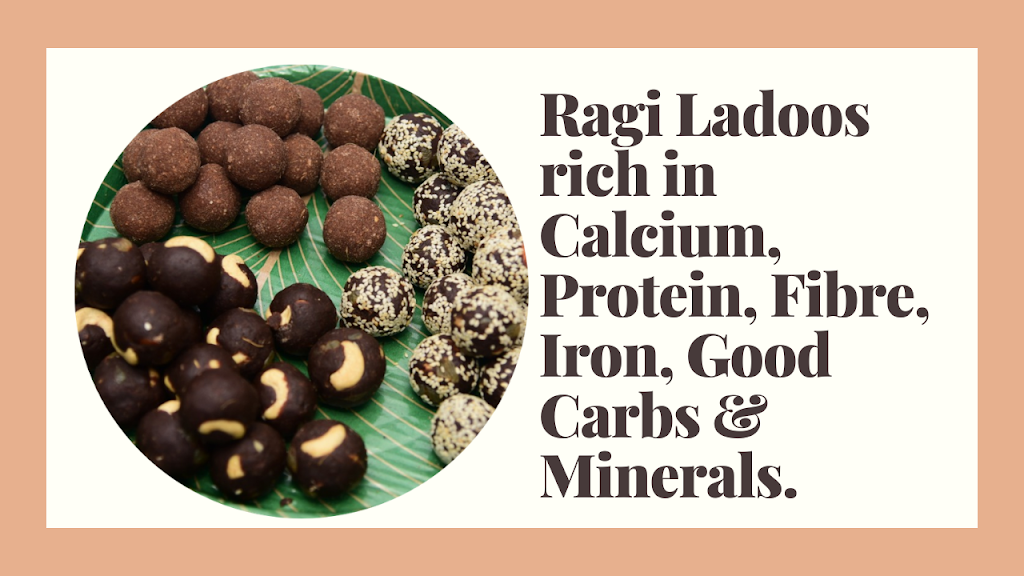
    Ragi Ladoos – Nutritious & Healthy

    Millets making a comeback due to their rise in demand by the people and the ability of millets to face climate change creating space on the farmers’ fields. Finger Millet (Ragi) is widely accepted in India due to its ease in processing and making different recipes. Ragi Lodoos made by EarthPorna are creating food sensations in people’s hearts.

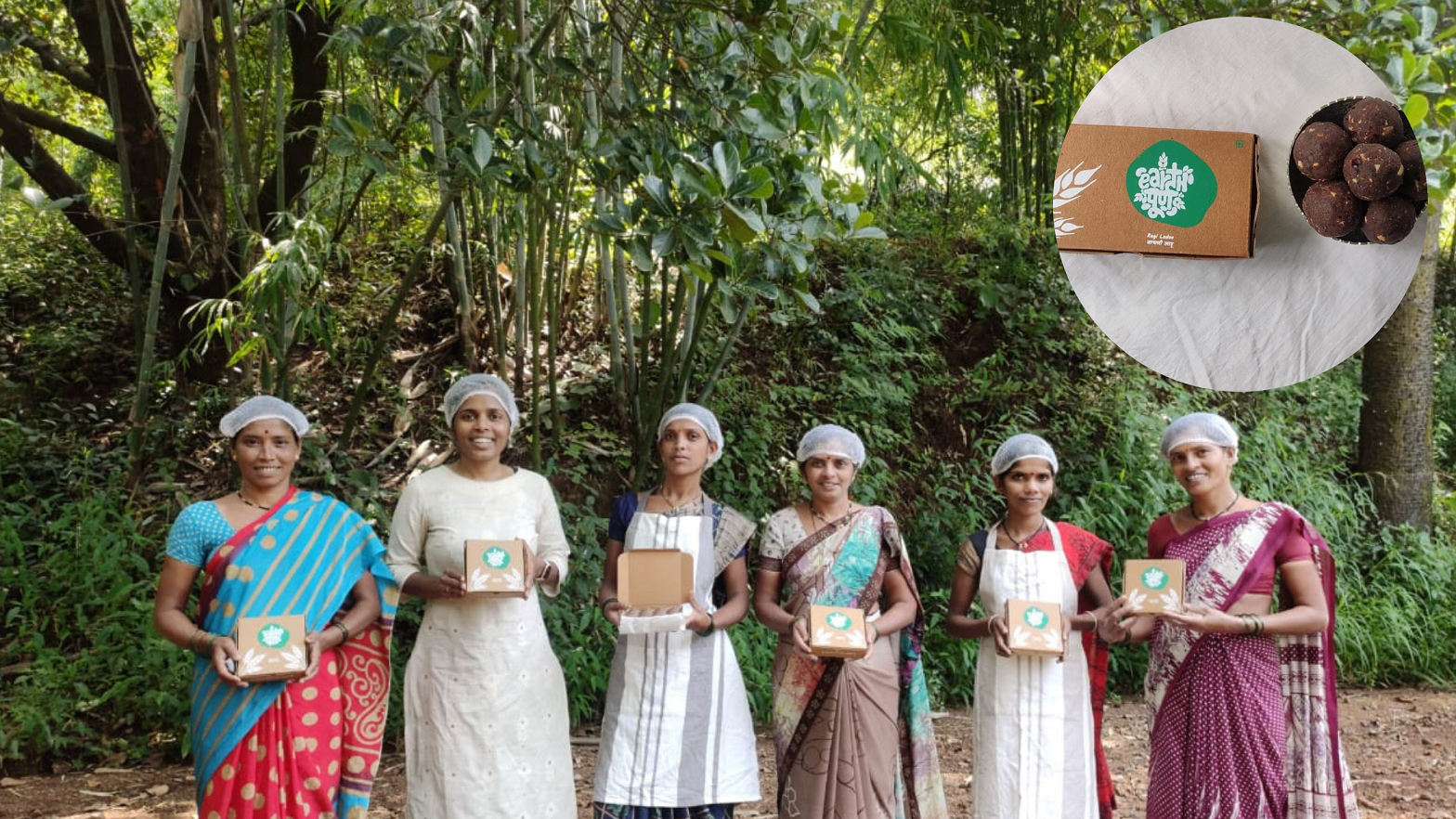
    EarthPoorna, a social venture by Sucheta Bhandare of Pune involving women in the business and procuring millets directly from farmers. Ensuring and supporting the livelihood of women and farmers.

    Before going to the story let us understand the health benefits of ragi ladoos and how it is helping people in their health.

    Health Benefits of Ragi Ladoos:

    • Rich in Calcium which is good for bones. It has been reported that 100 gm of ragi contains 364 mg of calcium.
    • It is gluten-free and it will be a good choice for people suffering from celiac disease.
    • Due to the low glycemic index, it is good for diabetic patients. The recent meta-analysis of millets has given us more evidence of their goodness in controlling blood sugar levels in our bodies.
    • It helps in maintaining good skin and prevents wrinkle formation and sagging.
    • Due to high fiber, it helps in better digestion and prevents constipation.
    • Ragi helps in checking the weight of the body by lowering the appetite and helps in the weight loss journey.

    Related Post: Health Benefits of Finger Millet (Ragi)


    After going through the health benefits of Ragi Ladoos, let us now listen to the Founder of EarthPoorna- Sucheta Bhandare a Social Entrepreneur who has taken the Ragi Ladoos to a great level and created a sensation among the people of India.
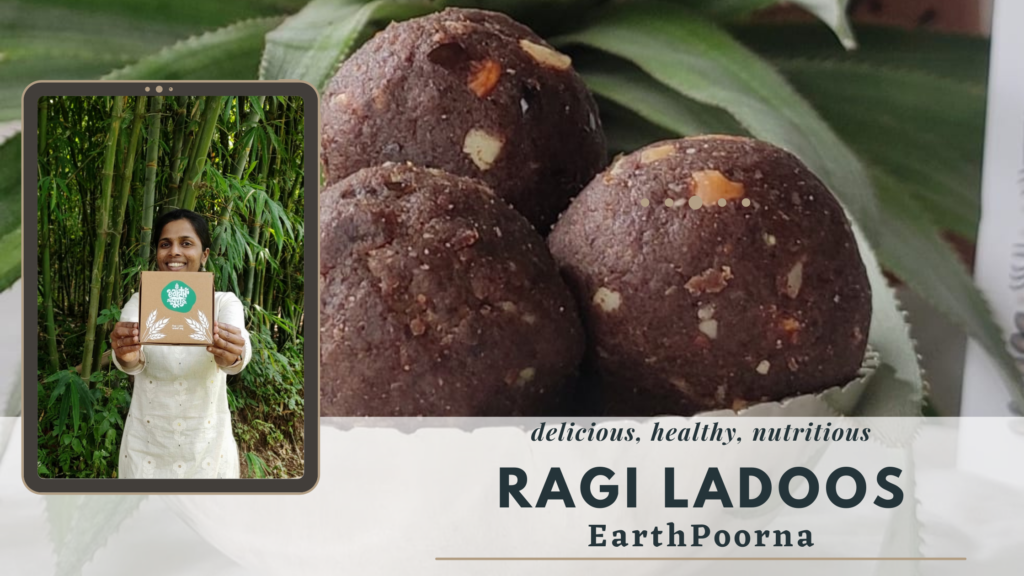
    Ragi Ladoos

    The short breaks at my school in Vadner used to be so interesting that even the thought of it makes me smile today. I used to take peanuts and jaggery, dates and grated coconut, roasted grams, and puffed rice some days, and seasonal fruits, pulses, and healthy and nutritious ladoos on other days.  During days-offs and holidays, my friends and I would go to the farms and happily devour whatever was growing there. Spending my childhood in a village in a village in the district of Nashik meant that I had no other option for the junk food that kids in the cities eat today.

    Today, although I live in a big city like Pune, my hunger pangs are still fulfilled by such simple preparation. During times of exertion and exercise, I have realized the benefits of consuming such simple yet healthy preparations. All this was easily available to me back at home because my mother made it a point to put it in my Dabba(tiffin box). In cities, there are many out there who want to incorporate such a healthy diet into their lifestyle but have no time and sources to get hold of such products.

    That is why we are bringing to you such preparations filled with love and health. A combination of your grandma’s recipe and expert advice on diets suitable to our lifestyle is what you will find in our natural and tasty preparations. We at ‘EarthPoorna Foods’ are glad to serve you delicious food in your office, school, gym, college, and at your home.


    EarthPoorna – Impact on the life of Women, Farmers, and Consumers:

    The best thing about EarthPoorna is that the chemical-free raw materials are procured directly from the farmers. In the initial days, it was difficult to get ragi grains, but slowly Sucheta Bhandare convinced the farmers of her locality to cultivate and promised to pay a better price. Farmers were happy and started cultivating ragi in their fields when they could find a better market for their produce.
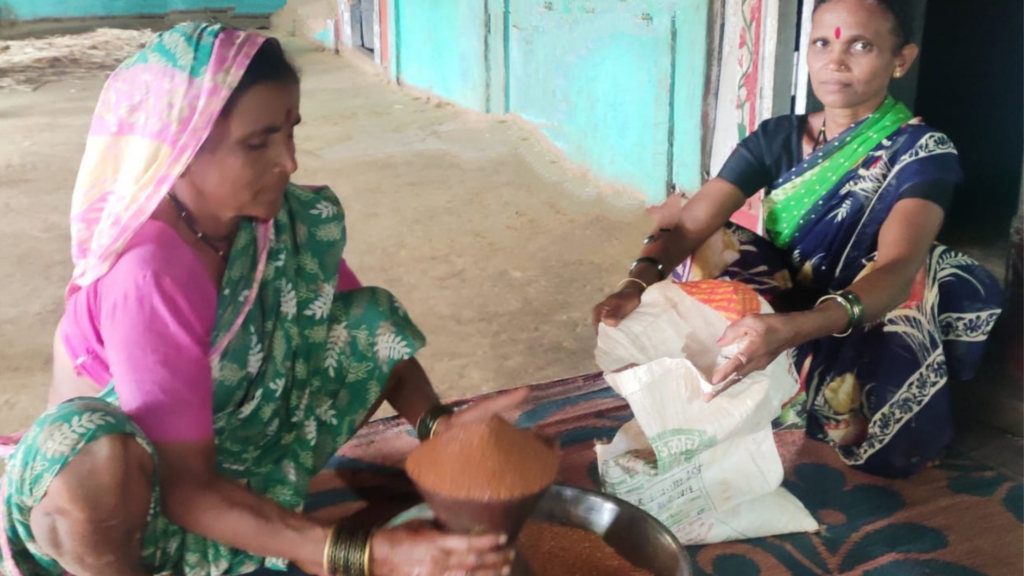
    Ragi Procurement directly from farmers
                                                                                        Photo: Ragi Procurement directly from farmers

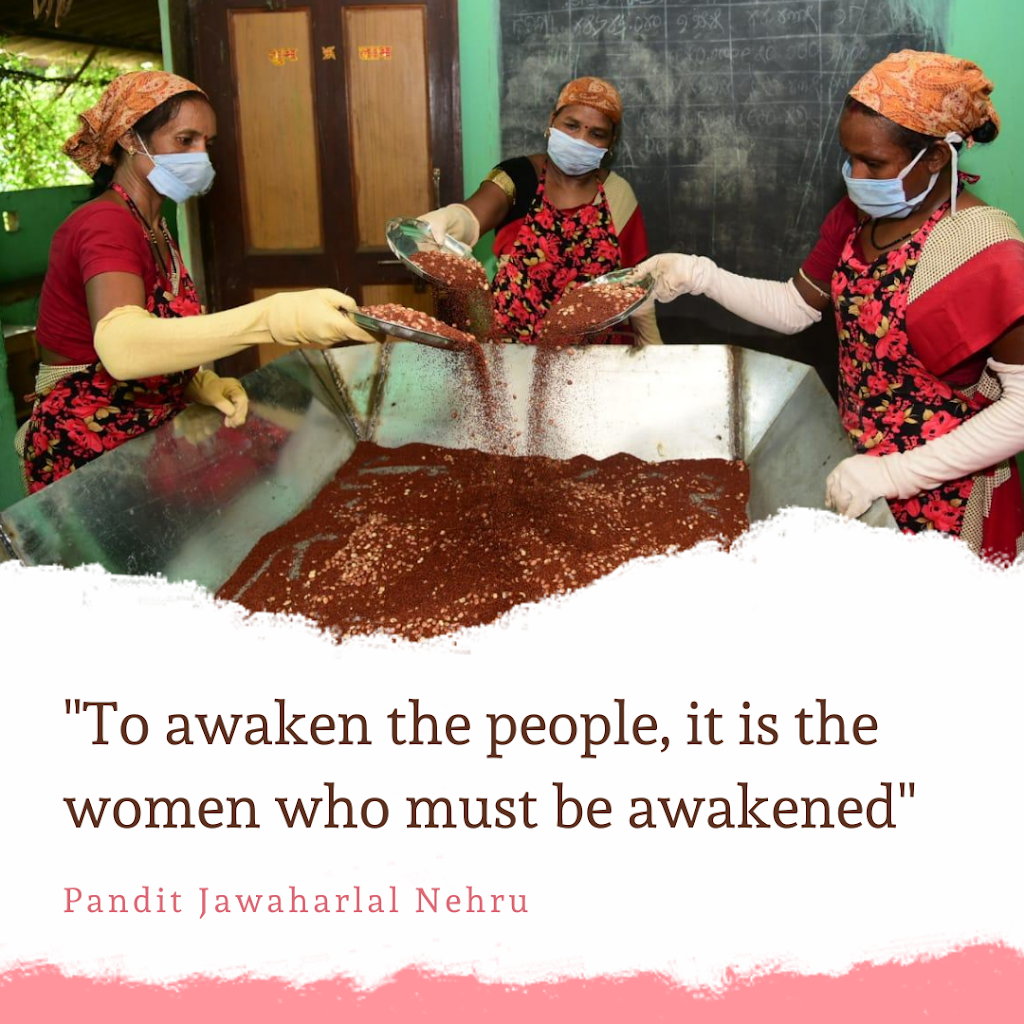
    EarthPoorna has a team of dedicated and well-trained women who make delicious, healthy, and nutritious ragi ladoos. This venture has bought about a change in the life of the women and improved their livelihood status.

    The EarthPoorna Ragi Ladoos impacted the health of the consumers. Now, people have got a nice product to choose from. Ragi Ladoos has reached the different corners of the country. The feedback from the consumers is amazing and they are recommending it to their friends and relatives. They liked the taste of the Ragi Ladoos. It is becoming a part of every festival in India. It has created positive vibes among consumers.
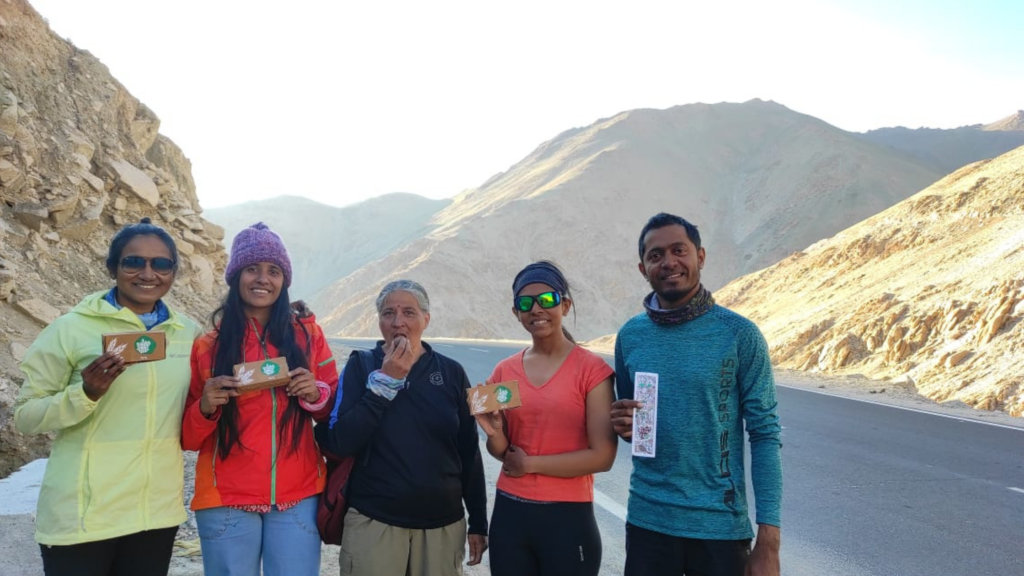
    Ragi Ladoos
    EarthPoorna’s Ragi Ladoos among the Trekking Group

    The uniqueness of EarthPoorna’s Ragi Ladoos:

    The Ragi Ladoos are made by maintaining proper hygiene and cleanliness. These products are tested in the Government Lab and a proper nutrients certificate is obtained and also certified by the Food Safety and Standards Authority of India (FSSAI). Ragi Ladoos is made under the guidance of a Nutritionist and Ayurveda practitioner.

    Ragi Ladoos are made in four variants. The main ingredients of the ladoos are Ragi flour, Jaggery, Cow Ghee, dry fruits, dry dates, flax seed powder, and Cardamom powder. One of them is the multigrain ladoo which is made with a combination of pulses, flax seeds, jaggery, ghee, and almonds. Research has found that millets in combination with pulses improve the bio-availability and absorption of nutrients in the body.

    This makes EarthPoorna’s Ragi Ladoos unique in the market.


    Online Presence of EarthPoorna’s Ragi Ladoos:

    The presence of ragi ladoos in the online platform connects consumers from different corners of the country.
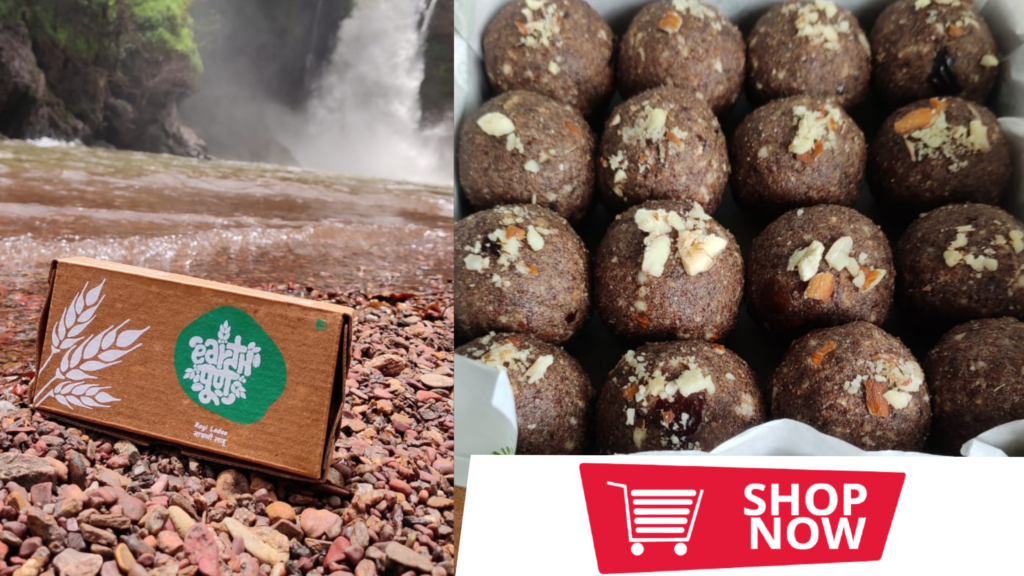
    Ragi Ladoos
                                                                                                                               Click to buy Online

    Adding Ragi Ladoos to your diet will definitely keep you and your family healthy. EarthPoorna’s venture works for the sustainable development of farmers and simultaneously provides you with wholesome and healthy food. I hope this social enterprise will flourish more in the days to come and bring smiles to the face of the farmers and keep us healthy.


    Author: Tapas Chandra Roy, A Certified Farm Advisor on Millets, ‘Promoting Millets from Farm to Plate’. In a mission to take the forgotten grains- Millets to Millions. To remain updated on my blogs on millets you can join my Telegram Channel – Millet Advisor.
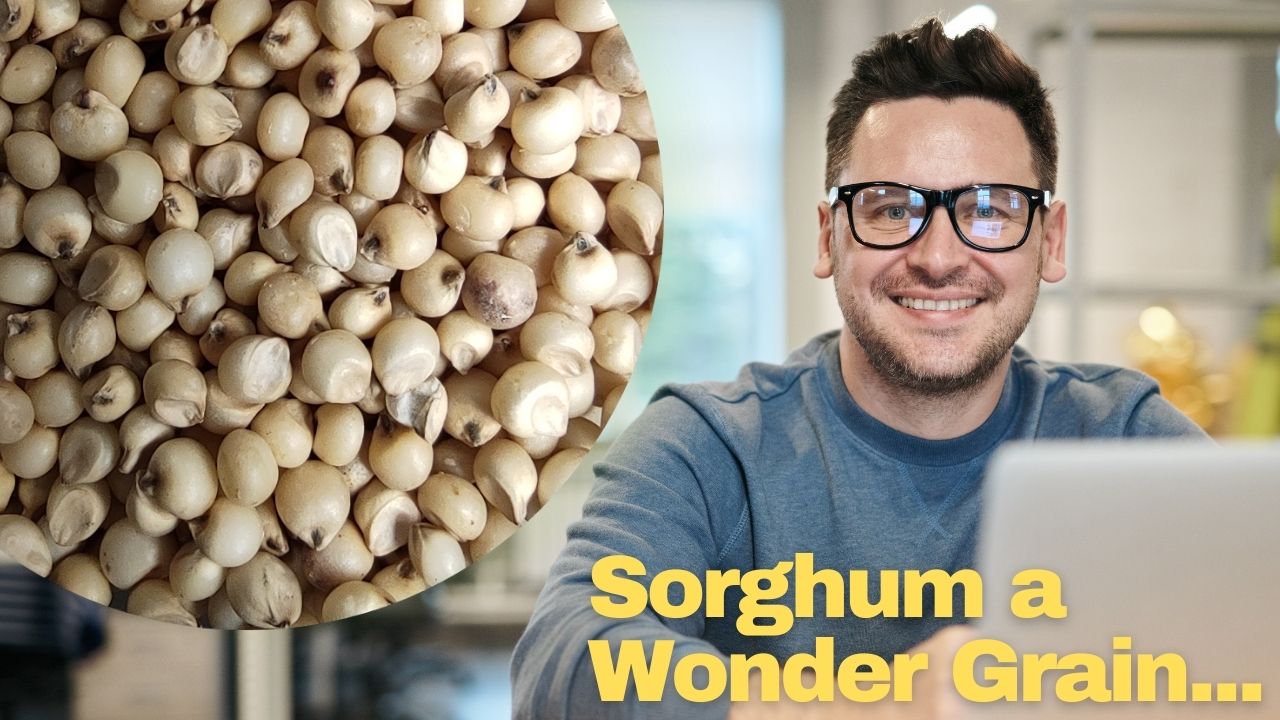
     

  • Sorghum a Wonder Grain for New Enthusiastic Entrepreneurs

    Sorghum a Wonder Grain for New Enthusiastic Entrepreneurs

    Sorghum a Wonder Grain:

    Sorghum is an ancient grain that comes under the major millet category. Major millet due to its size and the area of production. This grain is the nutrient-rich, gluten-free, and best alternative to wheat and rice in terms of everything. We called ”Sorghum a wonder grain” due to its versatility and making its space in every sector like Food, Feed, and Fuel. Sorghum is a smart food that is good for you, good for the planet, and good for the farmers(ICRISAT).

    Nutritional Profile of Sorghum:

    According to the report of the National Institute for Nutrition, Hyderabad in every 100 grams of Sorghum grains contains 67.7 g of Carbohydrates, 9.9 g of protein, 1.73 g of fats and provides the energy of 334-kilo calories. It has captured its position in terms of dietary fiber (10.2 g) and 133 mg Magnesium and 39.4 μg Folic acid. It also contains Calcium(27.6 mg), Phosphorous(274 mg), Zinc(1.9 mg), Thiamine (0.35 mg), Riboflavin (0.14 mg) and Niacin(2.1 mg) per 100 grams of grains.


    Health benefits of Sorghum:

    • Sorghum reduces hypertension. It contains lesser Sodium(7.3 mg/100g) and higher potassium(408mg/100g) as compared to other cereals and these properties help in the therapeutic use for hypertensive patients.
    • Sorghum helps in Weight Loss. It contains policosanols that help in reducing cholesterol in the body and thus intake of policosanols favors weight loss.
    • Sorghum is good for diabetic patients. Due to the low glycaemic index, it helps slow down glucose levels in the blood.
    • Sorghum inhibits Cancer tumor growth. The scientist has found out that the presence of 3-Deoxyanthoxyanins in darker Sorghum have antiproliferative activity against human colon cancer cells (Journal of Agricultural and Food Chemistry – March 2019).
    • Sorghum is found to be good for the patient suffering from Celiac disease as it is gluten-free.

    Why Sorghum is good for the New Entrepreneurs:

    Sorghum has opened up its potential in the field of Food, Brewing, Livestock, and Export Industries. The demand for Sorghum is increasing as nowadays people are becoming more health-conscious and preferring the forgotten ancient grain in their diet. As per the report announced by the Report Linker, the Millet market of North America is expected to grow at a CAGR of 4% to reach US$ 1192.24 million by 2027. This will create more opportunities for entrepreneurs.

    Now, lets us see how Sorghum has created its space in the market and how it can be utilized on a commercial basis.

    • FOOD INDUSTRY: Sorghum a wonder grain fits well in baking, popping, gluten-free mix, extrusion, and flakes. Indian Institute of Millets Research(ICAR-IIMR), Hyderabad a premier institute solely popularising Millets as healthy food under the brand name “Eatrite”. The Nutrihub incubation program is designed to help Nutri-Cereals Startups to grow in a streamlined fashion.

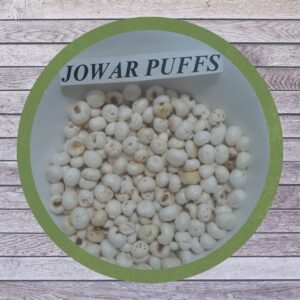
    The demand for millets is increasing due to their health benefits. Sorghum flour is replacing wheat flour in many households in India. Mostly ”Roti” are made with sorghum flour. Sorghum puffs are ready-to-eat (RTE) snacks that are developed by using Puff Gun Machine. It serves as healthy evening snacks, especially for children.

    Sorghum a wonder grain

    Sorghum is also used for making cookies/biscuits. I have tasted the biscuits made from Sorghum at IIMR, Hyderabad. It was really soft, tasty, and delicious. It can surely compete with the products available in the market.


    • CUTLERY INDUSTRY: The word “Cutler” is derived from the Middle English word Cuteler. The cutlery is generally made of metal, wood, plastic and now the trend of disposable. During the COVID-19 situation, there is a shift in the eating etiquette trends and people are preferring different types of cutlery. Increasing hygiene has resulted in the high use of disposable cutlery that is made of bamboo and wood.

    According to Future Market Insights(FMI), disposable cutlery sales are estimated to rise CAGR by 4% from 2021 to 2031, in comparison to a CAGR of 3.4% from 2016 to 2020.

    The trend of Cloud Kitchen is increasing at a faster rate in India and Online Food Delivery Service providers like Swiggy and Zomato creating more opportunities for disposable or single-use cutlery.

    But there is an opportunity of making cutlery, which is edible and this can be made from Millets. No doubt it is disposable at a faster rate and also it can be consumed just after completing the meal. Among millets, Sorghum fits well in this cutlery industry.

    BK Environmental Innovations claimed to be the first to introduce cutlery made of Sorghum which is edible. Narayan Peesapaty, MD makes cutlery under the brand name Bakeys. In this segment, he makes spoons, forks, knives, and chopsticks using Sorghum flour as the base material. This cutlery can be decomposed within 4-5 days and it is made without preservatives and has a shelf life of 3 years.


    • BIO-FUEL INDUSTRY: The increase in petroleum prices and the contribution of Fossil Fuels to global warming are becoming a concern for all of us. Bio-fuel is the next generation fuel which will be economical and the most important is environmentally friendly.

    Sweet Sorghum stalk has the potential to emerge as the major bioenergy crop. It is more efficient than maize and sugarcane in terms of productivity with low water and inputs. Sweet Sorghum made its place in the National Policy of Biofuels-2018 and this will increase the scope for 1st Generation Ethanol.

    Sweet Sorghum fits well because it is a versatile crop propagated by seeds and farmers can take 2-3 crops per year. IIMR, ICRISAT, and many R & D organizations are actively involved in taking the Sweet Sorghum journey to the next level in biofuel production and creating a milestone.

    The best part of Sweet Sorghum in Biofuel production is that the sugarcane factories can be utilized around the year.


    • FEED INDUSTRY: Sorghum is a good source of raw materials that are utilized for poultry and animal feed. After crushing of Sweet Sorghum, the bagasse is used for animal feed. The bagasse is turned into feed blocks. It is highly palatable, cost-effective, and also improves the yield of cows’ milk. The Sorghum grain is mixed with the feed of the birds and the result is good as maize.


    • ALCOHOL INDUSTRY: Sorghum grains have opened up opportunities for entrepreneurs. Sorghum is an ingredient that is used in the production of fermented beverages. With Sorghum, many types of alcohol can be made like beer and whiskey.

      Sorghum a wonder grain
      Sorghum Beer

    In China, a famous Chinese Liquor called “Baijiu” is produced using Sorghum and it is the world’s top-selling spirit covering 40% by volume of alcohol followed by whisky. This spirit has already entered the Indian market.


    By this, we can understand the potential of Sorghum, and that’s why Sorghum is called the ”Wonder Grain”. Entrepreneurs thinking of entering into the millet market can include Sorghum as their ingredient for their innovative millet products.

    Hope you liked the article, do leave your valuable comments below, I will be happy to hear from you.


    Author: Tapas Chandra Roy, A Certified Farm Advisor on Millets, ‘Promoting Millets from Farm to Plate’. In a mission to take the forgotten grains- Millets to Millions. To remain updated on my blogs on millets you can join my Telegram Channel Millet Advisor.
  • The revival of Millet Grain on Farm to Plates addressing Nutritional Security

    The revival of Millet Grain on Farm to Plates addressing Nutritional Security

     Odisha Millets Mission in Sundargarh:

    “Special Programme for Promotion of Millets in Tribal Areas of Odisha” (Odisha Millets Mission)- Reviving Millets on Farm to Plates. It is a flagship programme supported by the Department of Agriculture & Food Production, (Govt of Odisha) to promote millets. It was launched in Sundargarh district in the year 2018-19. The programme initially covered 4 blocks, that is, Nuagaon, Kuarmunda, Rajgangpur and Kutra, which was gradually extended to another 4 blocks (Lephripada, Hemgir, Tangarpali & Balisankara) with financial assistance from District Mineral Foundation, Sundargarh.

    The programme covers all aspects of millet ecosystem that includes production, consumption, processing, marketing and inclusion of millets in State Nutrition Programmes.
    Ragi Ladoos for Nutritional Security
    Ragi Ladoos for Pre-School Children


    The objectives of the Millet Mission:
    1. Improving the productivity of Millet crops to secure household level surplus.
    2. Setting up of decentralized processing facilities for easy access to processed millets.
    3. Promoting Household-level consumption to increase food and nutrition security.
    4. Promoting farmer collectives and marketing to further the millet economy with a focus on women entrepreneurs.
    5. Inclusion of millets in the State Nutrition Programme and Public Distribution System.
    The success of Odisha Millets Mission owes to its unique design of programme delivery involving various stakeholders like Government agencies, Civil Society Organisations, Community Based Organisations and Academic institutions. In Sundargarh, 8 Community-Based Organisations have been implementing the programme with the support of 6 Facilitating NGOs.
    The Agricultural Technology Management Agency (ATMA), Sundargarh acts as the nodal organisation for implementation of the programme at the district level. The State Secretariat for Odisha Millets Mission is hosted at Nabakrushna Choudhury Centre for Development Studies (NCDS), a social science research institute situated at Bhubaneswar. The State Secretariat comprises of Programme Secretariat and Research Secretariat anchored by WASSAN and NCDS respectively.
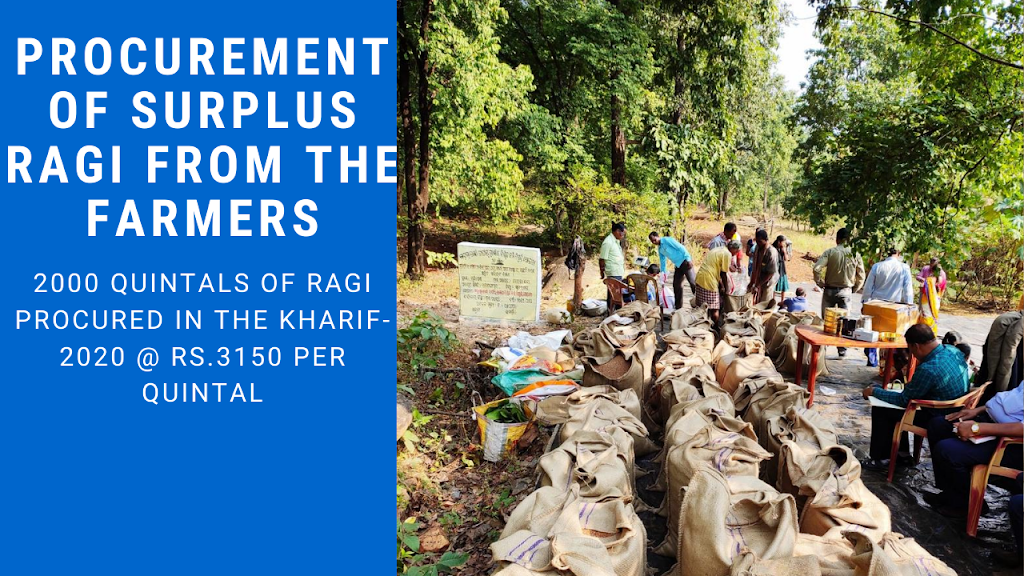
    In the first year of implementation (2018-19), millet (exclusively Ragi) was cultivated in 600 Hectares benefitting 1405 farmers in 4 blocks of the district. During 2019-20, 930 Hectares of millet was cultivated including Ragi, Little Millet, Foxtail Millet and Sorghum involving 2820 farmers. A surplus of around 500 quintals of Ragi was procured from farmers in the Kharif Marketing Season 2018-19 which increased 4 folds to just above 2000 quintals in Kharif Marketing Season 2019-20. 
    Procurement of Surplus Ragi from farmers
    Procurement of Surplus Ragi from the Farmers


    The millets, owing to its nutritional benefits, climate resilience characteristics and nostalgic sentiments about the grain being attached with their tribal culture have added to the other incentives provided by the programme to encourage farmers to cultivate and consume millets. The positive feedbacks from the agrarian community and successful implementation of the programme paved the way for an expansion of the scheme to 4 additional blocks with support from District Mineral Foundation, Sundargarh from 2020-21.
    Inclusion of Ragi Ladoo in ICDS, Sundargarh
    Background of Millet Mission:
    In a series of discussions at State level regarding utilization of the Ragi procured from farmers it was proposed that Ragi, for its nutritional values should be included in the ICDS using DMF and OMBADC funds, based on which the pilot programme for introducing Ragi Ladoo for pre-school children in Anganwadis Centres of Sundargah the district was planned.
    Ragi is extremely nutritious millet rich in Calcium(344 mg), Protein(7.3 gm), Fibre(3.6 gm), Iron(3.9 mg), Good carbohydrate(72 gms), and other essential minerals. In the process of hulling, the nutrition content of ragi is not lost. Hence, this is an excellent grain for the children.
    About the Project:
    The project envisages supplementing the nutritional requirements of pre-school children (3 to 6 years) enrolled in the Anganwadi Centres of the district. Each child shall be provided with 4 Ragi Ladoos per week comprising of 10.5 gms of Ragi in each Ladoo.
    The existing WSHGs engaged as the THR (Take Home Ration) making units or Chhatua Units in each ICDS project area, promoted by Mission Shakti (W&CD Dept, Govt of Odisha) shall be trained to prepare and supply the Ragi Ladoo Mix to the Anganwadi Centres.
    The Anganwadi helpers shall make ladoos out of the Ragi Ladoo Mix and provide to the children. As Anganwadi Centres are closed in the present pandemic situation, the Ragi Ladoo Mix is packaged and supplied to the beneficiaries’ home on a monthly basis.
    The project, supported by DMF, Sundargarh is a joint initiative involving 2 agencies, that is, Odisha Millets Mission (Directorate of Agriculture & Food Production, Odisha) & Mission Shakti / ICDS (Dept of Women & Child Development and Mission Shakti, Odisha).
    Odisha Millets Mission shall ensure enhancement in millet production in the district and thereby the availability of surplus Ragi in procurement Mandis. They shall also provide machinery required for cleaning, grading and destoning ragi grains to the selected WSHGs. Two WSHGs in the district have been empanelled as the cleaning units, which shall clean the ragi grains using the machinery and supply to the various Chhatua Units for preparation of Ragi Ladoo Mix. The project shall be implemented in a phased manner.
    Millet Ladoo making
    Preparation of the First batch of Ragi Ladoo Mix by Jyoti SHG of Bileimunda, Hemgir Block

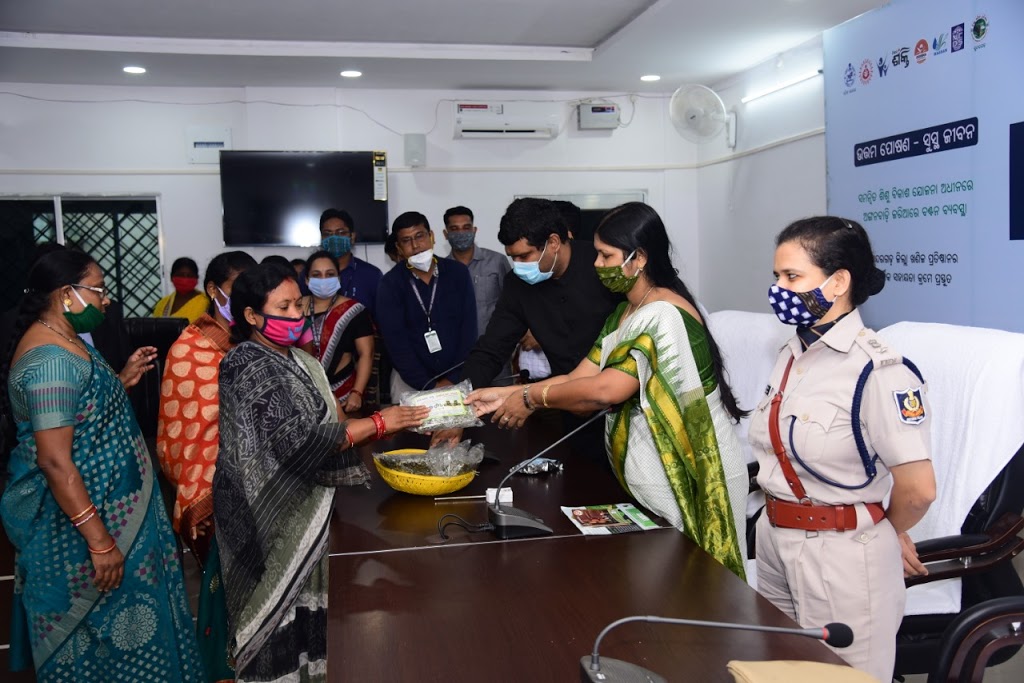
    The first phase was inaugurated by the Minister of WCD&Mission Shakti on 15th August 2020 in which about 3000 children of Hemgir project were covered. From November 2020, the second phase shall be launched in 5 project areas (primarily urban) and in the third phase, starting from January 2020 all 21 project areas are planned to be covered.

    Millet ladoo mix distribution
    Distribution of Ragi Ladoo mix by the Honourable Minister WCD & Mission Shakti to beneficiaries in the Inaugural Ceremony.


    This initiative was jointly undertaken by Odisha Millets Mission & Mission Shakti, with support from DMF, Sundargarh and Sundargarh District Administration has exemplified how convergence among different agencies have successfully revived the journey of a once-neglected the Nutri-cereal grain on-farm to plates and thus this initiative will address the Nutritional Security.
    Author: Arpan Das, District Project Coordinator, WASSAN, Odisha Millet Mission
  • Delicious Millet Kheer with Jaggery

    Delicious Millet Kheer with Jaggery

    Millet Kheer with Jaggery:

    You might have heard of making Kheer with rice but few have heard of making it with millets. As you know making with millets makes it tasty, nutritious, and healthy. Kheer or Payasam is originated in the Indian sub-continent and it is served during meals or in desserts. It is flavoured with cardamom, raisins, almonds, cashews and many other dry fruits and nuts.

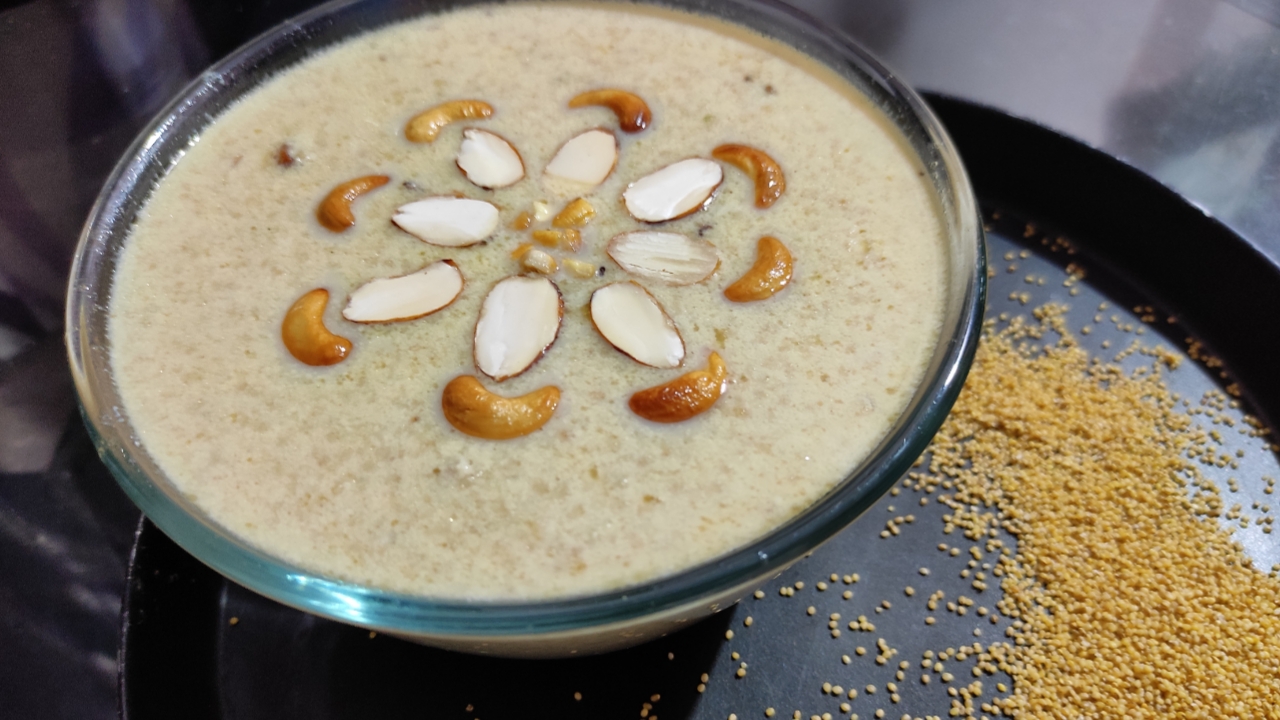
    Millet Kheer
    Delicious Foxtail Millet Kheer

    Ingredients for Millet Kheer:

    • 1/2 cup foxtail millet
    • 1/3 cup of desi ghee
    • 1/3 cup powdered/ grated jaggery
    • 1 litre of milk
    • 5-6 Nos. of Cardamon
    • 15-20 Nos. of raisins
    • 10-12 Nos. of Almonds
    • 20 Nos. of cashew

    Preparation Method of Millet Kheer:

    • First of all the foxtail millet was soaked for 6 hours to get the maximum nutrition. and for better cooking.
    • Take a pressure cooker and light the stove to heat it and then put 2 tbsp of ghee.
    • Keep the flame on a low medium and add the soaked millet.
    • Saute it well for 2 minutes and add two and a half cup of water.
    • A pinch of salt is added to it so that millet is cooked properly.
    • The pressure cooker is covered with a lid up to 2 whistles on a medium flame.
    • After two whistles keep it aside and let the pressure releases by itself.
    • Open the lid after 15 minutes and add the boiled milk into it.
    • In the meantime, take a pan and add 1 tbsp of ghee into it and then add all the cashews and fry it until it turns to golden in colour.
    • Repeat the same process for raisins.
    • After 20 minutes put the grated jaggery into it and give it a nice mix.
    • Keep stirring and ensure that it does not stick to the bottom.
    • Add the fried cashews and almonds.
    • Add the powdered cardamom powder into it and switch of the stove.
    • Add the fried raisins into it.
    • You can put ghee on the top of the kheer.
    • Transfer the entire kheer into a bowl and garnish it with almonds and cashews.
    • You can take it when it is hot or after it cools down

    Award-Winning Recipe: Millet Rasgulla with Jaggery

    For more Millet Recipes: Subscribe my Youtube Channel


  • Millets Market Analysis in 2020

    Millets Market Analysis in 2020

    MILLET MARKET ANALYSIS:

    Millets are ancient Super grains, nowadays known as Nutri-Cereals, is the reservoirs of nutrition for better health. They are classified into major and minor. Major Millets( Sorghum and Pearl Millet) and Minor Millets(Foxtail, Proso, Kodo, Little, Barnyard Millet). They are predominantly gaining more importance in the world and in India.

    Market  Analysis pertaining to Millet can be discussed by its:
    1. Demand and Consumption
    2. Use in Food Processing
    3.Online Distribution Channel
    4. Increase in Millet Production
    5. Market Forecast
    6. Market Competition.

    DEMAND & CONSUMPTION:

    Millets were considered as the Poor Man’s Food. Now it has shifted to Rich Man’s Food. The demand for it is increasing in urban areas not only due to its nutritional value but also enhancing immunity in the human body. They are considered to be promising sources as an immunity booster. The important elements that maintain our body’s immune system are those which contain all vitamins and minerals and a completely balanced diet.


    So, the first cereals that come to my mind which contain vitamins, minerals, fiber, and anti-oxidants are the MILLETS. The increase in awareness of the health benefits of Millets will directly boost the consumption and trigger the industry growth rapidly by 2025.


    USE OF MILLETS IN PROCESSING:
    Millets Beer
    Millet Beer

    Innovative millet products are taking their share in many segments like Infant Food, Bakery Products, Health Drinks, Ready to Eat Food, Breakfast Food, and the emerging industry i.e. Alcohol.

    Two mothers of India came forward with a yummy and healthy food for babies in the brand name  Slurrp Farm. Bringing their experience and imbibing their ideas into them. Many Startup Businesses have come with wonderful millet products in the market. The Toit Brewery of Bengaluru is the first to introduce Nutri grain-Millet into the beer jug. By this, there will be a reduction in the import of barley malt from abroad. As they are rich in nutrients, it is taking the place in the health drink segment.
    ONLINE DISTRIBUTION CHANNEL:
    Millet Market Share
    Market Share by Distribution Channel

    In 2018, millets market share by distribution channel shows that e-commerce online stores are gaining importance and likely to show promising above growth more than 3% CAGR by 2025. Previously people were dependant on traditional grocery stores for millet products but now in the situation of COVID-Pandemic, everyone is dependant on online stores. Keep in mind that Millets are the immunity booster and getting the product at the doorstep, Online Store will take the maximum share in the distribution channel.

    INCREASE IN MILLET PRODUCTION:

    India is the largest producer of millets with 41% market share in the world. The importance of millet is increasing day by day due to increased awareness among people and government policies supporting nutritional security. The only crop to withstand drought and climate change is the millet as it can be grown in every soil with less rainfall. Many states like Odisha, Karnataka are promoting millets on a large scale benefitting small and marginal farmers. There is an increase in MSP of millets for the last 3 years giving confidence to farmers to grow more millets.


    MILLET MARKET FORECAST:

    According to a report announced by the Reportlinker.com “North America Millets Market Forecast to 2027- COVID-19 Impact and Regional Analysis By Product; Application; Distribution Channel; and Country, where they have mentioned that The North America Millets Market was valued at US$ 841.87 million in 2018 and expected to grow at a CAGR of 4.0% during 2019-2027 to reach US$ 1,192.24 million by 2027.


    MARKET COMPETITION:

    The global millet market is unorganized and fragmented. The millet processors are generally small in size catering small export business. As the trend of growth in millet will bring more opportunities for the entrepreneurs and simultaneously have more competition in the market. The entrepreneur with the right strategy and good quality products will take the maximum market share. The organic millets with more traceability and transparency will win the game.

    BUY MILLET PRODUCTS FROM STOREFRONT IN AMAZON


  • Millet Startups and Business Opportunities in 2020

    Millet Startups and Business Opportunities in 2020

    ”Millet Startups Ignition – Business Opportunities in Millets”

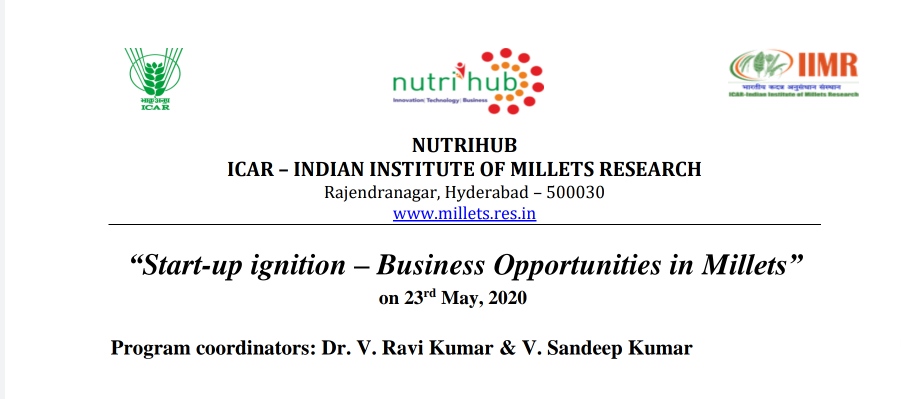
    Looking into the potential of Millets and its business in India, A webinar was organized by a premier agricultural research institute engaged in basic and strategic research on sorghum and other millets under the Indian Council of Agricultural Research(ICAR)-Indian Institute of Millet Research(IIMR), Hyderabad on 23rd, May 2020 at 10 AM.
    Millet Starups and Business Opportunities
    Millet Startups Webinar- Nutrihub, IIMR
    Around 80 participants participated in this Millet Startups webinar and I too got the opportunity to attend this Webinar and could learn a lot of things from the great panelists who are having better experience and knowledge in this sector. So, I thought of sharing with you all.
    It started with joining and acceptance of participants and then witnessed the Nutrihub Film focusing not only Lab to Land and Farm to Fork Solution but addressing a major nutritional problem of the nation and Indian Government is putting effort into supporting the commercialization of technologies from public-funded Institute through Start-up.
    Nutrihub Incubation program is designed to help Nutri-cereals startups grow in a streamlined fashion by providing them the required technology and business support system which I have mentioned in my previous post on “The Potential of Millets and start-up”. In the future, we intend to create 100 plus entrepreneurs in the next 5 years said by Director of IIMR, Hyderabad.
     

    Dr. Raj Bhandari said on the topic “USP of Millets – Developing markets on Nutrition”. Health and Nutrition will be the main focus of all future development programs. Over the years there are many changes in lifestyle, nutrition, food, and immunity.

    The challenges that we are going to face is the Food Nutrition and Immunity. Millets were there around the 3000-5000 years and were eaten as a staple food. There is a lot of value in these wonderful grains. In the next decade will go back to ancient grains. The body recognizes and understands millets due to its immunological memory in our body of our past experience which we carry as a legacy for the future.

    USP of Millets:

    1. Millets are the next smart food because it is packed with nutrients and energy. They are the powerhouse and the Government of India has named it Nutri-Cereals.
    2. Nice source of energy as it releases energy in a constant manner.
    3. Millets are gluten-free.
    4. Millets contain a good profile of micronutrients which is divided into two categories, Type-1 and Type-2. First, the Type-1 which are the functional nutrients that can be stored in the body like iron, calcium, manganese, copper, iodine, and a certain amount of Vitamin A, D, K which is helpful for cellulose metabolism. The type-2 are the growth nutrients (growth promoters) like Nitrogen, Phosphorous, Zinc, Magnesium, and Potassium.

    5. Millets contain a balanced amino profile. The protein digestibility can be increased by proper processing and malting.
    6. Millets doest not contain trans fat.
    7. Millets contain fiber and resistant starch which work as pre-biotics.
    8. Millets are used in the pharmaceutical industry.
    9. Millets are alkaline in nature.
    10. Millets come under the therapeutic category.
    11. Good for the farmers as it is suitable for dryland agriculture and requires fewer inputs that require less water and naturally organic in nature.
    12.Good for the planet as it is climate-resilient crops.

                  The Unique Selling Proposition (USP) of Millets can be created in the target groups and demographic profile where we can use millet as the main ingredients in the food-based approach. We are committed to reducing malnutrition. The stakeholders of millets are huge and this is a way to move forward.

    Dr. Vilas A Tonapi, Director, IIMR

    Dr.Vilas Tonapi, Director, ICAR- Indian Institute of Millets Research, Hyderabad presented on ”An Overview of Millets – Production and Utilization”. This institute has taken this task of mainstreaming millets into the food plates of everyone. This can be done by telling people about the millet grains, what are the business opportunity around them, how to cook these millets. The food recipes created in this institute can be used in creating food diversity at home.

    Awareness is the key to success. A strong value chain has been created. 15 states have spearheaded in the millet mission. Production and productivity will take place but the backward linkages that we have created with the technologies with the cultivars, with the production practices and the awareness all these have created an ecosystem of awareness around Millets. It is not only the elder to take millets but also for children. For children, the recipes should be attractive, appealing, and tasty. We have experimented, confirmed, and validated that tasty recipes can be made with millets as wheat and rice.
    Coming to the Business Opportunities in Millets. You need to look at the area of business, which is good for me and how can I create my own sphere, dimensions, and status around which I am called the Millet entrepreneur.

    Important aspects for a Millet Entrepreneur:

    1. Production: You can create a Farmer Producer Organisation(FPO) for which you can get Government support.
    2. Primary Processing of Millets at the farm gate.
    3. Millets Value Addition: Vermicelli, pasta, puffs, flakes
    4. Seed Entrepreneurs: You can give good quality seed to the farmers which will enhance the production and productivity of millets.
    5. Aggregators: Aggregating millets in the warehouse for supermarkets and food industry.
    6. Packaging for supermarkets and food industry
    7. Food Entrepreneurs: Biscuits and Cakes
    8. Millet based Hotel Industry
    9. Millet Export Industry
                       When you link to all the value chain from production, processing, value addition, aggregators, and you as a millet entrepreneur making available to consumers is an important aspect. APEDA and FSSAI  and laboratory for quality checks are there to help you in this business. Opportunities are many if we explore and we can provide you handhold support under NGRAIN Programme and RKVY-RAFTAAR.
    Dr. Dayakar Rao, CEO, Nutrihub
    Dr. Dayakar Rao, CEO, Nutrihub presented on ”Millet Startups and Business Opportunities in Millets”. 24 Mantra is doing good business in the United States. I was a little bit skeptical about one aspect is the Shelf life. The holistic aspect and clear understanding of the products are required. Nutrition Security is a stake and we are unable to tackle the problem of malnutrition.
    There is a shift in government policies and how to address nutrition security. There are many programs where the government is looking for millets to supplement with other products. We are at the forefront taking millet movement in the country and took with millets working with people from NGOs, Public, Private like ITC, 24 Mantra.
    We succeeded in creating a brand under the name of Eatrite. Now we focus on other brands by Nutrihub. This will cater to all business needs of Millet Startups and there is Centre of Excellency for Nutri-Cereals at IIMR supported by the Government where the R&D takes place.
    Government Industry policies to encourage the micro food enterprise. Today the value chain be relied upon which was not before. Backward integration is to be done to do the business proposition.
    Availability of processing machines where the efficiency is about 70-80% and we are working hard to take it to 90% efficiency.
    There is a move by APEDA to take millets into the international market as proposed by our honorable prime minister and create a brand in the global market.
    Recently, I heard about the importance of millets from our honorable Prime Minister and you can surely have a look at it.
     
    So, there will be a lot of support from the government side in this millet business.
    The shelf life of millets is to considered as Bajra contains 5% fats whereas the rest millets contain less than that. We have achieved the shelf from 6 months to one year except for some flours. In flour, you can go with adding and packing in a different way. An integrated approach is required for packing these products. We have developed around 70 product technology and we will be glad to handhold support by licensing of the technology. We are looking for express food technology as we find it in flight. Plant protein is a future opportunity. Fermented food is another area of opportunity. There are about 400 brands in South India. There is also an opportunity in the fabrication industry as of now only about 5 fabricators are there in India. You can also go for bio-ethanol from sorghum stalk. and making alcohol by blending like whiskey, Brandy, and Beer.

    A journey of 24 Mantra in India and Abroad:

    Dr.Rajashekar Reddy, Founder & MD, 24 Mantra presented on “24 Mantra – Perspective of leading organic exports company”. We have started the 24 Mantra 16 years back and there was no much awareness on organic and that too in a small market.
    There were mainly two challenges one was the building of a supply chain where maintaining traceability was difficult. The other problems were in processing, packaging, and storage. There was no suitable technology and convincing farmers for doing organics and educating consumers to eat organics.
    We systematically tackled the supply chain and it took 7-8 years without using preservatives or chemicals. In terms of minor millets, there is a challenge of getting the right seeds but in the case of major millet, there was no issue. For demand creation Government should run a program as ”One Millet a Day Mission”.
    Initially, we have started with our own store and doing investment in taking supermarket shelf space. Similar things we have to do for millets by putting a shelf and a person educating consumers about millets. If you are self-funded the ability to invest becomes very difficult. So, early in our life, we realized that with our own funding we will be never able to move in retail. So we convinced some of the institutional investors to invest and they are looking for the size of the market opportunity and our ability to convert that opportunity into a reality. So we were able to secure a large number of findings.
    So in millet entrepreneurs have to go the people and convince them to invest and this is possible. If we were able to convince 10% people to have one millet in a day so we are talking about 30-40 million dollar opportunity. The grocery market is about 600 million dollars. So, there is a huge opportunity.
    When we started our journey in 2004 the export was the only market but when we looked down the export market and realized that if you want to tap the export market you need to have very good systems and processing infrastructure to tap the opportunity. So, we hopefully started the domestic market although it was very tough and in a few years, we were able to set up some basic processes, infrastructure, and looking for export opportunities.
    Unless you conquer the domestic market, the exports will not be a viable kind of approach. ”You have to win at home to win outside”. 40 years back rice was luxury for most of the south Indian people but today eating millets have become luxury. Millets are more expensive than rice and wheat. So, changing food habits is not going to be easy.

    Some points to note before starting Millet Startups:

    1. Keep developing products with a good taste profile.
    2. Investing in educating consumers.
    3. Price competitiveness closer to conventional products.
    4. Develop a domestic market.
    5. Gluten-free trends as it is adopted in the USA at an 8-10% rate.
    6. Government help in educating the consumer.
    Dr. Sangappa, Scientist, IIMR
    Dr. Sangappa, Scientist, IIMR presented on ”Millet value-added technology licensing” ICAR-IIMR. The value-added technologies of Millets developed by ICAR-IIMR are:
    1. Milling:
     
    • Sorghum Atta
    • Multigrain atta
    • Semolina, Khichdi, Idli and Upma rawa for all millets
    • Millets Rice
     
    2. Shelf-life enhancement technologies:
     
    • Pretreatments
    • Packaging
    • Application of TBHQ
    • Millet primary processing
     
    3. Beverages:
     
    • Malts
    • Lassi
     
    4.Instant Mix:
     
    • Sorghum upma mix
    • Sorghum Pongal mix
    • Millet Laddu mix
    • Millet Idli mix
    • Khichdi Mix
    • Dosa Mix
    5. Flaking:
    • All millet flakes
    • Muesli
    6. Puffing:
    • All millet puffs
    7.Baking:
    • All Millets/Multi Millet
    • Cookies
    • cakes
    • Bread/Bun
    • Pizza Base
    8. Extrusion:
    • All Millets/Multi Millet
    • Vermicelli
    • Pasta
    • Noodles
    • Extruded Snacks
    • Extruded Flakes
    MOU is signed with more than 100 entrepreneurs.

    Millets Technology Transfer :

    1. Potential Technology Identification
    2. Disclosure of ITMU/PME
    3. Expression of Interest
    4. Technology Pricing & ITMU Approval.
    5. Technology Licensing/MOU
    6. Training & handholding for three years.
     
    Once the MOU is signed training for 2 days be done on the particular technology and provide all the documents. The training will be conducted as per the convenience. Karnataka Government has come with a scheme for new entrepreneurs, FPOs, and SHG members where the Government is bearing the technology prices.
    Ms. Sri Devi Nune, Chief Business Manager, Nutrihub presented on ”Millet Startups – Incubation at Nutihub- Programs. Nutrihub will be going to help in:
    1. Infrastructure facilities
    2. Domain/R&D Consultancy
    3.Technology Consultancy
    4. Business Consultancy
    5. Mentoring and Networking
    6. Access to Funding
    7. Awareness
     
    Capacity Building Programs:
    1. NEST: Training participants from idea to prototype, with up to 5 lakhs grants-in-aid after two months of training.
    2. N-GRAIN: Training for those startups which are having their MVP in place, with up to 25 lakhs grants-in-aid.
    If you are interested to be Millet Entrepreneur and want to do Millet Startups you can apply in this NGRAIN Programs. Be Hurry as the closing date for this program is 30th May 2020.
     
    Really, the Millet Startups Webinar was a very mind-opening event and it has enriched my knowledge. I must thank Director, IIMR, & the panelists of this webinar for providing such enriching technologies, and experiences. Hope Millets will go a long way when everyone is putting the best effort and will be witnessing more Millet Startups in India. In the end, I must thank all the team members of IIMR for conducting such a nice webinar successfully.

    Finally, I must thank Dr.Vilas Tonapi, Director, ICAR-IIMR, and Dr.B.Dayakar Rao, CEO, Nutrihub for providing the e-Certificate for attending this webinar.

    Business Opportunities in Millets
    e-Certificate for attending the Millet Startups Webinar


  • Best Millet Biscuits making for Entrepreneurs to do Start-up Business

    Best Millet Biscuits making for Entrepreneurs to do Start-up Business

    Millet Biscuits Making Business:

    Millet Biscuits


                                  Generally, wheat is one of the cereals used extensively throughout the world for the preparation of cookies. But cookie from non-wheat cereals like millet is uncommon. Now day’s millets are gaining importance because they are rich in nutrients having a low glycemic index.
    The demand for ready-to-eat convenience food products has been steadily increasing. The technology has made it possible to process millets into an easily acceptable, familiar form.
    Millet Cookies are healthy, don’t contain preservatives, and, most importantly, taste good.
     

    The Millet cookies making machine consist of the planetary mixture, cutting machine, and convection oven. In preparation for cookies, to reduce drudgery, enhance biscuit quality, and hygiene good manufacturing practices must be followed.

    Equipment Required:

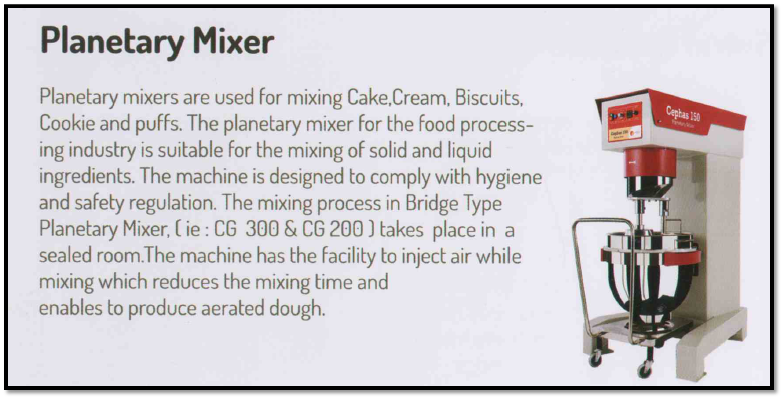
    1.Planetary Mixer:

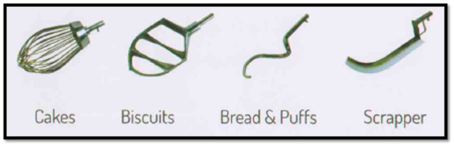
    Kettle – 2 blades – Kettle shifter – Speed adjuster and height adjuster of blades – The capacity of kneader is 12 kg per batch. It is suitable for the food processing industry for mixing solid and liquid ingredients.

    Accessories of the Planetary Mixture:

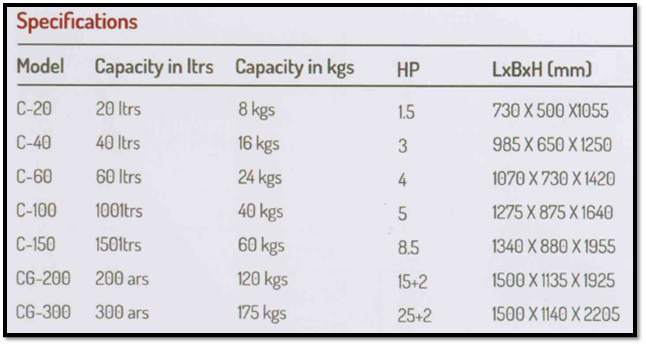
    Specifications:


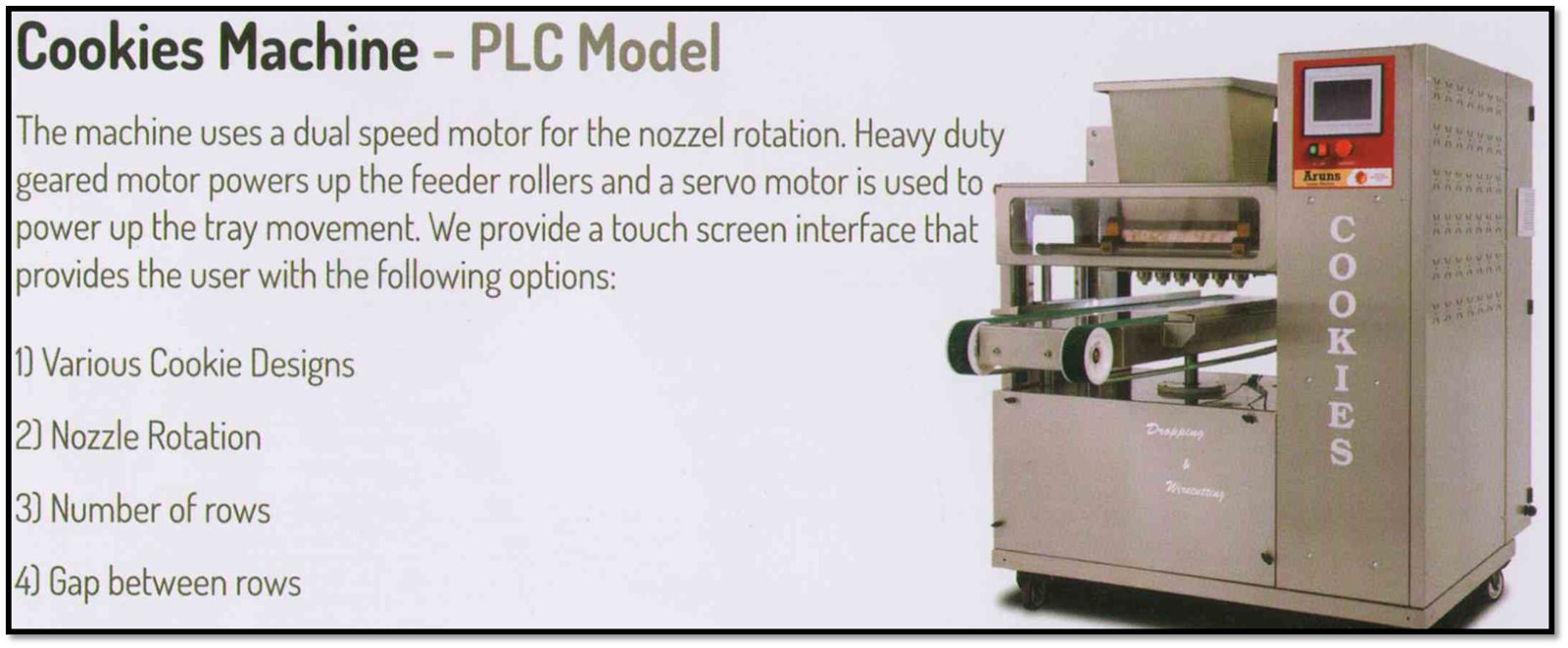
    2.Cookies cutting machine:

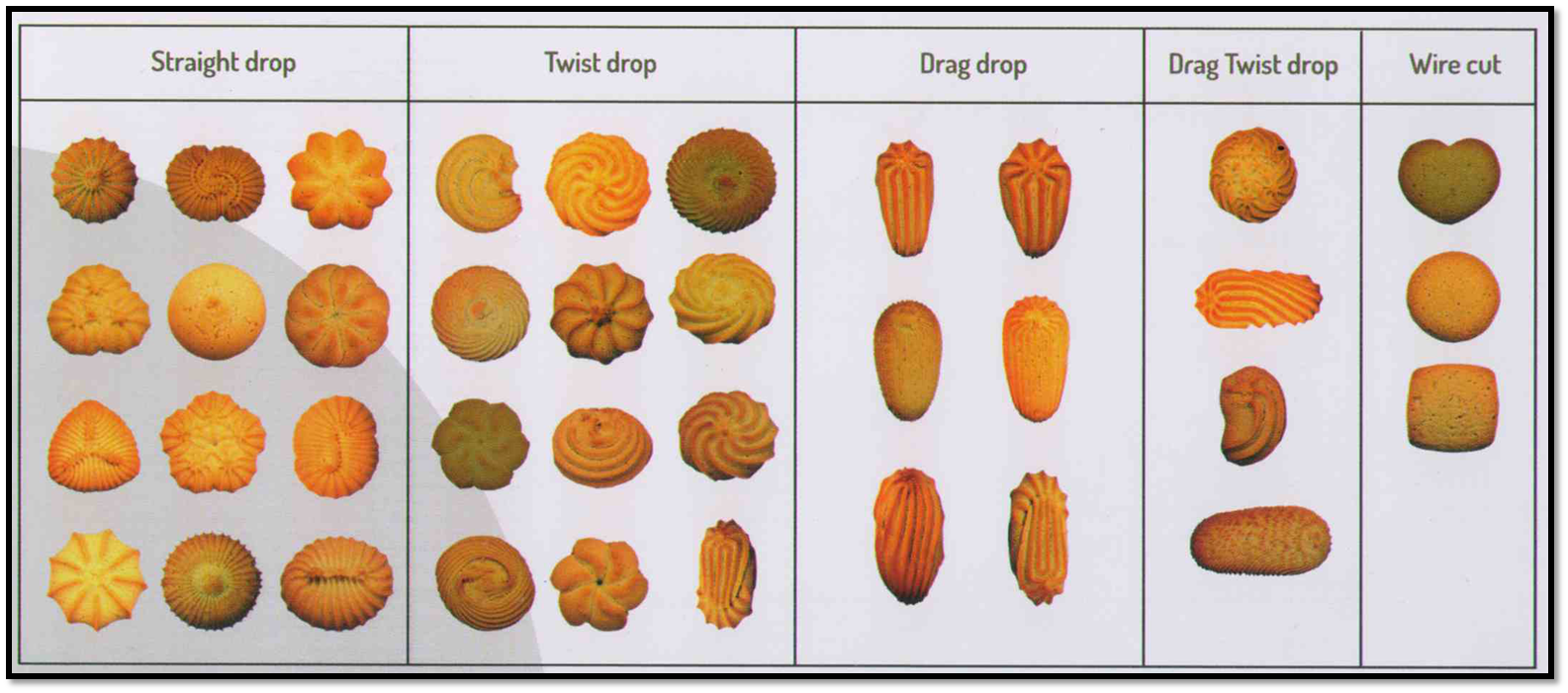
    It consists of a hopper in which sheeting rollers are inserted and beneath the rollers cutting dies are fitted. The function of sheeting rollers is to spread the dough into a biscuit shape.


    Biscuits sample shapes from the cutting machines. The different shapes will attract the customers and we can also name the biscuits in different names.

    Biscuits sample shapes from the cutting machines.


    3.Rotary Convection Oven:

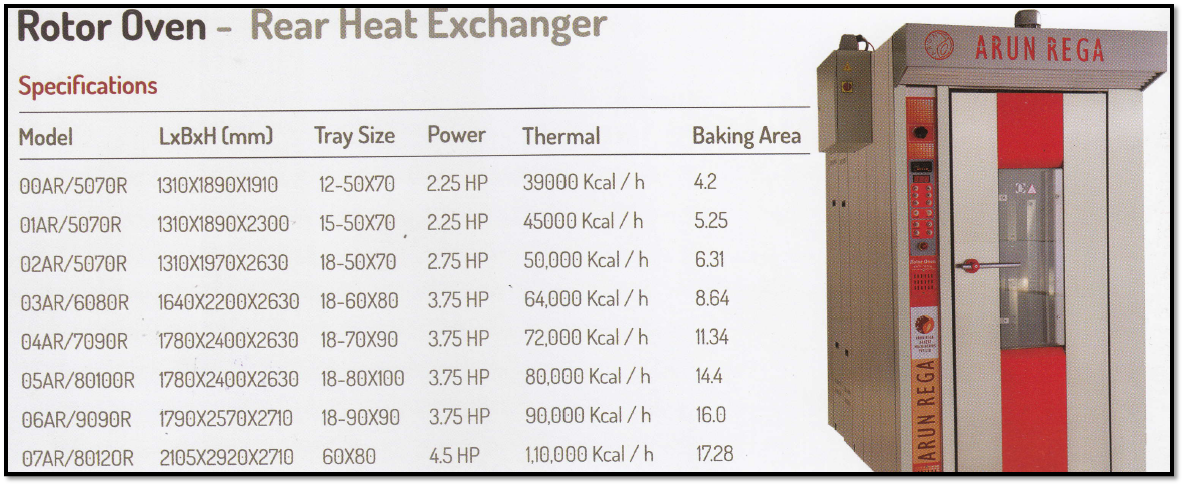
    Rotary Oven is an advanced technology over convection oven. In the convection oven, the warm air is not equally distributed. In a rotary oven, the trays are rotated and it uses a built-in fan that forces the heated air faster inside the oven through the cavity and circulates it around the item being cooked. Therefore, a rotary oven cooks much faster than the convection oven and also cooks food at lower temperatures. The rotary oven consists of: – A cabin with racks -Trays -Oven cavity -Starter with temperature indicator


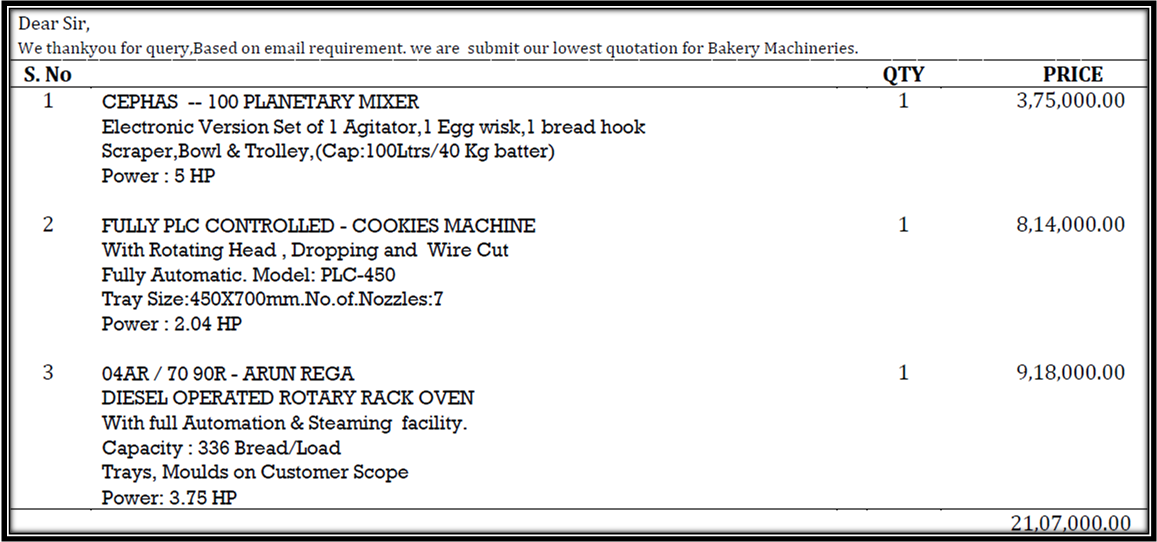
    Going deep into the project, enquired about the cost of the machines from ARUN REGA BAKERY MACHINERIES PVT. LTD., Hyderabad. I have specified the model of machines and got the quotation.

    The cost of the project will vary according to the model specifications.

    I hope, the information above may help you in taking decisions for your new startup.

    Related Post: How to make Millet Ragi Biscuits at home

    How the Sorghum Cookies are made on a commercial basis.


    Author: Tapas Chandra Roy, A Certified Farm Advisor on Millets, ‘Promoting Millets from Farm to Plate’. In a mission to take the forgotten grains- Millets to Millions. To remain updated on my blogs on millets you can join my Telegram Channel – Millet Advisor.