Category: Millets

  • Millets Market Analysis in 2020

    Millets Market Analysis in 2020

    MILLET MARKET ANALYSIS:

    Millets are ancient Super grains, nowadays known as Nutri-Cereals, is the reservoirs of nutrition for better health. They are classified into major and minor. Major Millets( Sorghum and Pearl Millet) and Minor Millets(Foxtail, Proso, Kodo, Little, Barnyard Millet). They are predominantly gaining more importance in the world and in India.

    Market  Analysis pertaining to Millet can be discussed by its:
    1. Demand and Consumption
    2. Use in Food Processing
    3.Online Distribution Channel
    4. Increase in Millet Production
    5. Market Forecast
    6. Market Competition.

    DEMAND & CONSUMPTION:

    Millets were considered as the Poor Man’s Food. Now it has shifted to Rich Man’s Food. The demand for it is increasing in urban areas not only due to its nutritional value but also enhancing immunity in the human body. They are considered to be promising sources as an immunity booster. The important elements that maintain our body’s immune system are those which contain all vitamins and minerals and a completely balanced diet.


    So, the first cereals that come to my mind which contain vitamins, minerals, fiber, and anti-oxidants are the MILLETS. The increase in awareness of the health benefits of Millets will directly boost the consumption and trigger the industry growth rapidly by 2025.


    USE OF MILLETS IN PROCESSING:
    Millets Beer
    Millet Beer

    Innovative millet products are taking their share in many segments like Infant Food, Bakery Products, Health Drinks, Ready to Eat Food, Breakfast Food, and the emerging industry i.e. Alcohol.

    Two mothers of India came forward with a yummy and healthy food for babies in the brand name  Slurrp Farm. Bringing their experience and imbibing their ideas into them. Many Startup Businesses have come with wonderful millet products in the market. The Toit Brewery of Bengaluru is the first to introduce Nutri grain-Millet into the beer jug. By this, there will be a reduction in the import of barley malt from abroad. As they are rich in nutrients, it is taking the place in the health drink segment.
    ONLINE DISTRIBUTION CHANNEL:
    Millet Market Share
    Market Share by Distribution Channel

    In 2018, millets market share by distribution channel shows that e-commerce online stores are gaining importance and likely to show promising above growth more than 3% CAGR by 2025. Previously people were dependant on traditional grocery stores for millet products but now in the situation of COVID-Pandemic, everyone is dependant on online stores. Keep in mind that Millets are the immunity booster and getting the product at the doorstep, Online Store will take the maximum share in the distribution channel.

    INCREASE IN MILLET PRODUCTION:

    India is the largest producer of millets with 41% market share in the world. The importance of millet is increasing day by day due to increased awareness among people and government policies supporting nutritional security. The only crop to withstand drought and climate change is the millet as it can be grown in every soil with less rainfall. Many states like Odisha, Karnataka are promoting millets on a large scale benefitting small and marginal farmers. There is an increase in MSP of millets for the last 3 years giving confidence to farmers to grow more millets.


    MILLET MARKET FORECAST:

    According to a report announced by the Reportlinker.com “North America Millets Market Forecast to 2027- COVID-19 Impact and Regional Analysis By Product; Application; Distribution Channel; and Country, where they have mentioned that The North America Millets Market was valued at US$ 841.87 million in 2018 and expected to grow at a CAGR of 4.0% during 2019-2027 to reach US$ 1,192.24 million by 2027.


    MARKET COMPETITION:

    The global millet market is unorganized and fragmented. The millet processors are generally small in size catering small export business. As the trend of growth in millet will bring more opportunities for the entrepreneurs and simultaneously have more competition in the market. The entrepreneur with the right strategy and good quality products will take the maximum market share. The organic millets with more traceability and transparency will win the game.

    BUY MILLET PRODUCTS FROM STOREFRONT IN AMAZON


  • Varietal Diversity in Finger Millet in Koraput

    Varietal Diversity in Finger Millet in Koraput

    Varietal Diversity in Finger Millet:

    Varietal Diversity in Finger Millet
    Finger Millet Varieties in Koraput

                                         The Finger Millet is mostly grown by the tribal farmers of Koraput as it can withstand drought and can be grown in marginal and infertile soil. Finger Millet serves as an important food for nutritional security as it is rich in nutrients and easy to process as compared to other millets. The best attribute of Finger Millet is that it has excellent keeping qualities. The varietal diversity in Finger Millet is considered to be an important contributor to the resilience of the concerned farming system.

    Dasamantpur site is already facing climate change-induced weather-related issues such as late-onset of monsoon, dry spells within the crop period, heavy rains during harvest, and early withdrawal of monsoon. Varietal diversity in the household is expected to play an important role in adapting to these conditions.

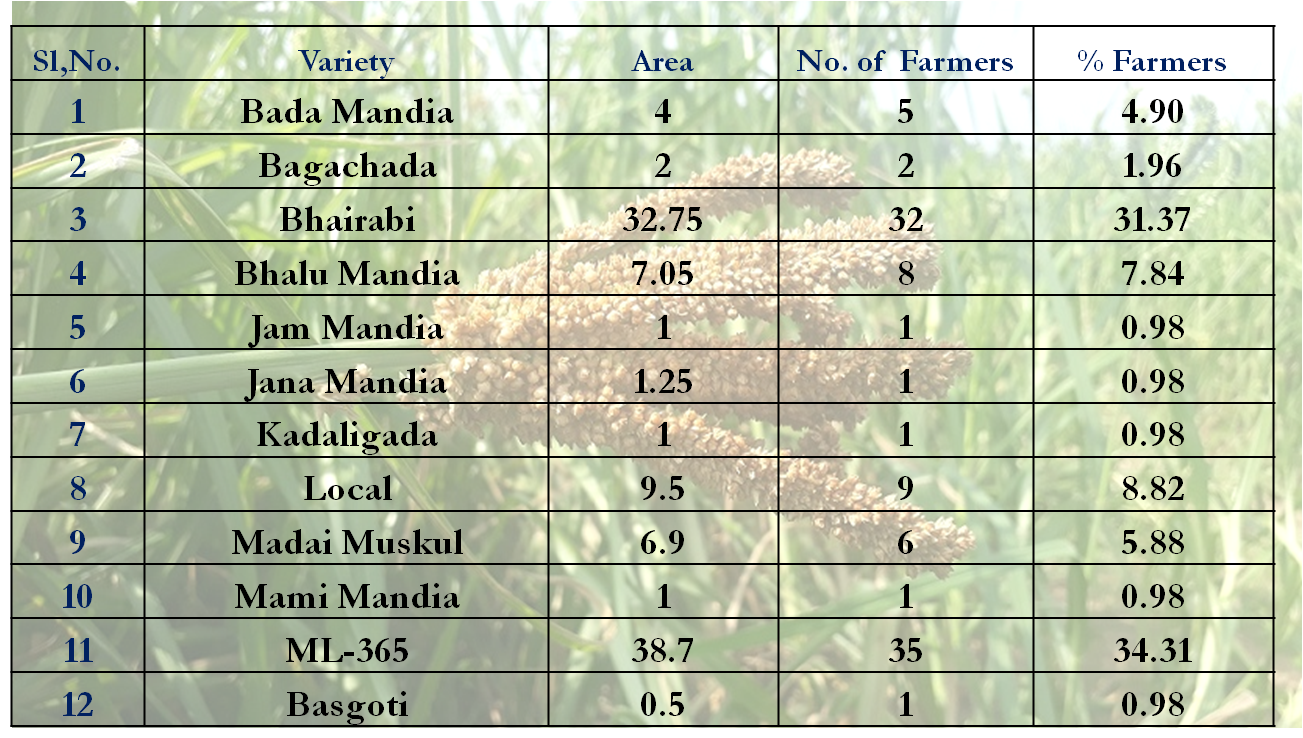
    It was observed through the survey, that there is a lack of varietal diversity in Finger Millet at the household farm level in Dasamantpur. Only three households were found with two varieties of Finger Millet each, though there were a total of twelve known varieties among the sample households.

    The existing Finger Millet Varieties was broadly classified under two heads: 1. Released Varieties 2. Local Varieties

    The two released varieties existing among the sample households were Bhairabi and ML-365.

    Similarly, nine local varieties were Bada Mandia, Bagachada, Bhalu Mandia, Jana Mandia, Jam Mandia, Kadaligada, Mami Mandia, Modai Maskuli and Basgoti.

    Varietal Diversity of Finger Millet
              (Figure: The proportion of Finger Millet Variety, area and no. of farmers)

                                              Around 65.38 percent of Finger Millet farmers were using released varieties. This is due to the Odisha Millet Mission and National Food Security Mission (NFSM – Nutri Cereals) intervention in this study area. The remaining farmers were cultivating local varieties. The category of varieties grown by 8.82 percent of the farmers could not be identified. Among the released varieties, ML-365 was found to be the dominant one (34.31 percent farmers). Moreover, the adoption of released varieties was found to be widespread across the landholding categories. 

    Varietal Diversity in Finger Millet
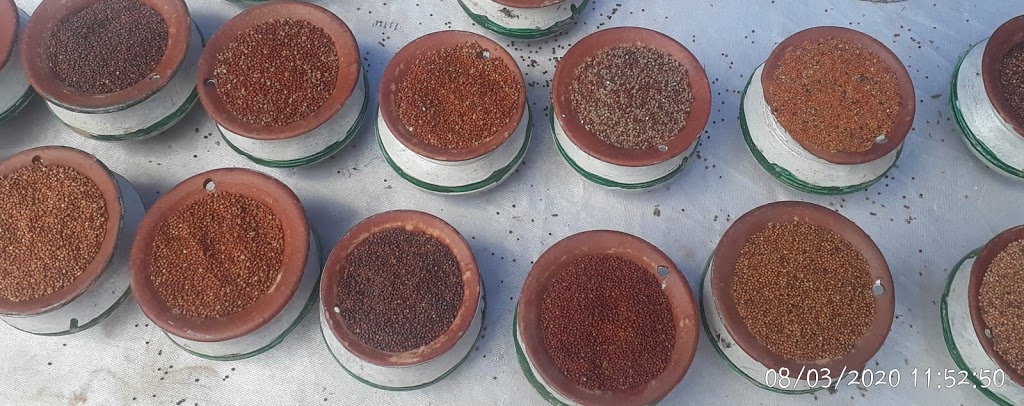
    Number of farmers, the area covered, and varieties wise of finger millets:(100 respondents)

    Sources of the seed of finger millet:

    It is observed that most of the farmers in the sample used department-supplied seeds (65.38 percent). The second source of seed was found to be farmer saved seeds (34.62 percent).
    The productivity of finger millet:
    The analysis of the productivity of Finger Millet is important to understand the factors behind the difference in productivity among the sample households. An analysis based on the area of landholding, the variety was undertaken, the number of farmers, the average yield, and the method of planting to understand the productivity situation in Dasamantpur.
    Figure: Proportion of average yield and the method of agronomic practices)
                             In this, it is seen that most of the sample households were using the Bhairabi variety and with this variety, they had followed(28% sample households) the system of Millet Intensification(SMI) agronomic practices. Bhairabi variety performance was accepted by the farmers as it was giving a promising average yield of 4.98 quintal/acre and due to its special character i.e. Non-lodging and good taste. Other local varieties like Madai Muskul and Basgoti average yield were found to be 6 quintals/acre but it is not considered as the sample size is only 6 and 1 respectively.
     
    Participatory Varietal Trial of Finger Millet:
    Varietal of Finger Millet
    Participatory Varietal Trial of Finger Millet

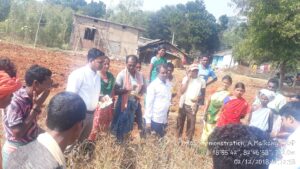
    Participatory Varietal Trial(PVT) was conducted under Odisha Millet Mission by DHAN Foundation. In every plot of the demonstration, the same agronomic practices were followed. Farmers participated in this trial and were given their feedbacks and views depending upon the yield, color, taste, duration, plant height, size of the grains, and market demand.

    This PVT will definitely help in preserving the seed variety, good in every aspect. As seen in the study, the local finger millet varieties are vanishing day by day. We need to preserve the local varieties of Finger Millet by building Community Seed Centre at the village level.

    Author: Tapas Chandra Roy, A Certified Farm Advisor on Millets, ‘Promoting Millets from Farm to Plate’. In a mission to take the forgotten grains- Millets to Millions. To remain updated on my blogs on millets you can join my Telegram Channel – Millet Advisor.
  • Experiences of Certified Farm Advisor on Millets

    Certified Farm Advisor Programme:
    Certified Farm Advisor on Millets
    Certified Farm Advisor on Millets

    MANAGE, Hyderabad has launched a new initiative called the “Certified Farm Advisor/Certified Livestock Advisor” program to develop Agricultural Extension Personnel into Specialists in a particular Crop / Livestock.

    The program consists of three Modules. The first module is on basic aspects of the latest technologies in Crop /Livestock. The candidate enrolled for the program has to undergo online training for about 3 months which will be conducted by MANAGE. Thereupon, the candidate can opt for any particular crop or enterprise to become an expert in that specialization. List of Crops for Specializations

    I had enrolled in Millet Crops and undergone this program. If you like to do this course, you need to Apply Online.

    However, specialization training will not be taken up unless a minimum of 20 candidates is enrolled. Based on the choice of the crop/enterprise, the candidates will be sponsored to relevant ICAR institutions/SAUs or any reputed institute to undergo training for a period of 15 days. During the training, the candidate will have in-depth knowledge and learn the latest technologies relevant to the selected crop/ enterprise.


    As I had opted for the Millet crop, so undergone training at the Indian Institute of Millet Research, Hyderabad for 15 days. In this period I had the in-depth knowledge and learned about millet technology, it’s processing, and value addition.


    After completing rigorous training, the candidate will be allotted to Mentor Scientist/s from the concerned Research Institute for a period of one year for technical guidance to face the field level challenges. On completion, the candidate’s Knowledge will be assessed based on the identified parameters to be declared as “Certified Farm Advisor” or “Certified Livestock Advisor” by MANAGE and technical partner.


    I had the opportunity to work under the mentor scientist of IIMR, Hyderabad, and completed a project on “Utilisation of Finger Millet in Nutritional Security. Really, It was great learning where I visited the farmer’s field and could address their issues and problems and demonstrated the technique and good practices in millet cultivation.


    As I was associated with the Odisha Millet Mission and I think I could deliver my duty and responsibility with endeavor because I was fully equipped with knowledge and skill on millets. I could impart training to the farmers of my block nicely and had the opportunity to train the farmers of neighboring districts and also the farmers from other states like Chattisgarh.
    This course has given me the knowledge to make tasty, nutritious, healthier millet recipes which I had already uploaded on my website: www.tcrconnectingagriculture.com and hope you all will try at your home for your kids and family. I am sure they will love it.

    Not that much, it gives me immense pleasure to help the farmers, entrepreneurs from different parts of India through my Youtube Channel and could solve their queries and issues relating to Millets.

    Eligibility for Enrolment in Certified Farm Advisor Course:

    Any Extension Officer/Agripreneur with B.Sc (Ag) or Graduation in the allied sector, up to an age of 55 years are eligible for enrolment. Fee: For Government, Servants is Rs.5000/- and for private candidates and Agripreneurs, it is Rs.15000/- per candidate to be paid in the form of Demand Draft drawn in favor of MANAGE, Hyderabad.

    The Government employees have to send their application through proper channel. The filled-in application may be sent to The Deputy Director (OSPM), National Institute of Agricultural Extension Management (MANAGE), Rajendranagar, Hyderabad – 30.

    Expected outcome of the Certified Farm Advisor Course:

    A person completing this course will acquire good knowledge of a particular crop/enterprise. Apart from having a basic understanding of agricultural extension management. After certifying the candidates as “Certified Farm Advisor” or “Certified Livestock Advisor” MANAGE will display their names on its website so that the stakeholders could verify the credentials of the Advisors. Interested candidates may send their applications along with the Demand Draft.

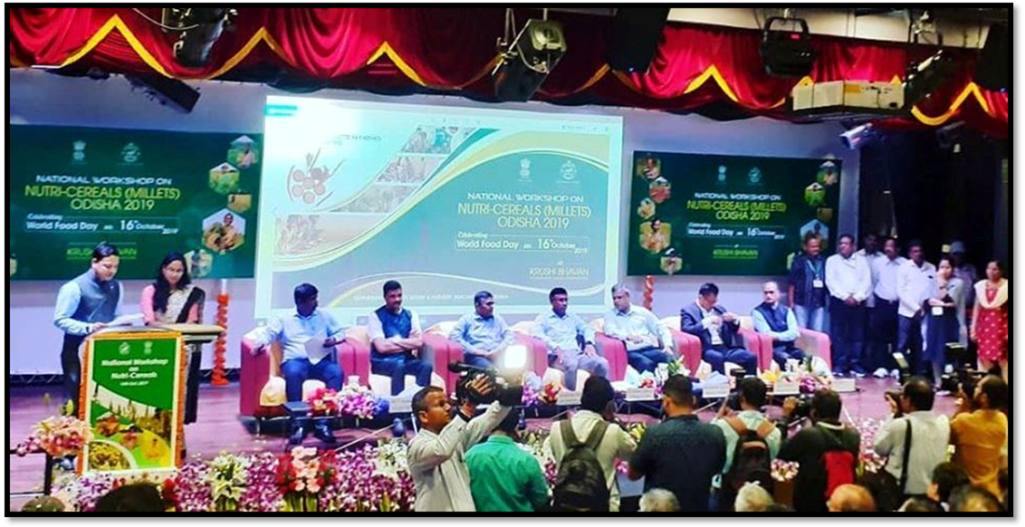
    Really, I was grateful to be the Master of Ceremonies of the National Workshop on Nutri-Cereals held at Krushi  Bhawan, Bhubaneswar on 16th October 2019. It was a successful event which had attracted dignitaries, renowned resource personnel, and a representative from the different esteemed organization from various states.


    In the end, I must say that the Certified Farm Advisor Program on Millets has boosted my confidence and knowledge of Millets.


  • Millet Startups and Business Opportunities in 2020

    Millet Startups and Business Opportunities in 2020

    ”Millet Startups Ignition – Business Opportunities in Millets”

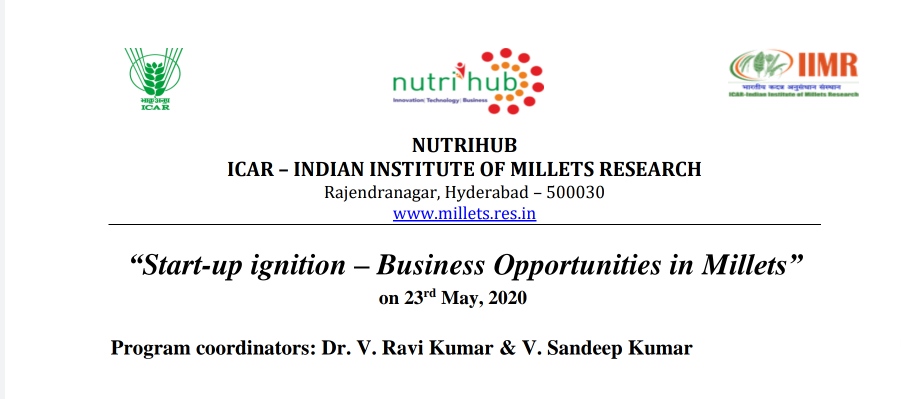
    Looking into the potential of Millets and its business in India, A webinar was organized by a premier agricultural research institute engaged in basic and strategic research on sorghum and other millets under the Indian Council of Agricultural Research(ICAR)-Indian Institute of Millet Research(IIMR), Hyderabad on 23rd, May 2020 at 10 AM.
    Millet Starups and Business Opportunities
    Millet Startups Webinar- Nutrihub, IIMR
    Around 80 participants participated in this Millet Startups webinar and I too got the opportunity to attend this Webinar and could learn a lot of things from the great panelists who are having better experience and knowledge in this sector. So, I thought of sharing with you all.
    It started with joining and acceptance of participants and then witnessed the Nutrihub Film focusing not only Lab to Land and Farm to Fork Solution but addressing a major nutritional problem of the nation and Indian Government is putting effort into supporting the commercialization of technologies from public-funded Institute through Start-up.
    Nutrihub Incubation program is designed to help Nutri-cereals startups grow in a streamlined fashion by providing them the required technology and business support system which I have mentioned in my previous post on “The Potential of Millets and start-up”. In the future, we intend to create 100 plus entrepreneurs in the next 5 years said by Director of IIMR, Hyderabad.
     

    Dr. Raj Bhandari said on the topic “USP of Millets – Developing markets on Nutrition”. Health and Nutrition will be the main focus of all future development programs. Over the years there are many changes in lifestyle, nutrition, food, and immunity.

    The challenges that we are going to face is the Food Nutrition and Immunity. Millets were there around the 3000-5000 years and were eaten as a staple food. There is a lot of value in these wonderful grains. In the next decade will go back to ancient grains. The body recognizes and understands millets due to its immunological memory in our body of our past experience which we carry as a legacy for the future.

    USP of Millets:

    1. Millets are the next smart food because it is packed with nutrients and energy. They are the powerhouse and the Government of India has named it Nutri-Cereals.
    2. Nice source of energy as it releases energy in a constant manner.
    3. Millets are gluten-free.
    4. Millets contain a good profile of micronutrients which is divided into two categories, Type-1 and Type-2. First, the Type-1 which are the functional nutrients that can be stored in the body like iron, calcium, manganese, copper, iodine, and a certain amount of Vitamin A, D, K which is helpful for cellulose metabolism. The type-2 are the growth nutrients (growth promoters) like Nitrogen, Phosphorous, Zinc, Magnesium, and Potassium.

    5. Millets contain a balanced amino profile. The protein digestibility can be increased by proper processing and malting.
    6. Millets doest not contain trans fat.
    7. Millets contain fiber and resistant starch which work as pre-biotics.
    8. Millets are used in the pharmaceutical industry.
    9. Millets are alkaline in nature.
    10. Millets come under the therapeutic category.
    11. Good for the farmers as it is suitable for dryland agriculture and requires fewer inputs that require less water and naturally organic in nature.
    12.Good for the planet as it is climate-resilient crops.

                  The Unique Selling Proposition (USP) of Millets can be created in the target groups and demographic profile where we can use millet as the main ingredients in the food-based approach. We are committed to reducing malnutrition. The stakeholders of millets are huge and this is a way to move forward.

    Dr. Vilas A Tonapi, Director, IIMR

    Dr.Vilas Tonapi, Director, ICAR- Indian Institute of Millets Research, Hyderabad presented on ”An Overview of Millets – Production and Utilization”. This institute has taken this task of mainstreaming millets into the food plates of everyone. This can be done by telling people about the millet grains, what are the business opportunity around them, how to cook these millets. The food recipes created in this institute can be used in creating food diversity at home.

    Awareness is the key to success. A strong value chain has been created. 15 states have spearheaded in the millet mission. Production and productivity will take place but the backward linkages that we have created with the technologies with the cultivars, with the production practices and the awareness all these have created an ecosystem of awareness around Millets. It is not only the elder to take millets but also for children. For children, the recipes should be attractive, appealing, and tasty. We have experimented, confirmed, and validated that tasty recipes can be made with millets as wheat and rice.
    Coming to the Business Opportunities in Millets. You need to look at the area of business, which is good for me and how can I create my own sphere, dimensions, and status around which I am called the Millet entrepreneur.

    Important aspects for a Millet Entrepreneur:

    1. Production: You can create a Farmer Producer Organisation(FPO) for which you can get Government support.
    2. Primary Processing of Millets at the farm gate.
    3. Millets Value Addition: Vermicelli, pasta, puffs, flakes
    4. Seed Entrepreneurs: You can give good quality seed to the farmers which will enhance the production and productivity of millets.
    5. Aggregators: Aggregating millets in the warehouse for supermarkets and food industry.
    6. Packaging for supermarkets and food industry
    7. Food Entrepreneurs: Biscuits and Cakes
    8. Millet based Hotel Industry
    9. Millet Export Industry
                       When you link to all the value chain from production, processing, value addition, aggregators, and you as a millet entrepreneur making available to consumers is an important aspect. APEDA and FSSAI  and laboratory for quality checks are there to help you in this business. Opportunities are many if we explore and we can provide you handhold support under NGRAIN Programme and RKVY-RAFTAAR.

    Dr. Dayakar Rao, CEO, Nutrihub
    Dr. Dayakar Rao, CEO, Nutrihub presented on ”Millet Startups and Business Opportunities in Millets”. 24 Mantra is doing good business in the United States. I was a little bit skeptical about one aspect is the Shelf life. The holistic aspect and clear understanding of the products are required. Nutrition Security is a stake and we are unable to tackle the problem of malnutrition.
    There is a shift in government policies and how to address nutrition security. There are many programs where the government is looking for millets to supplement with other products. We are at the forefront taking millet movement in the country and took with millets working with people from NGOs, Public, Private like ITC, 24 Mantra.
    We succeeded in creating a brand under the name of Eatrite. Now we focus on other brands by Nutrihub. This will cater to all business needs of Millet Startups and there is Centre of Excellency for Nutri-Cereals at IIMR supported by the Government where the R&D takes place.
    Government Industry policies to encourage the micro food enterprise. Today the value chain be relied upon which was not before. Backward integration is to be done to do the business proposition.
    Availability of processing machines where the efficiency is about 70-80% and we are working hard to take it to 90% efficiency.
    There is a move by APEDA to take millets into the international market as proposed by our honorable prime minister and create a brand in the global market.
    Recently, I heard about the importance of millets from our honorable Prime Minister and you can surely have a look at it.
     
    So, there will be a lot of support from the government side in this millet business.
    The shelf life of millets is to considered as Bajra contains 5% fats whereas the rest millets contain less than that. We have achieved the shelf from 6 months to one year except for some flours. In flour, you can go with adding and packing in a different way. An integrated approach is required for packing these products. We have developed around 70 product technology and we will be glad to handhold support by licensing of the technology. We are looking for express food technology as we find it in flight. Plant protein is a future opportunity. Fermented food is another area of opportunity. There are about 400 brands in South India. There is also an opportunity in the fabrication industry as of now only about 5 fabricators are there in India. You can also go for bio-ethanol from sorghum stalk. and making alcohol by blending like whiskey, Brandy, and Beer.

    A journey of 24 Mantra in India and Abroad:

    Dr.Rajashekar Reddy, Founder & MD, 24 Mantra presented on “24 Mantra – Perspective of leading organic exports company”. We have started the 24 Mantra 16 years back and there was no much awareness on organic and that too in a small market.
    There were mainly two challenges one was the building of a supply chain where maintaining traceability was difficult. The other problems were in processing, packaging, and storage. There was no suitable technology and convincing farmers for doing organics and educating consumers to eat organics.
    We systematically tackled the supply chain and it took 7-8 years without using preservatives or chemicals. In terms of minor millets, there is a challenge of getting the right seeds but in the case of major millet, there was no issue. For demand creation Government should run a program as ”One Millet a Day Mission”.
    Initially, we have started with our own store and doing investment in taking supermarket shelf space. Similar things we have to do for millets by putting a shelf and a person educating consumers about millets. If you are self-funded the ability to invest becomes very difficult. So, early in our life, we realized that with our own funding we will be never able to move in retail. So we convinced some of the institutional investors to invest and they are looking for the size of the market opportunity and our ability to convert that opportunity into a reality. So we were able to secure a large number of findings.
    So in millet entrepreneurs have to go the people and convince them to invest and this is possible. If we were able to convince 10% people to have one millet in a day so we are talking about 30-40 million dollar opportunity. The grocery market is about 600 million dollars. So, there is a huge opportunity.
    When we started our journey in 2004 the export was the only market but when we looked down the export market and realized that if you want to tap the export market you need to have very good systems and processing infrastructure to tap the opportunity. So, we hopefully started the domestic market although it was very tough and in a few years, we were able to set up some basic processes, infrastructure, and looking for export opportunities.
    Unless you conquer the domestic market, the exports will not be a viable kind of approach. ”You have to win at home to win outside”. 40 years back rice was luxury for most of the south Indian people but today eating millets have become luxury. Millets are more expensive than rice and wheat. So, changing food habits is not going to be easy.


    Some points to note before starting Millet Startups:

    1. Keep developing products with a good taste profile.
    2. Investing in educating consumers.
    3. Price competitiveness closer to conventional products.
    4. Develop a domestic market.
    5. Gluten-free trends as it is adopted in the USA at an 8-10% rate.
    6. Government help in educating the consumer.
    Dr. Sangappa, Scientist, IIMR
    Dr. Sangappa, Scientist, IIMR presented on ”Millet value-added technology licensing” ICAR-IIMR. The value-added technologies of Millets developed by ICAR-IIMR are:
    1. Milling:
     
    • Sorghum Atta
    • Multigrain atta
    • Semolina, Khichdi, Idli and Upma rawa for all millets
    • Millets Rice
     
    2. Shelf-life enhancement technologies:
     
    • Pretreatments
    • Packaging
    • Application of TBHQ
    • Millet primary processing
     
    3. Beverages:
     
    • Malts
    • Lassi
     
    4.Instant Mix:
     
    • Sorghum upma mix
    • Sorghum Pongal mix
    • Millet Laddu mix
    • Millet Idli mix
    • Khichdi Mix
    • Dosa Mix
    5. Flaking:
    • All millet flakes
    • Muesli
    6. Puffing:
    • All millet puffs
    7.Baking:
    • All Millets/Multi Millet
    • Cookies
    • cakes
    • Bread/Bun
    • Pizza Base
    8. Extrusion:
    • All Millets/Multi Millet
    • Vermicelli
    • Pasta
    • Noodles
    • Extruded Snacks
    • Extruded Flakes
    MOU is signed with more than 100 entrepreneurs.

    Millets Technology Transfer :

    1. Potential Technology Identification
    2. Disclosure of ITMU/PME
    3. Expression of Interest
    4. Technology Pricing & ITMU Approval.
    5. Technology Licensing/MOU
    6. Training & handholding for three years.
     
    Once the MOU is signed training for 2 days be done on the particular technology and provide all the documents. The training will be conducted as per the convenience. Karnataka Government has come with a scheme for new entrepreneurs, FPOs, and SHG members where the Government is bearing the technology prices.
    Ms. Sri Devi Nune, Chief Business Manager, Nutrihub presented on ”Millet Startups – Incubation at Nutihub- Programs. Nutrihub will be going to help in:
    1. Infrastructure facilities
    2. Domain/R&D Consultancy
    3.Technology Consultancy
    4. Business Consultancy
    5. Mentoring and Networking
    6. Access to Funding
    7. Awareness
     
    Capacity Building Programs:
    1. NEST: Training participants from idea to prototype, with up to 5 lakhs grants-in-aid after two months of training.
    2. N-GRAIN: Training for those startups which are having their MVP in place, with up to 25 lakhs grants-in-aid.
    If you are interested to be Millet Entrepreneur and want to do Millet Startups you can apply in this NGRAIN Programs. Be Hurry as the closing date for this program is 30th May 2020.
     
    Really, the Millet Startups Webinar was a very mind-opening event and it has enriched my knowledge. I must thank Director, IIMR, & the panelists of this webinar for providing such enriching technologies, and experiences. Hope Millets will go a long way when everyone is putting the best effort and will be witnessing more Millet Startups in India. In the end, I must thank all the team members of IIMR for conducting such a nice webinar successfully.

    Finally, I must thank Dr.Vilas Tonapi, Director, ICAR-IIMR, and Dr.B.Dayakar Rao, CEO, Nutrihub for providing the e-Certificate for attending this webinar.
    Business Opportunities in Millets
    e-Certificate for attending the Millet Startups Webinar


  • Study on Consumption of Finger Millet in Tribal Areas of Koraput

    Study on Consumption of Finger Millet in Tribal Areas of Koraput

    CONSUMPTION OF FINGER MILLET:

    Consumption of Finger Millet
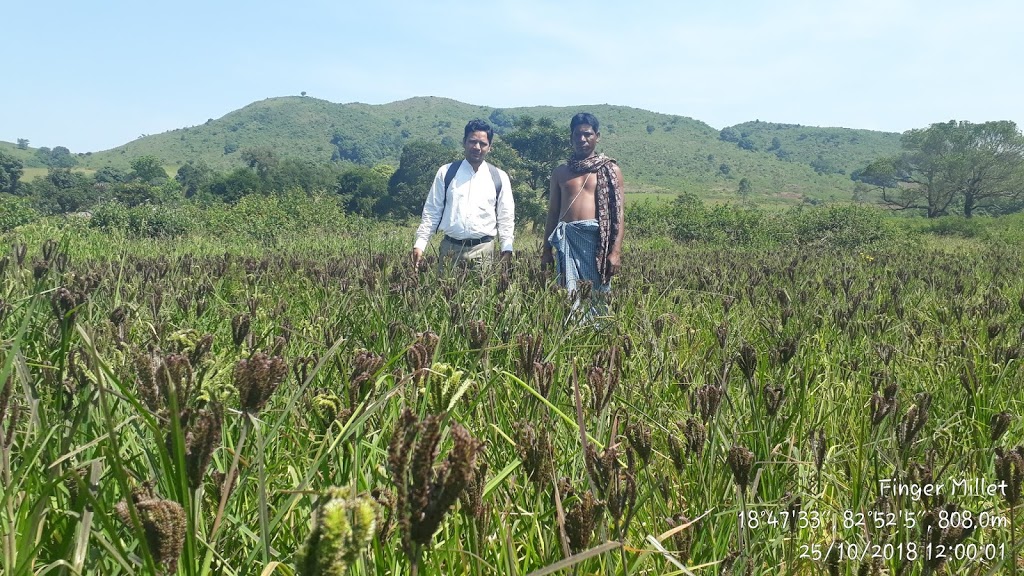
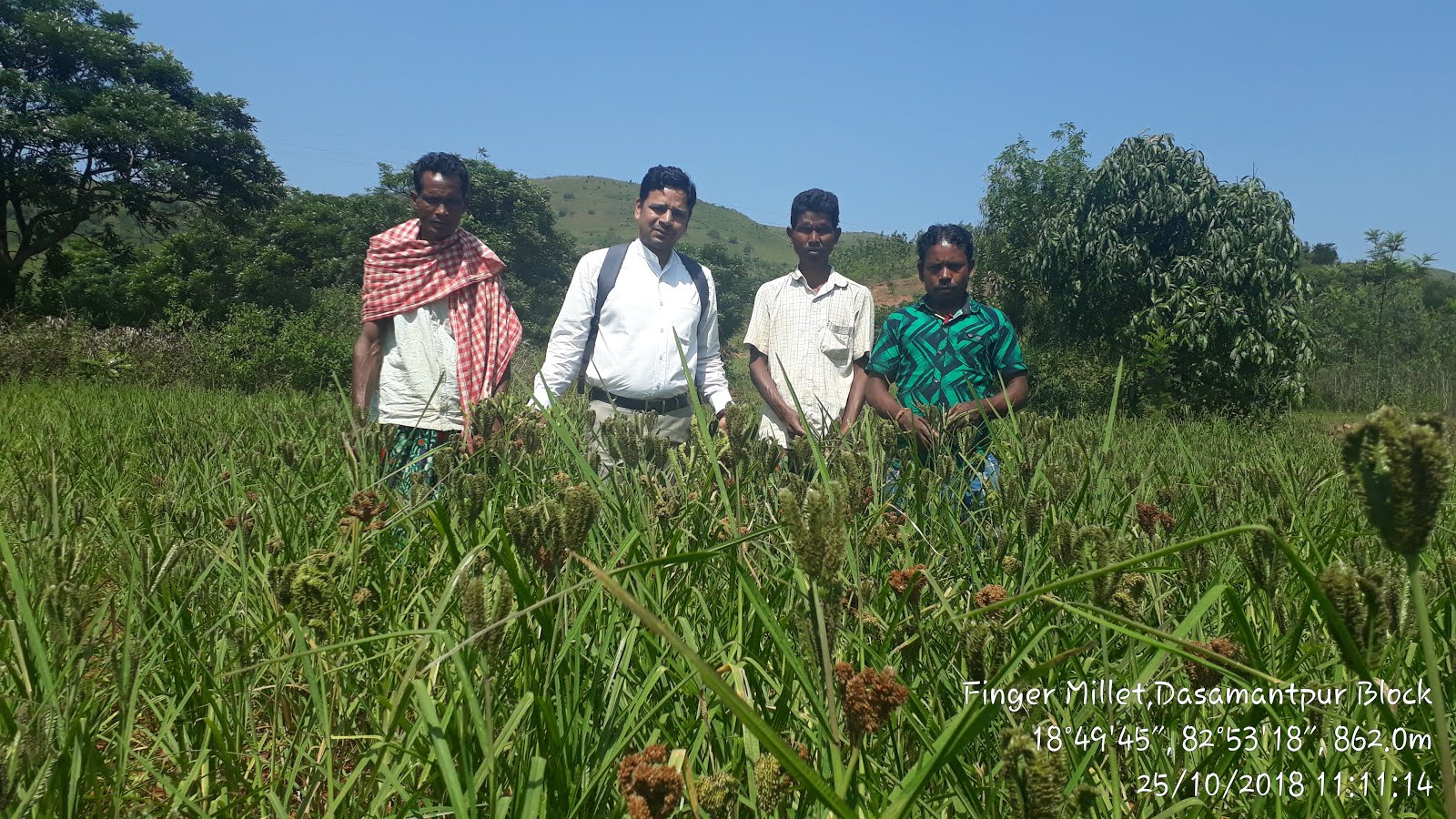
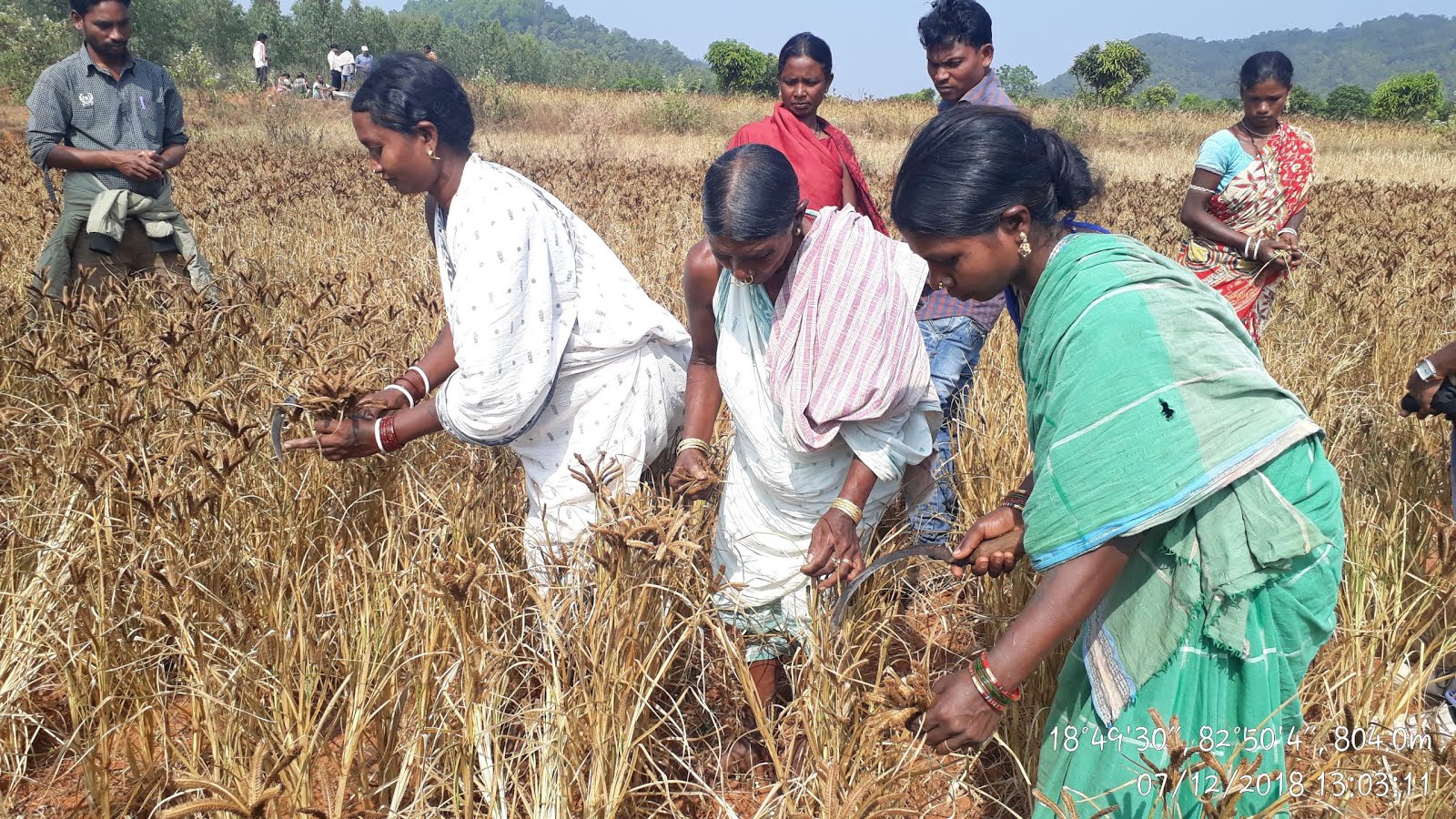
    In the Finger Millet field with the farmer
    Finger millet is among the major crops cultivated in the undulating terrains of Dasamantpur Block, Koraput district of Odisha, India. It is consumed as a staple food and drink by the local tribal communities. However, over the years there has been a rapid decline both in the area and in the production of the crop leading to reduced grain availability for household consumption.

     Further, due to traditional cultivation practices, the grain yield is as low as 2.64 quintals/acre under the broadcasting method, and whereas by line transplanting and SMI method the yield goes to 4.95 quintals/acre.

    consumption of finger millet
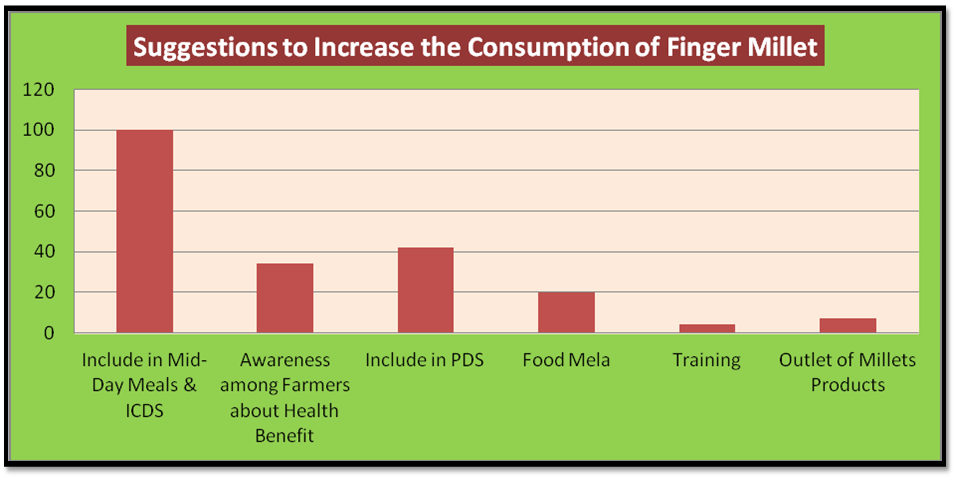
    Suggestions to Increase the Consumption of Finger Millet

    Out of 100 samples under survey, it was found that most of the sample households consumed ragi daily and few occasionally but their concern was that their children do not take ragi. So all recommended to include ragi in mid-day meals and ICDS.

    The second suggestion (42 sample household) was to include ragi in PDS followed by awareness creation among farmers about health benefits, organizing food Mela, an outlet of millet products in the local market and finally training to farmers.

    The National Food Security Act (2013) provides for the inclusion of millets in government food distribution programs like the Public Distribution System (PDS), midday meal in schools, and Supplementary Nutrition Programme (SNP) under the Integrated Child Development Services (ICDS). Odisha has already commenced doing this under Odisha Millet Mission.

    consumption of finger millet
    Distribution of Ragi under PDS

    An initiative of Odisha Millet Mission:

    In 2018-19, around 18,000 quintal ragi were procured in the districts included Koraput, Malkangiri, Rayagada, Ganjam, Gajapati, Kandhamal, Kalahandi, Nuapada, Balangir, Sundargarh, Keonjhar, and Bargarh from farmers @ Rs.28.97 per Kg.

    In 2019-20, the Odisha government had decided to procure ragi from these districts by providing a remunerative price of Rs 3,150 per quintal to the ragi growing farmers and around 94,691 quantal ragi were procured from 23,238 farmers of Odisha.

    Really, it is a good sign that the ragi consumption will increase in many folds in these tribal areas of Odisha, and surely this will address the nutritional security.

    Author: Tapas Chandra Roy, Assistant Agriculture Officer, Department of Agriculture and Farmers’ Empowerment, (Govt. of Odisha)

  • Positive Millets

    Positive Millets

    POSITIVE MILLET:

    Grains are classified into 3 categories:

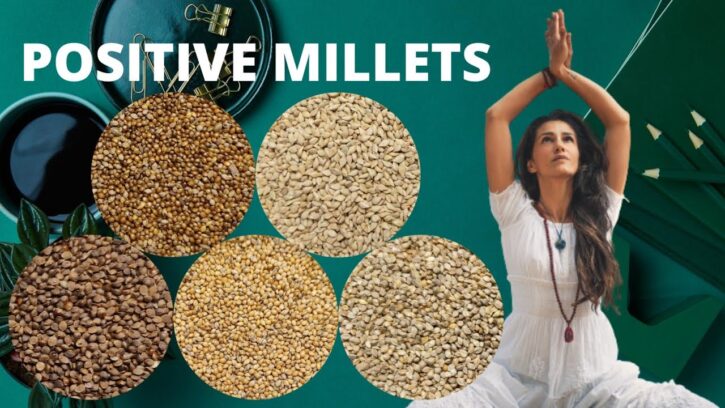
    1.Positive Millet

    2.Neutral Millet

    3. Negative Millet

    The first two categories of grains are called Millet, i.e. Positive and Neutral grain. Positive Millets are also called Sridhanya Millet.

    Related Post: Types of Millets

    The list of Positive Millets are as follow:

    Positive Millets
    Positive Millets

    1.Barnyard Millet

    2.Foxtail Millet

    3. Little Millet

    4.Kodo Millet

    5.Browntop Millet

    Positive gains contain dietary fiber, proteins, minerals, essential amino acids, medicinal values, healing qualities, and therapeutic benefit in abundance. Positive grains take over 6 hours while rice takes just 45 minutes to get absorbed in the blood increases the risk of diabetes. Positive Millet is not just nutritious, they can be grown in less fertile soil or in the dry land. They can resist drought and can sustain even at 20 cm of rainfall. To produce one kg of millet we require 300 liters of rainfall.

    Related Post: Types of Millets and their Health Benefits

  • Close-up of millet grains

    Close-up of millet grains

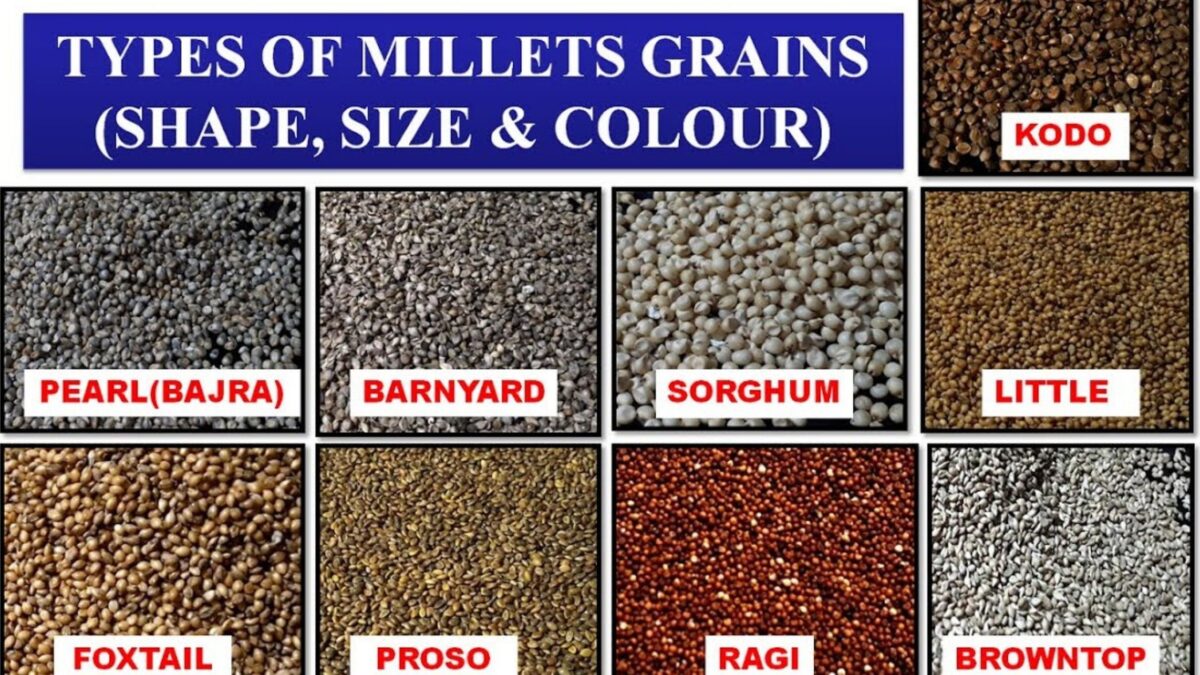
    MILLET GRAIN SIZE, SHAPE AND COLOUR:


    There are two main groups of millet-based on size:
    1. Major Millets (Sorghum and Pearl Millet)
    2. Minor Millets (Finger Millet, Little Millet, Foxtail Millet, Proso Millet, Barnyard Millet, Kodo Millet, Browntop Millet)

    The seed coat and husk of foxtail, little and Proso Millet are generally of a single entity with a glossy appearance, whereas the Kodo and Barnyard Millet contains multiple layered seed coat.

    Normally, the seed coat of Kodo Millet is brown colour, foxtail millet is yellowish whereas other millets are greyish coloured.

    But looking deep into its shape, size and colour of millets grains let us discuss it one by one briefly.

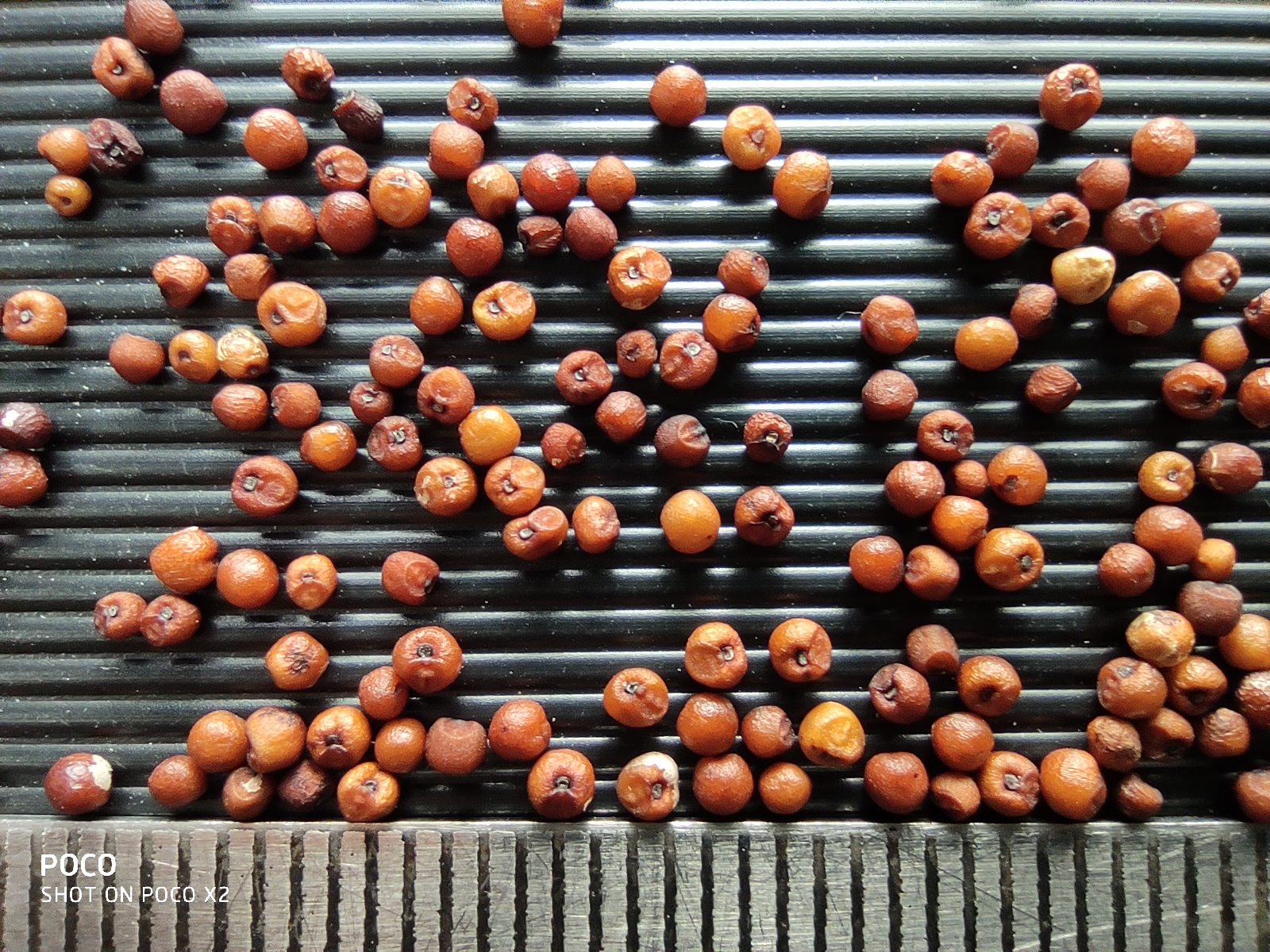
    1. FINGER MILLET:

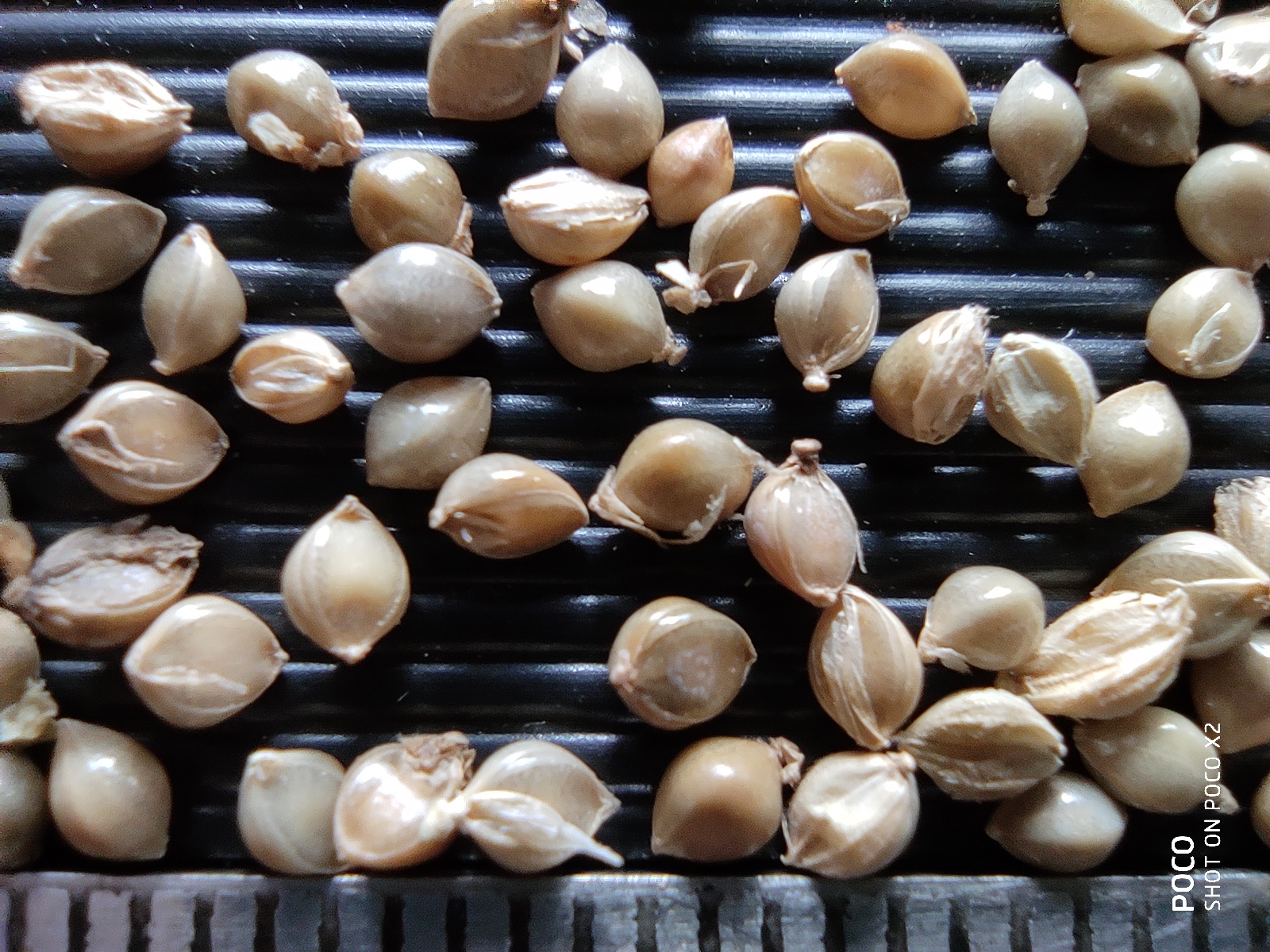
    Close-up photo of Finger Millet grains.
    Close-up photo of Finger Millet grains.

    Grains are 1-2 mm in diameter, with the colour varying from brown to dark brown in colour. The seed type of finger millet is Utricle. The kernel weight of 1000 kernels is 2.3 gm. The shape of the grain is globose. The testa of finger millet is very thick with five cell layers and also it is pigmented. The endosperm is the largest component of the kernel cereal. Aleurone layer is single which lies just below the testa or seed coat.

    2..PROSO MILLET:

    Close-up photo of Proso Millet grains.
    Close-up photo of Proso Millet grains.

    The grain size is 3-4 mm in length. Grains vary in colour from white cream golden yellow, brown & straw white in colour. The grains are spherical to oval in shape, about 3mm long & 2mm diameter. The 1000 kernel weight is about 7.1g. The seed type is Utricle. The testa layer is single and it is not pigmented.


    3.BARNYARD MILLET:

    Close-up photo of Barnyard Millet grains.
    Close-up photo of Barnyard Millet grains.

    The seed size is 3mm in length. The shape of the grain is Concave, oval. The colour of the varies from straw white, grey, little grey to dull white. There is a knob-like structure which is attached to the panicle which makes it different from Little Millet.

    4.SORGHUM:

    Close-up photo of Sorghum grains.
    Close-up photo of Sorghum grains.

    The seed size is 4-6 mm in length. The seeds vary widely among different types of colour, shape and size. The grains of sorghum are classed according to pericarp colour(white, yellow, or red)

    5.PEARL MILLET:

    Close-up photo of Pearl Millet grains.
    Close-up photo of Pearl Millet grains.

    The seed type of Pearl Millet is Caryopsis. It consists of a single thin testa layer and sometimes pigmented. It has a single aleurone layer. With ovoid grains of 3-5 mm length which can be a nearly white, pale yellow, brown, grey, slate blue or purple colour. The shape of the grain is ovoid, hexagonal and globose. The 100 seed weight can be from 2.5 to 14 grams with mean to 8 gm. The seeds are 1/3 to 1/2 the size of that of sorghum and tend to be more elongated and tear-shaped.

    6.FOXTAIL MILLET:

    Close-up photo of Foxtail Millet grains.
    Close-up photo of Foxtail Millet grains.

    Grains are about 2-3 mm in length and the glumes can be red, black, white, yellow in colour. The seed type of Foxtail Millet is Caryopsis.

    7. KODO MILLET:

    Close-up photo of Kodo Millet grains.
    Close-up photo of Kodo Millet grains.

    The seed size is 3-4 mm in length. Grain shape is elliptical to oval shape and its colour vary from blackish brown to dark brown in colour.

    8.BROWNTOP MILLET:

    Close-up photo of Browntop Millet grains.
    Close-up photo of Browntop Millet grains.

    The seed size is 4-5 mm in length. Seeds are ellipsoid in shape and tan in colour.

    9.LITTLE MILLET:

    Close-up photo of Little Millet grains.
    Close-up photo of Little Millet grains.

    The seed size is 2-3 mm in length. Grain shape is elliptical to oval shape and its colour vary from grey to straw white.

    Related Post: Types of Millets grown in India

    VIDEO:

    ***Please give your valuable suggestions and feedback for improvement.


    Author: Tapas Chandra Roy, Assistant Agriculture Officer, Department of Agriculture and Farmers’ Empowerment, (Govt. of Odisha)

  • Amazing 9 Millets Health Benefits

    Amazing 9 Millets Health Benefits

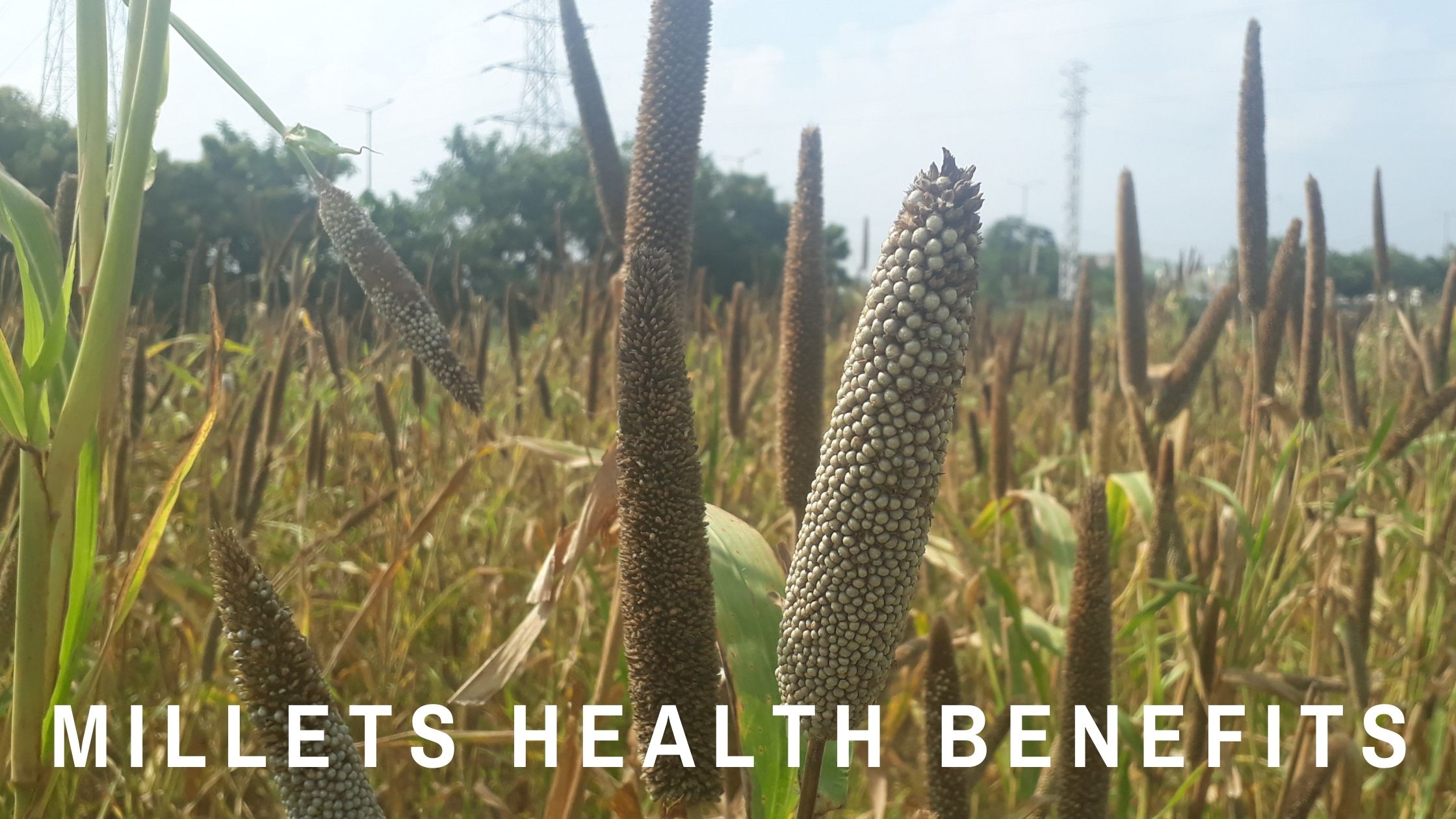
    MILLETS HEALTH BENEFITS:

    Millets are small-seeded grains. Nowadays it is called Nutri-Cereals. Millets are the first domesticated crop in the world. It is suited to harsh environments. We can also call millets the next generation of crops. Millets are full of nutrients and can solve many health problems arising due to the current lifestyles. They are gluten-free and have a low glycemic index. The Government of India has approved 2018 as a national year to promote the production of Nutri-grains. Millets are the only crops that will address important issues in the future.
     

    1. Food, fodder, and fuel

    2. Malnutrition

    3. Health

    4. Climate change

    Let us start with the types and millets’ health benefits in detail.

    Types of millets grown in India :

    1. Finger Millet ( Nachni, Mundua, Ragi, Mandika, Mandia)

    2. Foxtail Millet ( Kangni, Kakum, Korra, Kanghu)

    3. Little Millet ( Kutki, Samai,Sava,Suan)

    4. Proso Millet ( Chena, Variga)

    5. Kodo Millet ( Kodon, Kodra, Kodua)

    6. Barnyard Millet ( Sanwa, Udhalu, Khira)

    7. Pearl Millet ( Bajra, Bajri, Sajja)

    8. Sorghum (Jowar, Jonna,Juara)

    9. BrowntopMillet


    1. FINGER MILLET AND ITS HEALTH BENEFITS :

    Millets health benefits
    In the Finger Millet field with the farmers

    Finger Millet (Eleusine coracana), commonly known as ragi. It is one of the important millet crops grown for cereal and fodder purposes under various agro-climatic conditions in India. The crop requires little input and is less affected by major pests and diseases and matures in 90–120 days. The major finger millet growing states in India are Karnataka, Uttarakhand, Tamil Nadu, Andhra Pradesh, Odisha, Jharkhand, and Maharashtra. 

     
    Finger millet contains about 65–75% carbohydrates, 8% protein, 15–20% dietary fiber, and 2.5–3.5% minerals. Finger Millet grains are highly nutritious and are known to contain the highest amounts of calcium (344 mg / 100g grains), iron, zinc, dietary fiber, and essential amino acids. Protein content in finger millet helps in preventing malnutrition and is also an ideal food for diabetics as it has demonstrated the ability to control blood glucose levels and hyperglycemia.

    2. FOXTAIL MILLET AND ITS HEALTH BENEFITS:

    Panicle of Foxtail Millet after 73 days, Variety-SiA 3222
    Panicle of Foxtail Millet after 73 days, Variety-SiA 3222

    Foxtail Millet (Setaria Italica (L.) P.Beauvois, the oldest cultivated millet in the world. It is cultivated in about 23 countries in Asia, Africa, and America. It is a self-pollinating, short-duration, C4 grain, good for human consumption, grain for chickens and cage birds, and fodder for livestock. Foxtail Millet is the second-largest producer of millet in the world. In India, it is mainly grown to some extent in Andhra Pradesh, Karnataka, Tamil Nadu, Madhya Pradesh, Uttar Pradesh, and northeastern states of India.

     
    It is used as an energy source for pregnant and lactating women and sick people and children. Foxtail Millet releases glucose continuously without affecting the body’s metabolism. Foxtail Millet provides a host of nutrients, has a sweet nutty flavor, and is considered to be the most digestible and non-allergic grain available.

    3. LITTLE MILLET AND ITS HEALTH BENEFITS:

    Little Millet Crop after 60 days, Variety-VS9
    Little Millet Crop after 60 days, Variety-VS9

    Little Millet (Panicum sumatrense) is a fast-growing, short-duration cereal that can withstand both drought and waterlog. It is an important crop grown for food and fodder. It is domesticated in the Eastern Ghats of India, which maintains a large proportion of the diet among the tribal people of Sri Lanka, Nepal, and Myanmar. In India, its cultivation is mostly confined to the tribal areas of Madhya Pradesh, Chhattisgarh, Andhra Pradesh, and Odisha.

     
    It is a wonderful millet that is suitable for all age groups. It helps prevent constipation and corrects all stomach-related problems. Its carbohydrate complex is slowly digested which is helpful for patients with diabetes. Little Millet contains 8.7 grams of protein, 75.7 grams of carbohydrates, 5.3 grams of fat, 1.7 grams of minerals, and 9.3 milligrams of iron per 100 grams of grains. Its high fiber helps in reducing the deposition of body fat. Little Millet has an important role in providing nutritional components such as phenols, tannins, and phytates with other nutrients.

    4. PROSO MILLET AND ITS HEALTH BENEFITS:


    Proso Millet (Panicum miliaceum) is able to evade drought through its quick maturity. Being a shorter duration crop (60–90 days) with relatively less water requirement, this escapes the drought period and, therefore, offers better prospects for intensive farming in dryland areas. Under rainfed conditions, generally, proso millet is grown during the Kharif season, but in areas where irrigation facilities are available, it is profitably grown as a summer catch crop in high-intensity rotations.
    It is preferred for extreme soil and climatic conditions as it yields a reasonable harvest even in degraded soils under adverse weather conditions. Proso Millet is mainly cultivated in Madhya Pradesh, Eastern Uttar Pradesh, Bihar, Tamil Nadu, Maharashtra, Telangana, Andhra Pradesh, and Karnataka. 
    It contains a good amount of protein, carbohydrates, fats, dietary fiber, minerals, magnesium, and micro and macronutrients that have antioxidant properties and provide enough zinc, vitamin B6, and iron for daily functioning. It is easily digested because they are non-acid forming. They are rich in fiber which helps in making the stomach full for a long period of time and prevents overeating.

    5. KODO MILLET AND ITS HEALTH BENEFITS:

    Panicle of Kodo millet
    Kodo Millet

    The Kodo Millet (Paspalum scrobiculatum L.) is the origin of tropical and subtropical regions of South America and was domesticated in India 3000 years ago. Kodo Millet is extensively grown on the poorest soil in the whole of India. It is extremely hard, drought-resistant, and reputed to grow on rocky or gravelly soils. It requires less rainfall. It is a relatively long-duration crop that requires 100–140 days to mature as compared to 65–120 days for other millets. Kodo Millet is an annual tufted grass that grows up to 90 cm.

    The grain is enclosed in hard, corneous, persistent husks that are difficult to remove. The color of the grain may vary from light red to dark brown. Its cultivation is prominent in Madhya Pradesh, Karnataka, Tamil Nadu, Telangana, Andhra Pradesh, Odisha, Bihar, and Maharashtra.


    Kodo Millet contains a good amount of protein, carbohydrates, fats, dietary fiber, and minerals. The grain is recommended as an alternative to rice for patients with diabetes.

    6. BARNYARD MILLET AND ITS HEALTH BENEFITS:


    Barnyard Millet (Echinochloa frumentacea) is widely cultivated as a minor cereal for food as well as fodder in India, China, Japan, Korea, Pakistan, Nepal, and the semi-arid tropics of Africa. In India, Barnyard Millet is mainly grown in Uttarakhand, Uttar Pradesh, Karnataka, Tamil Nadu, Andhra Pradesh, Bihar, Gujarat, Chattisgarh, and Madhya Pradesh. Due to its remarkable ability to withstand erratic rainfall and varying weather conditions, it is been classed as one of the drought stress tolerant hardy crops which are largely cultivated in harsh and fragile environments with minimal use of agricultural inputs. 


    Due to its nutritional quality traits like high dietary fiber content and rich nutritional profile with iron, calcium, magnesium, and zinc minerals, it is gaining importance as a health food. This millet contains 11.2-grams protein, 10.1-gram crude fiber, 4.4-gram minerals, and 15.3 mg of iron in a 100-gram grain.

    7. PEARL MILLET AND ITS HEALTH BENEFITS:


    Pearl Millet (Pennisetum glaucum) is the most widely grown millet in the world and in India. It is been grown since prehistoric times in Africa and the Indian subcontinent.
     
    With ovoid grains of 3-4 mm, the length of pearl millet has the largest kernels of all varieties of millet except sorghum. It can be nearly white, pa;e yellow, brown, grey, slate blue, or purple. The 1000 seed weight can be around 2.5 to 14 g with a mean of 8 grams. The height of the plant ranges from 0.5 t0 4 meters. Pearl Millet can tolerate drought, low fertility, and high temperature. It is a summer annual crop well suited for double cropping and crop rotation. 
    Pearl Millet contains phytochemicals that lower cholesterol. It also contains folate, magnesium, copper, zinc, and vitamins E and B-complex.

    8. SORGHUM AND ITS HEALTH BENEFITS:

    Sorghum Field at IIMR, Hyderabad
    Sorghum Field at IIMR, Hyderabad

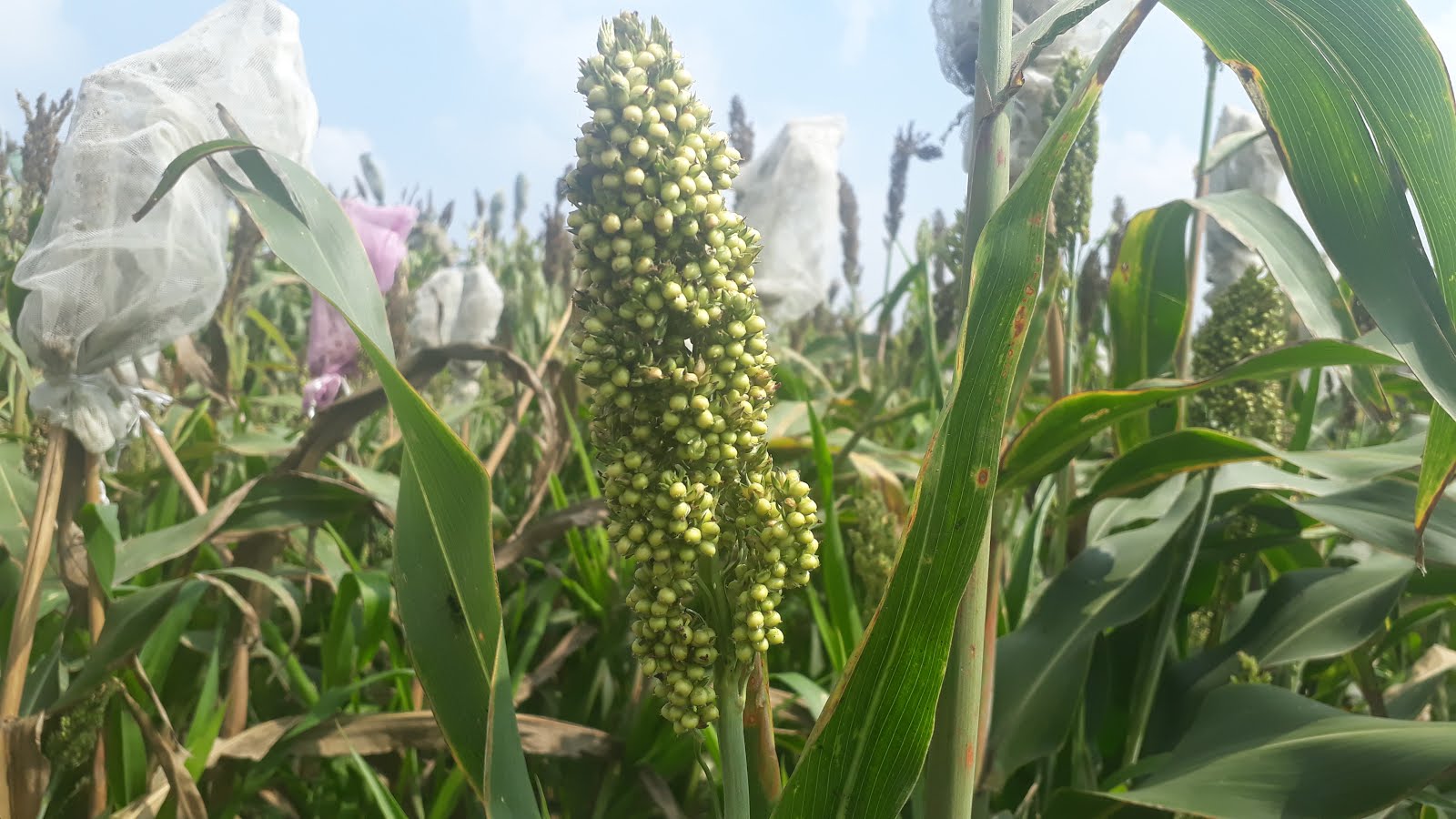
    Sorghum (Sorghum bicolor), is a warm-season crop intolerant to low temperatures, resistant to pests and diseases, highly nutritious, and a climate-compliant crop. It ranks fifth in cereals produced worldwide and fourth in India. It is a principal source of protein, vitamins, energy, and minerals for millions of people, especially in the semi-arid regions.

     
    It has a nutritional profile better than rice as it contains rich in protein, fiber, thiamine, riboflavin, folic acid, calcium, phosphorus, iron, and beta-carotene. Due to this, it is being targeted as a means to reduce malnutrition globally. It also helps to control heart problems, obesity, and arthritis.

    9. BROWNTOP MILLET AND ITS HEALTH BENEFITS:


    Browntop millet (Brachiaria ramosa (L.) Stapf; Panicum ramosum L.) is an introduced annual grass that originated in South-East Asia. It is grown in Africa, Arabia, China, and Australia. In the US, it is mainly grown in the South-East for hay, pasture, and game bird feed. The browntop millet, called Korale in Kannada, is specially grown in rainfed tracts of Tumakuru, Chitradurga, and Chikkaballapura districts of Karnataka state. The crop is popular in this region in terms of cultivation and consumption. This millet seed is grown in a variety of soils and climates.
    Like other millets, it is a hardy crop and well suited for dry land. Browntop millet is an annual warm-season species that grows 1 to 3 ft tall. The smooth stems have pubescent nodes and may stand erect or ascend from a decumbent base. The leaves are 2.2 to 18cm long and 6-18mm wide; both surfaces are smooth. The inflorescence is indeterminate, open, spreading with a simple axis and stalked flowers. It has 3-15 inflorescences and white flowers. Seeds are ellipsoid and tan in color; they mature in approximately 60 days. Planting time: Browntop millet can be planted from mid-April until mid-August in most locations, though later plantings will result in lower yields.

    It is gluten-free and rich in essential nutrients. It is a rich source of natural fiber, containing the highest fiber as compared to other millets about 12.5%. Due to the fiber content, it acts as a medicine for lifestyle diseases.


    Related Post: Identification of Dehulled Millets Grains


    VIDEO:


    Author: Tapas Chandra Roy, A Certified Farm Advisor on Millets, ‘Promoting Millets from Farm to Plate’. In a mission to take the forgotten grains- Millets to Millions. To remain updated on my blogs on millets you can join my Telegram Channel – Millet Advisor.


  • Study of Post Harvest Operations of Finger Millet in Koraput, Odisha

    Study of Post Harvest Operations of Finger Millet in Koraput, Odisha

    Post Harvest Operations of Finger Millet:

    Finger Millet is one of the major crops in the Koraput District Of Odisha. It is mostly cultivated in the tribal areas in the Kharif season. The harvesting of finger millet takes place mainly from October to November. There are two methods of harvesting. One is harvesting of only panicles and the other is the harvesting of stalks along with the panicles.
    Harvesting of only panicles of Finger Millet.
    Finger Millet Threshing:
                                           Threshing is the process of loosening the edible part of the grain from the chaff. It is the step in grain preparation after reaping. Threshing does not remove the bran from the grain.
    (Figure: No. of sample households using different methods for threshing Finger Millet)
                 Threshing can be done manually by using sticks or by bullocks or by using a tractor or by machines. Out of the 100 household sample 86 percent of them do the threshing manually followed by bullocks (9 percent) and tractor (4 percent). Finger Millet threshed manually on the mud floor increases impurities such as mud, sand, and dust particles. This makes further processing difficult.
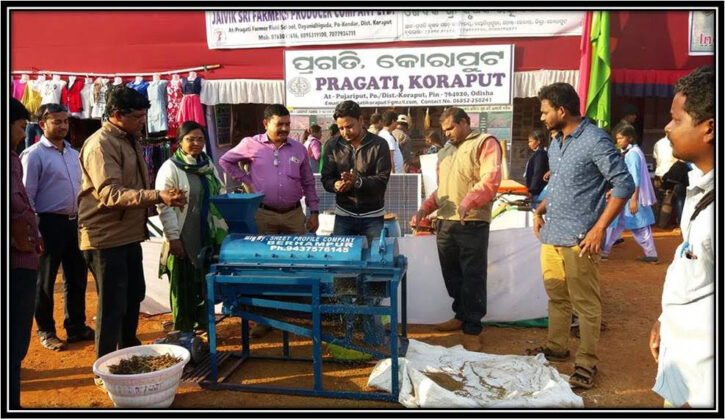
    To solve the threshing problem, there is OUAT Ragi thresher cum pearler which can be used for threshing, pearling, and cleaning operation. The machine comprises of a hopper, threshing cylinder, oscillating sieves, and an aspirator type blower.
    Finger Millet ear heads are fed through a tray-type hopper for threshing and pearling operations to be accomplished simultaneously inside the threshing cylinder while cleaning is achieved through an adjustable aspirator.
    The output of the OUAT Ragi thresher cum pearler was found to be 90 kg/hour with 93.5% threshing efficiency and 92.4% cleaning efficiency.
    (Photo: Checking the efficiency of the OUAT Ragi thresher cum pearler in the PARAB Ground, Koraput. This was demonstrated by PRAGATI, Koraput. )
    Finger Millet Primary Processing:
    Finger millet – are naked grains, i.e. do not have a husk layer. Processing these for human consumption is essentially a matter of cleaning and grading the grains. They are then ground up to either their flour form or into grits making them ready for cooking. This ease of processing is one of the reasons for these grains to persist in the local communities’ diets.
    (Photo: Primary processing by hand pounding`)
    The entire household sample interviewed, does their primary processing of Finger millet by hand pounding to remove the bran which is bound very tightly to the endosperm. Pounding by hand is very laborious, time-consuming, and inefficient.  It gives a non-uniform product that has poor keeping qualities.
    Secondary Processing of Finger Millet:

    Milling: – It is the processing stage for the grain of finger millet, in which the grain is pulverized in the form of flour for making different food products. It is generally done by some conventional or modern equipment like a stone mill, ball mill, hammer mill or burr mill, etc.


    At the household level, milling should be done by hand grinding. After cleaning, seeds should be passed through friction mills, so that glumes separate from it. After it, the grain can be used for pulverizing. Fine flour and coarse flour can be prepared based upon the requirement. The fine flour can be used for making Chapattis (millet bread), while the coarse flour of finger millet can be used for making Laddus (sweet balls).

    Most of the sample households (69 percent) do their milling by using traditional chhaki and the rest (30 percent) by pulverizer. It was found that the sample households near to market availed the service of pulverizer.

       (Figure: Secondary processing by sample households)
    Due to the lack of innovation of post harvest operations of Finger Millet technologies in rural areas, there is a lot of drudgeries. In order to address the processing appropriate mechanization is the need of the hour. The modern mechanization will definitely improve the consumption of finger millet in the rural as well as in the urban areas.
    ***Looking forward to your innovative ideas and technologies.


  • Nutri-Cereals- National Workshop in Odisha in 2019 a Grand Success

    Nutri-Cereals- National Workshop in Odisha in 2019 a Grand Success

    Nutri-Cereals – National Workshop in Odisha:

    Inaugurating a national workshop on Nutri-cereals, Chief Secretary Asit Tripathy said Odisha is the first State to introduce millets in the public distribution system and Niti Aayog has recognized it as a model State in this regard. The Odisha Millet Mission, launched in 2017, has now been extended to 72 blocks in 14 tribal-dominated districts. The National Millet Mission started in 2018 has given a further boost to the campaign in the State.

    Odisha Millet Mission:

    “Odisha Millet Mission” is a unique initiative for the revival and promotion of millet production. The Centre has recommended other states to follow the Odisha model,” said Pradeepta Kumar Mohapatra, Agriculture Production Commissioner.
    Principal Secretary of Agriculture & Farmers’ Empowerment Sourabh Garg said the Odisha Millet Mission is a unique partnership model wherein the Government, academia, and civil society have joined together to implement the programs through farmer producer organizations.
    “It is built on a comprehensive approach that includes production, processing, consumption, value addition and marketing,” he said. Around 50,000 farmers have been mobilized to take up millet cultivation with improved agronomic practices. The State Government has already started procurement of surplus millet from the farmers and the procurement target has been enhanced to one lakh tonne. Plans are afoot for the inclusion of millets in supplementary nutrition programs under ICDS, MDM, and PDS. 

    Deliberations on National Workshop on Nutri-Cereals:

    Director, Country Relations of International Crops Research Institute for the Semi-Arid Tropics (ICRISAT) Arabinda Kumar Padhi said millets are climate-resilient crops and can be grown under stressed rain-fed conditions, and people of South and West Odisha have traditional skills in millet production undertaken over generations. “The highlands of the State have vast scope for millet cultivation as well. ICRISAT would provide the technology and international best practices for improving productivity in the State’’. 
    In the national workshop on Nutri-cereals, deliberations were held on the promotion of seed diversity, policy initiatives, challenges in the inclusion of millet in PDS, millet marketing, and value chain through framers organizations. There were also experience sharing sessions among farmers and NGOs on agronomic practices.

    On the occasion, 14 leading millet farmers of the State along with representatives of leading NGOs namely Pragati and Pradhan were awarded.
    Focusing on the role of agriculture and food production with nutrition and security, FAO, Country Representative, Tomio Shichiri said: ‘’While food grain production in India has increased over five times since Independence to almost284 million tonnes in 2018-19, there is a high rate of malnutrition in the country, Therefore, there is a need for diversification toward Nutri-rich crop production such as Nutri-Cereals and pulses.’’ The focus must not only be on increased food grain production of targeted Nutri-cereals such as millets. Promotion of homestead gardens and diversification of agriculture production towards fruits, vegetables, and aquaculture can contribute towards addressing the malnutrition.
    Meera Mishra, Country Coordinator, International Fund for Agricultural Development (IFAD) India Country Office, said the changing patterns of consumption directly benefit farmer’s production system and income. Quoting an example of millet production in Madhya Pradesh, she said the tribal Baiga women in the remote Dindori district in MP grew minor millets – Kodo and Kutki – using traditional practices. Support from the government and IFAD program has increased production and engagement. Earlier only 750 farmers were doing millet farming on 750 acres and today these numbers have increased by 10 times to 7,500 farmers and 7,500 acres.

    “Nutri-Cereals: Challenges in Inclusion to ICDS/MDM/PDS- Nutritional Perspective”.

    Dr.Paras Sharma, Scientist, ICMR-National Institute of Nutrition presented about nutritional perspective and gave the Solutions and future actions to improve millet consumption. Millet Production should be increased in order to maintain supply. Identification and development of high micronutrient varieties with low anti-nutrients are necessary.
    Biofortification of millets crop is required to enhance micronutrients. There is a need for the development of millet processing technology at rural and urban levels. Degree of milling optimization to retain maximum nutrients and to reduce phytate and voluntarily adopted by the millet processing units.
    The role of other inositols Phosphates (IP5, IP4, and IP3) needs to be looked in for mineral bioavailability. There is a need to develop cooking methods to maximize nutrient retention and bioavailability. A combination of suitable food to enhance the bioavailability of nutrients can be explored. Development of recipes according to the region such as chapattis for the northern part of the country. Improvement of protein quality of millets through genetic approaches.  Blending with other cereals to enhance the organoleptic properties and ease in novel food product development.
    Germinated/sprouted/ malted or fermented millets have high bioavailability of micronutrients which may be served in MDM HTST processed foods including popping/puffing and roasting also reported to improve the mineral bioavailability and such products also have a longer shelf life so these may be included in the food supply system.

    Diverse Seed Systems for Millets:

    Mr.Ravindra A, WASSAN, presented on “Diverse Seed Systems for Millets” and why there is a need for diversity. How a seed system can be managed by the community and its replication in biodiversity blocks.

    ICRISAT initiatives in connecting crops in semi-arid tropics to meet nutritional requirements:

    Dr. A K Padhee, Director, Country Relationspresented on ‘’ICRISAT initiatives in connecting crops in semi-arid tropics to meet nutritional requirements”. There is a need for demand-driven innovation and this can be done by mainstreaming nutrition, empowering women, and attracting youth into agriculture. Pointed out the approaches for adoption by participatory and partnering, building capacity at state and local level, integrating communications, monitoring, and evaluation & finally policy support.

    Promotion of Production & Consumption of Nutri-Cereals:

    NITI Aayog, Government of India, presented on‘’ Promotion of Production & Consumption of Millets’’. In this, the key recommendations of the committee were focused.
    • Decentralized procurement of millets by State Government
    • Promotion of millets under schemes like Mid-Day Meal Scheme (MDM), Integrated Child Development Scheme (ICDS) to address the nutritional security of vulnerable groups.  
    • Enhancing public awareness about health, nutritional, environmental & other important benefits of consuming & cultivating millets
    • Development of new hybrid and high yielding varieties to improve productivity, increase shelf-life improved nutritional content, and promote crop diversity
    • Increasing incentives to farmers for millet cultivation and addressing issues related to the MSP of millets
    • Development of improved, technology-driven millet processing units to retain nutritional value and make millets ready for consumption and sale
    • Encouraging women’s, marginalized sections, and tribal communities to undertake millet production, supported by initiatives by NGOs and other organizations.
    • Gradual introduction under PDS- Once the supply of millets under PDS improves, out of 5 kg basket per person entitlement, 1 kg may be made mandatory for millets.
                      The suggested roadmap that can be achieved in short/medium term duration:
    • Inclusion of Millet based products in MDM & ICDS menus- Replicate initiatives of States already doing this
    • Engagement of Private sector & Industries- Creating a demand-pull among consumers    
    • Advocacy and Awareness generation about multifaceted benefits of Millets- Running a campaign
    • Establish “National Millets Board”- Link all stakeholders & create a certification mechanism
    • Improving procurement of Millets under PDS (beginning with Millet producing areas & gradually expanding)
    Finally, in the long term duration, the production of millets is to be increased.
    Odisha Millet Mission presented the Future roadmap- taking millets to million.
    • Making Odisha a “Centre for Excellence” on Millets.
    • Landscape based Agro Biodiversity.
    • Inclusion of suitable millets in ICDS, MDM, and PDS.
    • Start-Up Odisha – Millet Odisha.
    • Millet Value Chain – Seed to Storage to Supply.
    • Women SHGs led the Nutrition revolution. 
    Dr. Usha Dharmaraj, Sr. Technical Officer, Department of Grain Science and Technology CSIR-CFTRI, Mysore presented“ Millets in Community Feeding- Challenges and Interventions”.
    Challenges:
    • All millets but for pearl and finger millet contains husk (non-edible portion) as a separate entity- dehusking is necessary
    • No well-defined machinery set up for dehusking of millets
    •  Pearl, foxtail, and little millet  contains a higher amount of fat and also undergo rancidity at  faster rate-shelf stability is necessary
    •  The presence of bran and a high amount of dietary fiber affects its cooking quality and sensory attributes-Techno interventions are required
    •  Lack of diversified products from millets on the shelf-needs attention to promoting millet usage
    • Lack of awareness about millets and millet-based products
    Interventions:
    • Inclusion of a separator; either color sorter or gravity separator
    • Polishing judicially  to improve  both  the shelf-life and cooking properties
    • Suitable processing to improve the quality of the products
    • Preparation of diversified products from millets

    Promotion of Millet Diversity:

    Dr.Vilas Tonapi, Director, ICAR- Indian Institute of Millets Research, Hyderabad presented on the ‘’Promotion of Millet Diversity’’. ICAR-IIMR has undertaken a millet germplasm exploration in the Dong district in Gujarat and collected 37 accessions of five different millets from 27-28th October 2018. In which, the maximum of 16 acc. of Little millet followed by Finger millet (14 acc.), Sorghum (5 acc.), Foxtail millet and Barnyard millet (1 acc. each). The exploration has covered 27 villages in 4 Taluks in Dong district. The altitude ranged between 161-526 m MSL

    Overall, the Workshop on Nutri-Cereals was a grand success.

    ***Please put your valuable comments and suggestions for the development of Millets in India.